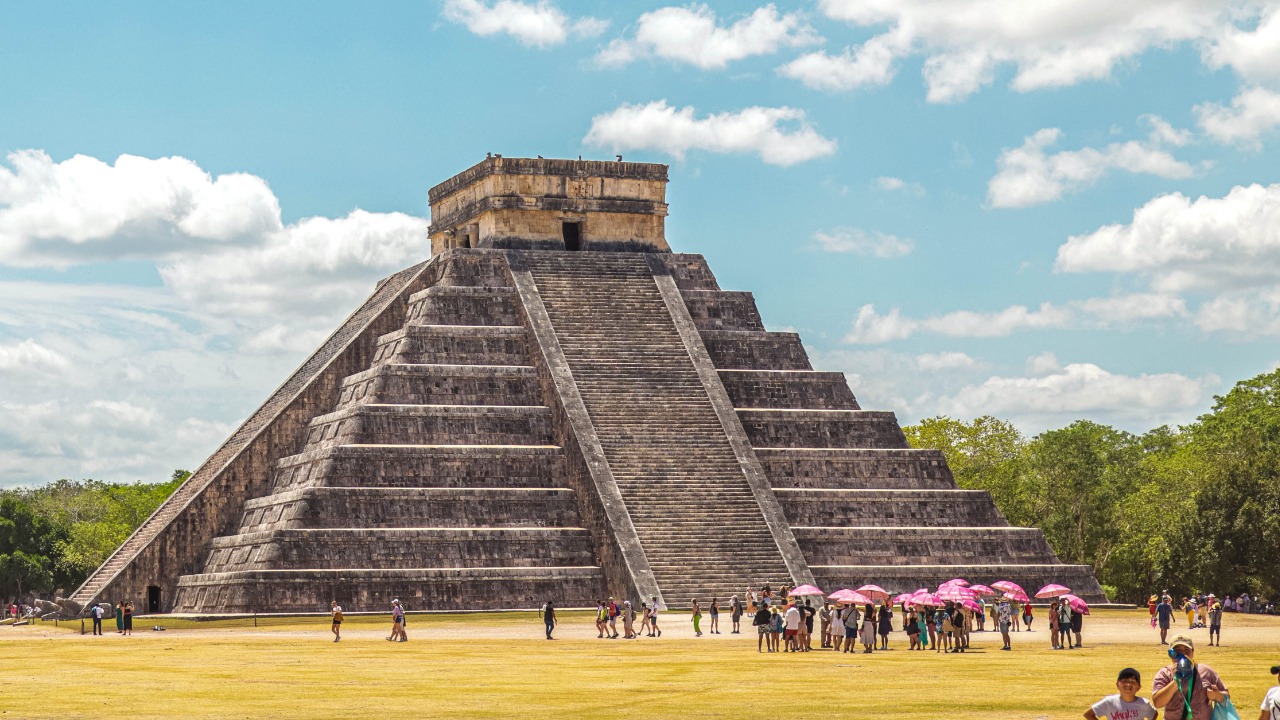

An archaeological team has revealed a previously unknown Maya city, preserved for roughly a thousand years under dense tropical forest in Mexico. Hidden beneath thick jungle canopy, the site contains towering pyramids, plazas and stone structures that had never been mapped or excavated before modern survey work cut through the vegetation.
The discovery adds a new chapter to the story of the Maya world, expanding the known footprint of ancient cities and raising fresh questions about how people once lived, traded and fought in this remote region. It also underscores how quickly new technologies are reshaping the understanding of places that seemed fully explored only a generation ago.
How a lost Maya city emerged from the jungle
The newly documented settlement lies deep inside the tropical forests of Mexico, in a region where thick vegetation, seasonal swamps and the absence of modern roads have long discouraged research. Archaeologists identified the city after remote sensing data revealed geometric shapes and elevated platforms that did not match natural landforms. Ground expeditions then confirmed that the anomalies were in fact monumental buildings, including pyramidal temples and palaces that had remained untouched for centuries, as reported in early coverage of the jungle discovery.
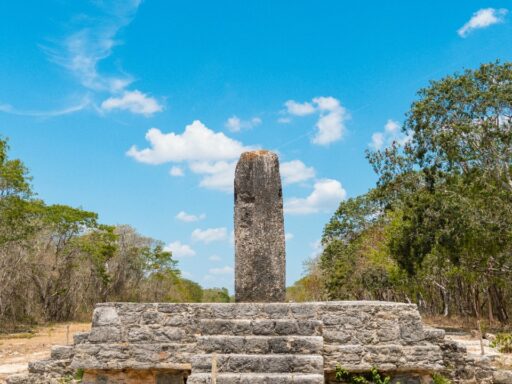
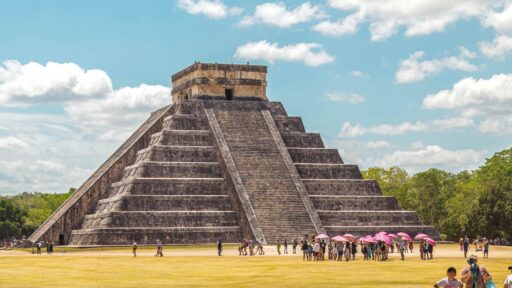
Once researchers reached the site, they found a central core with large plazas framed by pyramids and elongated platform mounds. These constructions, built in cut stone, suggest a planned urban layout rather than a loose cluster of villages. According to accounts of the untouched Mayan city, several structures rise high above the forest floor, with stairways and terraces still visible beneath the vines and roots that now cover them.
Archaeologists estimate that the city flourished roughly a thousand years ago, during the Late or Terminal Classic phases of Maya history, when many major centers were expanding and then collapsing in quick succession. Reports on the 1,000-year-old Maya city describe a dense concentration of ceremonial architecture that points to a powerful local elite, supported by farmers and craft workers who lived in smaller compounds around the monumental core.
The site appears to have been abandoned and left largely undisturbed, which is rare in regions where later communities often reused ancient stones or built directly on top of earlier ruins. Coverage of the ancient hidden city notes that no modern settlement overlies the remains, and that the jungle itself formed a protective layer over fragile carvings and masonry.
What has changed in the understanding of the Maya world
The find significantly changes the map of Maya civilization. For decades, scholarship focused on well-known centers such as Tikal, Palenque and Chichén Itzá. The newly revealed city shows that monumental building extended further into remote lowlands than previously documented, indicating that political and economic networks once reached deeper into what now appears to be unbroken forest. Reports describing the ancient Maya city emphasize that the settlement size and architectural scale rival some established sites.
Archaeologists now have physical evidence that this region supported a substantial population with the capacity to organize large construction projects. That challenges older models that portrayed interior jungle zones as sparsely inhabited buffer areas between major powers. Instead, the new city suggests a more continuous urban corridor, with mid-tier centers that may have mediated trade and alliances between larger kingdoms.
The discovery also reshapes thinking about how completely the Maya collapse has been documented. Many narratives of the political breakdown around a thousand years ago were built on data from a limited set of excavated cities. The presence of a sizeable, previously unknown center hints that other important players never made it into the historical record. Each new city, especially one preserved in such an undisturbed state, has the potential to alter chronologies of warfare, dynastic change and environmental stress.
Technologically, the find illustrates how remote sensing has transformed fieldwork. Airborne surveys can now reveal buried plazas and causeways that would take decades to identify on foot. The jungle city was not discovered by chance but through systematic analysis of elevation models that flagged regular shapes beneath the canopy. That method is rapidly shifting archaeology from a discipline that relies on scattered digs to one that can map entire cultural landscapes before the first trench is opened.
Why this untouched Maya city matters right now
The timing of the discovery matters for both science and policy. Around the world, rapid deforestation and infrastructure projects are cutting into tropical forests faster than researchers can document what lies beneath. The newly revealed Maya city sits in a zone where logging, agriculture and planned development could threaten unrecorded heritage. Identifying a major ancient center gives conservation advocates a concrete argument for protecting surrounding forest, since the ruins and the ecosystem are intertwined.
The site also enters ongoing debates about how ancient societies responded to environmental pressure. Many scholars argue that drought, soil depletion and political conflict combined to destabilize Maya kingdoms. A city preserved with minimal later disturbance offers a rare chance to study agricultural terraces, reservoirs and household remains in context. Soil samples, pollen records and construction sequences from this location can test whether local strategies differed from those seen at more famous sites that experienced heavy looting or early excavations.
For descendant communities, the find reinforces cultural continuity. Modern Maya groups across Mexico and Central America maintain languages, rituals and knowledge systems that trace back to the builders of cities like this one. Public discussion of the pristine Mayan city has highlighted the importance of involving local communities in decisions about research access, tourism and site management, so that benefits flow to people whose heritage is being studied.
Tourism and national identity are also at stake. Mexico already promotes its archaeological zones as key attractions, from the pyramids of Teotihuacan to the coastal temples of Tulum. A newly discovered city with large pyramids and intact jungle surroundings offers a different kind of experience, less polished but potentially more immersive. Authorities will face pressure to balance economic opportunity with the risk that uncontrolled visitation could damage fragile plaster, carvings and buried floors that have survived only because the forest shielded them.
At a global level, the story resonates with broader interest in how much of human history remains hidden. The fact that a city of this scale could stay unknown into the twenty-first century, despite satellite imagery and decades of regional research, suggests that many more sites may lie beneath forests in Central America, the Amazon and Southeast Asia. Each new discovery complicates simple narratives about progress and decline, and reminds readers that historical knowledge is still incomplete.
What researchers expect to learn next
Archaeologists are only at the beginning of work at the site. Initial surveys have mapped major structures, but detailed excavation will be needed to reconstruct daily life and political history. Teams will likely focus first on the largest pyramids and adjacent plazas, where carved monuments, altars or stairways might preserve names of rulers and dates of key events, similar to patterns seen at other Classic Maya centers documented in reports from recent coverage.
Researchers also plan to examine residential zones at the edge of the monumental core. These smaller platforms and house mounds can reveal how wealth was distributed, what people ate and how craft production was organized. If the city shows a mix of elite compounds and modest dwellings, that pattern could help compare its social structure to that of better known capitals. Excavations in these areas will likely produce ceramics, stone tools and organic remains that can be dated and analyzed for trade connections.
Another priority will be mapping the broader landscape. Raised roads, or sacbeob, often linked Maya cities to outlying settlements and agricultural fields. Remote sensing has already indicated possible causeways and water management features around the new site, as mentioned in technical summaries of the buried city. Field teams will try to confirm whether these features connected the city to regional trade routes or to smaller satellite communities.