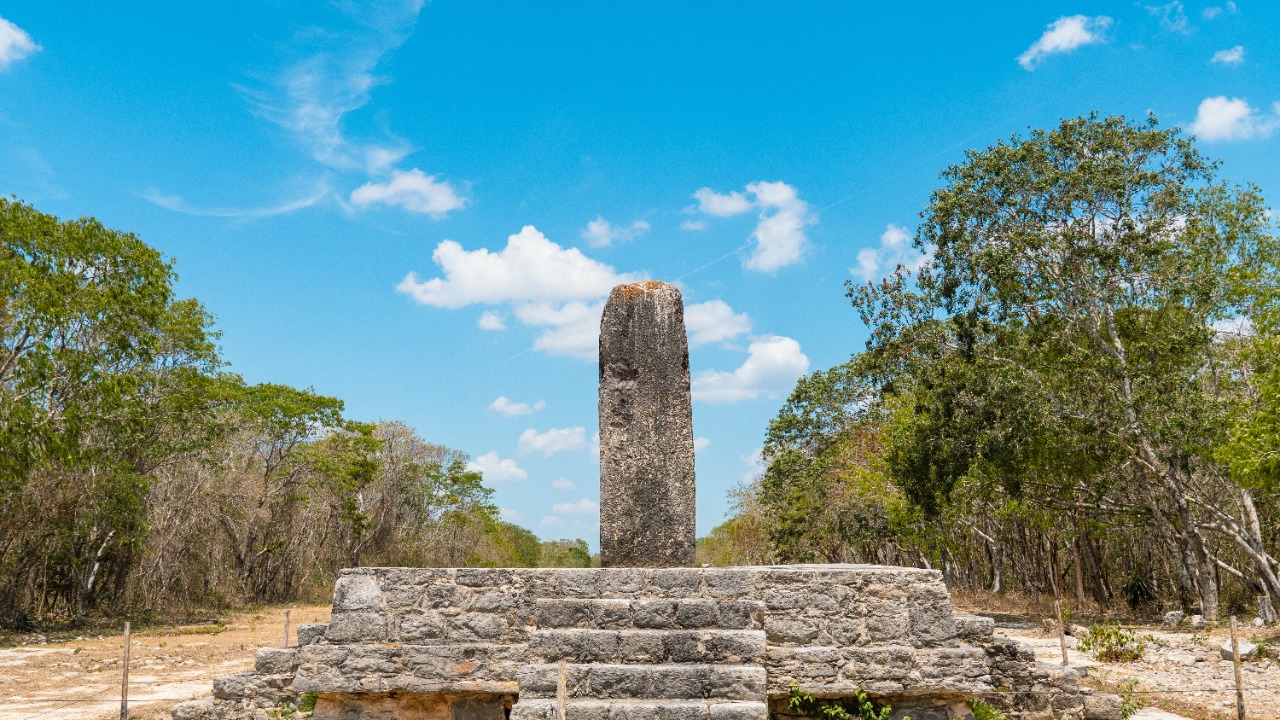

The newly documented Maya city of Minanbé in the jungles of Campeche is being hailed by archaeologists as the first major site in several years to emerge with its core architecture essentially untouched. After more than a thousand years of abandonment, the city’s plazas, palace complex and towering pyramid temple have surfaced from the forest canopy in a condition that researchers describe as unusually complete. That level of preservation is already reshaping expectations about what a Classic-period Maya urban center can reveal when looting, modern construction and earlier excavations have barely disturbed it.
Minanbé’s discovery and what makes this city different
Minanbé lies in a remote sector of the state of Campeche, inside dense tropical forest that shielded the ruins from logging, farming and road building for centuries. Archaeologists working with Mexico’s Instituto Nacional de Antropología e Historia identified the site after remote sensing surveys highlighted rectilinear anomalies that matched the footprint of plazas and monumental platforms. When teams finally reached the area on foot, they found a compact urban core with a large central plaza, a palace complex and a pyramid temple that rises about 13 meters above the surrounding terrain, all preserved beneath layers of vegetation. Reports describing the intact Maya city stress that the principal buildings remain standing to a degree rarely seen in first-time documentation of a major site.
The layout at Minanbé follows a familiar Maya pattern, yet the details appear unusually crisp. The main plaza is framed by elongated range structures interpreted as elite residences and administrative halls, while the pyramid temple dominates one side of the square. Surface ceramics and architectural style point to a flourishing center during the Late Classic period, when many lowland Maya cities reached their demographic and political peak. What separates Minanbé from most newly mapped sites is that its monumental architecture shows no obvious signs of stone robbing or large-scale collapse that would suggest centuries of reuse or systematic looting.
Archaeologists emphasize that the city had been effectively sealed by the forest since its abandonment. Unlike better known centers that sit near highways or modern towns, Minanbé required days of travel through thick jungle, which limited access for looters and tourists alike. According to descriptions of the jungle site of, the absence of looters’ trenches, illegal tunnels or modern graffiti is striking. That lack of disturbance means stratigraphy, floor sequences and even minor constructions around the main plaza are likely to survive in place, giving researchers a cleaner archaeological record than usual.
How Minanbé alters the recent history of Maya archaeology
Over the past decade, advances in lidar mapping have revealed thousands of Maya structures hidden under forest cover, but most large centers identified in that way have already suffered from looting or earlier, partial excavation. Researchers judging Minanbé as the first major Maya city in roughly three years to appear with its core architecture fully intact are drawing a contrast with sites where only foundations or scattered mounds remain. At Minanbé, the principal pyramid still rises as a coherent mass, the palace complex retains multiple standing walls and the plaza edges are sharply defined, allowing archaeologists to reconstruct urban planning decisions with far greater confidence.
The 13 meter high pyramid temple has become an emblem of this difference. Reports on the pyramid at Minanbé describe stairways and upper platforms that remain legible despite centuries of erosion. At many other cities, similar temples have lost their upper chambers to stone robbing or collapse, forcing archaeologists to rely on analogies from better preserved monuments. Here, the surviving architecture can anchor more precise reconstructions of roof combs, shrine layouts and ritual circulation routes.
The intact state of Minanbé also promises a more reliable sequence of building phases. Because later Maya inhabitants often remodeled earlier structures, many classic sites present a palimpsest of overlapping floors and facades that are difficult to disentangle when earlier levels have been disturbed. In this case, the lack of intrusive pits and modern cuts means archaeologists can trace how the palace and plaza evolved across generations with fewer gaps. That clarity can refine regional chronologies and help test long-standing theories about how Maya political centers grew, consolidated power and eventually contracted.
Why Minanbé matters for understanding the Maya world now
Minanbé arrives at a moment when scholars are rethinking how Maya cities functioned as political capitals, economic hubs and sacred landscapes. The city’s apparent isolation within the Campeche jungle makes it a valuable case study for how a medium-sized center negotiated its place among larger neighbors. The intact palace complex can shed light on courtly life, administrative routines and the relationship between elite households and commoner neighborhoods that likely spread beyond the mapped core. If inscriptions or carved monuments emerge in situ, they will carry added weight because their original spatial context will be clear.
The discovery also matters for debates about resilience and collapse. Minanbé appears to have been abandoned for roughly a thousand years, yet its architecture survived with minimal human interference. That contrast between cultural disappearance and material endurance raises questions about how local communities responded to environmental stress, shifting trade routes or political upheaval. Archaeologists hope that undisturbed middens, water management features and agricultural terraces around the city will preserve botanical and faunal remains that can clarify whether drought, soil exhaustion or conflict played the decisive role in its decline.
For contemporary Mexico, Minanbé underscores the stakes of conservation policy in remote forest regions. The city lies in an area where infrastructure projects, illegal logging and climate change driven fires all threaten unrecorded heritage. The fact that Minanbé reached the twenty first century largely untouched is partly a matter of chance, but it also reflects the protective effect of intact jungle cover. Heritage officials are already using the example of the city hidden for to argue that archaeological mapping and environmental protection need to move in parallel.
Minanbé’s condition could also influence tourism strategies. Mexico’s most famous Maya sites, such as Chichén Itzá and Palenque, face heavy visitor pressure that complicates conservation. An intact city in Campeche offers a chance to design controlled access from the outset, with clear visitor paths, limited numbers and strong monitoring of looting risks. Decisions taken in the first years after public announcement will determine whether Minanbé remains a near pristine research laboratory or quickly joins the long list of eroded and heavily trafficked ruins.
Next steps for research, protection and public access
In the short term, archaeologists expect a multi season program focused on mapping, stabilization and targeted excavation. Detailed topographic survey will extend beyond the monumental core to identify residential compounds, causeways and agricultural features that define the full urban footprint. Ground penetrating radar and other non invasive methods are likely to precede any large scale digging, since the site’s untouched character gives researchers strong incentives to document subsurface architecture before exposing it. Conservation teams will prioritize shoring up vulnerable walls on the pyramid and palace to prevent damage once vegetation is cleared.
Parallel to scientific work, heritage authorities will need to formalize legal protections and practical security. That effort typically includes declaring a protected archaeological zone, establishing a permanent on site presence and coordinating with local communities on surveillance. The sudden visibility of Minanbé increases the risk of looting, especially for portable artifacts that might attract collectors. Early outreach to nearby towns and ejidos can help frame the city as a shared asset rather than an external imposition, with potential benefits through employment, training and carefully managed tourism.