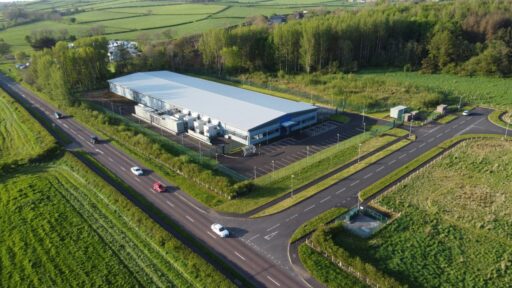
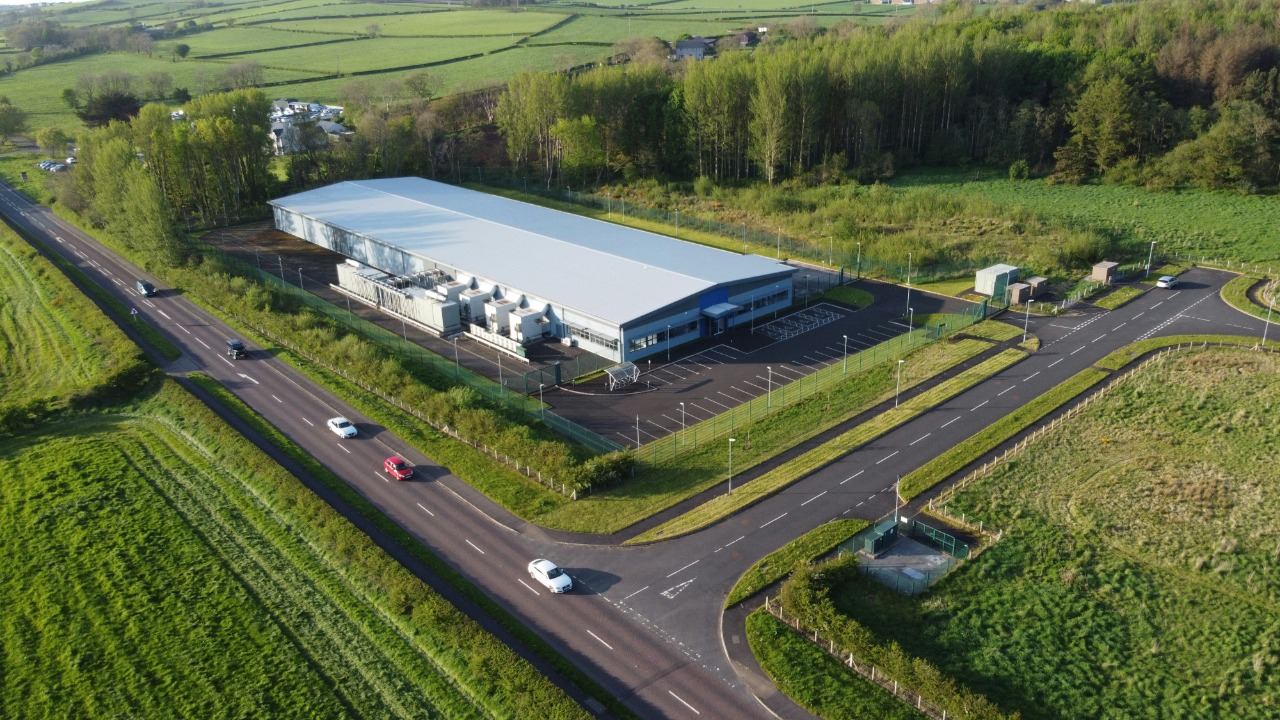

U.S. data centers are now drawing 42 gigawatts of power, nearly twice what they used only three years ago, as artificial intelligence training and cloud services surge. That load rivals the output of dozens of large power plants and is forcing utilities, regulators, and tech companies to rethink how digital infrastructure grows.
How U.S. data centers raced from niche load to 42 gigawatts
The jump to 42 gigawatts reflects a structural shift in what data centers do and how they are built. Traditional facilities that mainly served web hosting and enterprise IT have been joined by hyperscale campuses optimized for AI, with racks of specialized accelerators that consume far more electricity per square foot than earlier generations of servers. Instead of focusing on squeezing more virtual machines into a rack, operators now design around dense clusters of GPUs and custom chips that can each draw hundreds of watts.
AI training clusters sit at the center of this escalation. Training a single frontier model can require thousands of accelerators running continuously for weeks, which translates into sustained multi‑megawatt loads inside a single hall. Reporting on the AI data center has detailed how facilities that once peaked at tens of megawatts now plan for 100 megawatts or more on a single campus, with some projects seeking gigawatt‑scale connections to the grid. The 42 gigawatt figure aggregates hundreds of such sites, many of them clustered near cheap power and long‑haul fiber.
Cooling has become just as significant as compute. As chip power density climbs, air cooling alone often cannot keep temperatures in check, so operators deploy liquid systems that add their own pumps, chillers, and control gear. These systems increase total facility power, raising the ratio of overhead energy to IT load. In older designs, data centers might have used roughly 1.5 watts from the grid for every watt delivered to servers; AI‑heavy builds can push that figure higher when cooling and power distribution must be over‑engineered to handle extreme density.
Geography has amplified the trend. Hyperscale operators have concentrated new builds in power‑rich regions such as parts of the Southeast, the Midwest, and the Pacific Northwest, where access to transmission and favorable tariffs enable multi‑site expansion. Local grids that once served a mix of residential and industrial customers now must accommodate clusters of facilities that each draw as much power as a steel mill. That concentration helps operators manage latency and costs, but it also magnifies the strain on specific substations and transmission corridors.
Why surging data center demand is reshaping power, climate, and communities
The near‑doubling of data center load in three years matters because it changes the basic math of the U.S. power system. A 42 gigawatt continuous draw corresponds to a very large share of national electricity consumption, and utilities must plan years ahead to serve it. Long‑term resource plans that once assumed modest digital growth now factor in aggressive AI buildouts, which can require new gas plants, accelerated renewable projects, or both. For some utilities, data centers have become the single largest source of new demand on their systems.
This surge complicates climate targets. Many big operators have pledged to match their consumption with renewable energy purchases, signing contracts for large solar and wind projects. Yet the physical grid must still balance supply and demand in real time, and high‑density AI clusters often run around the clock, including at night when solar output falls. Analysis of AI energy demands has highlighted the gap between corporate clean‑energy accounting and the actual mix of electrons on the grid that keeps GPUs humming.
Communities near data center hubs are already feeling the effects. In some regions, utilities have delayed or denied new industrial and residential connections because planned data center campuses would consume much of the available capacity on local lines. Residents face the prospect of higher rates if utilities build new infrastructure primarily to serve large tech customers, especially when regulators allow cost recovery across the broader customer base. At the same time, local officials court these projects for their construction jobs and tax revenue, even though the facilities themselves are highly automated and support relatively few permanent positions.
Water use adds another layer of tension. Many modern data centers rely on evaporative cooling, which can consume large volumes of water in hot climates. As AI facilities proliferate in regions already facing drought stress, utilities and city planners must weigh the tradeoff between economic development and long‑term water security. Some operators are shifting to closed‑loop or air‑cooled designs to reduce withdrawals, but those alternatives can increase electricity use, pushing the power problem back onto the grid.
There is also a broader equity question around who benefits from the services that drive this load. The AI boom that fuels 42 gigawatts of demand supports products such as large language models, image generators, and recommendation engines that are integrated into consumer apps, enterprise software, and public services. Yet the costs of new power plants, transmission lines, and environmental impacts are distributed across society. Regulators are only beginning to grapple with how to align rate design, interconnection rules, and climate policy with a digital infrastructure sector that now behaves more like heavy industry than like a niche IT service.
How utilities, regulators, and tech firms may respond to the 42‑gigawatt era
With data center demand on a steep trajectory, the next phase will be defined by how quickly the power sector and developers adapt. Utilities are racing to expand transmission and substation capacity near major campuses, but those projects often take longer to complete than the data centers themselves. That mismatch in timelines has already led to queues of proposed facilities waiting for interconnection studies and upgrades, which can stretch into years. Some operators have responded by buying land adjacent to existing high‑voltage lines or retired industrial sites where grid capacity can be repurposed more quickly.
On the supply side, large tech companies are increasingly behaving like power developers. They are signing long‑term contracts for new wind, solar, and battery projects tied directly to their campuses, and in some cases are exploring on‑site generation such as fuel cells or small gas turbines to shave peak load. A few have signaled interest in advanced nuclear options, including small modular reactors, as a way to secure firm, carbon‑free power for AI clusters, although those concepts remain at an early stage and face significant regulatory hurdles.
Efficiency improvements will play a role, but they may not fully offset demand. Chip designers are working to increase performance per watt for AI accelerators, and data center engineers are refining cooling and power distribution to reduce overhead. History suggests, however, that efficiency gains often spur more usage rather than absolute reductions, especially when new applications emerge. As AI models expand in size and complexity, operators may simply use more hardware to chase better performance, keeping total power draw on an upward path even as each chip becomes more efficient.
Policy choices will shape the trajectory as well. State regulators can require large new loads to fund more of the grid upgrades they trigger, which would shift costs away from residential customers but might slow some projects. Local governments can attach conditions related to water use, noise, and emissions to zoning approvals, nudging operators toward more sustainable designs. At the federal level, tax incentives for clean energy and transmission could accelerate the buildout of low‑carbon supply that can serve both AI clusters and the broader economy.
For communities, the challenge is to capture the economic upside while managing the resource strain. That may mean negotiating community benefit agreements, insisting on transparency around water and energy consumption, and linking approvals to investments in workforce training and local infrastructure. As data centers evolve from background utilities of the internet to headline energy users, the politics around where and how they are built will likely intensify.