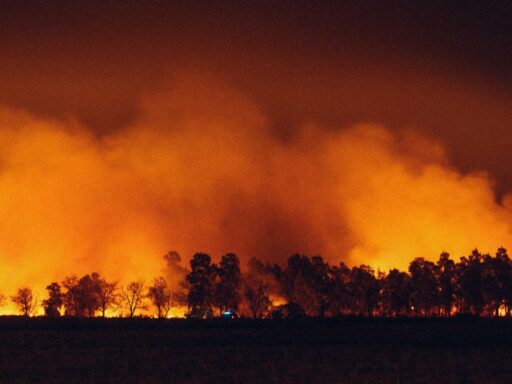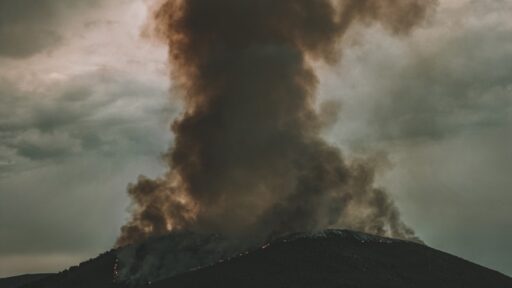
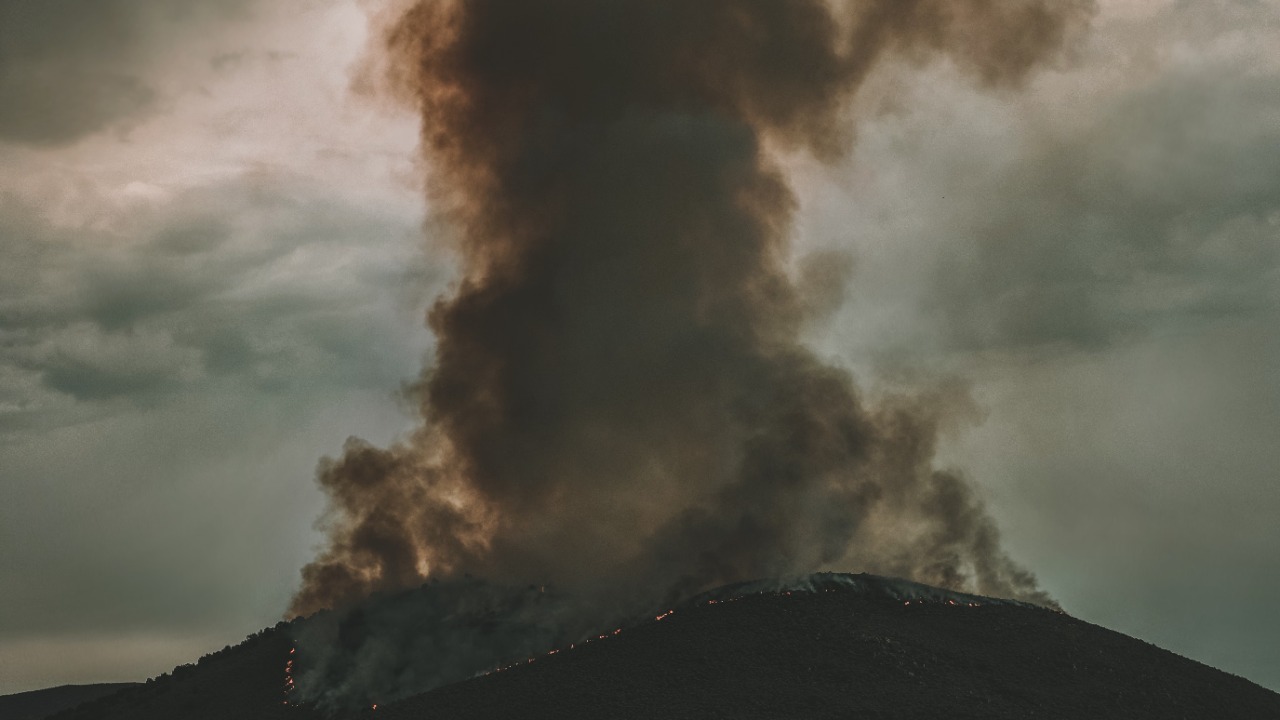

The Iron Fire has exploded to 37,000 acres in central Utah, forcing officials to order everyone in the town of Eureka to leave immediately. The fast-moving wildfire has turned a historic mining community into an active evacuation zone, with firefighters racing to keep flames away from homes, power infrastructure, and the main highway corridor.
As smoke thickens over Juab County and nearby valleys, the Iron Fire has become a test of how well a small rural town can mobilize under a sudden, high-stakes evacuation order. Decisions made over the next few days will shape not only Eureka’s safety, but also how quickly the region can recover once the fire line finally stops moving.
How the Iron Fire turned Eureka’s evacuation warning into a “leave now” order
Local authorities initially tracked the Iron Fire as it burned through dry grass, brush, and timber in the hills outside Eureka. With high winds and low humidity pushing the flames across rugged terrain, the fire grew rapidly to an estimated 37,000 acres, large enough to threaten the town’s edge and trigger a full evacuation directive for residents. Officials described the situation in Eureka as a “leave immediately” order, reflecting the shift from precaution to urgent life-safety action as the fire perimeter expanded toward homes and businesses.
The town sits along a narrow corridor of State Route 6, with steep slopes and limited access roads that can quickly become choke points when smoke reduces visibility. Once fire behavior models showed that the Iron Fire could reach structures or cut off escape routes, emergency managers moved from earlier alerts to a hard push for people to get out. The directive applied to the entire town, not just a few subdivisions, because embers and shifting winds can carry flames across seemingly safe distances in a matter of minutes.
Residents who had watched the fire from porches and side streets suddenly faced a compressed timeline to pack up essentials and go. Law enforcement vehicles moved through neighborhoods with lights and sirens, reinforcing the urgency of the order and guiding traffic toward designated evacuation routes. Officials aimed to clear Eureka before the fire’s most active afternoon and evening runs, when rising temperatures and gusty winds tend to push flames faster and farther.
As the Iron Fire grew, state and federal firefighting resources shifted into a more aggressive posture around the town. Crews worked to cut fire lines, protect structures, and position engines near vulnerable areas, while aircraft focused on slowing the fire’s approach to Eureka’s perimeter. That operational pivot, combined with the evacuation, marked a clear escalation in how authorities viewed the threat, from a large wildfire burning in the backcountry to a direct urban-interface emergency that placed an entire community at risk.
Why Eureka’s evacuation highlights growing wildfire risks across Utah
The order for everyone in Eureka to leave immediately is more than a local disruption. It shows how quickly fire conditions in Utah can shift from manageable to dangerous, especially in small towns surrounded by dry fuels. The Iron Fire’s 37,000-acre footprint has developed in a region where prolonged heat, limited precipitation, and gusty winds have combined to dry out vegetation that might once have slowed a blaze of this size.
Eureka’s situation also illustrates the vulnerability of historic communities that grew up around mining and rail lines before modern fire planning. Many structures sit close together, with older construction and limited defensible space, which increases the risk that a single ember storm could ignite multiple buildings at once. When a wildfire of this scale reaches the edge of such a town, evacuation becomes the most reliable way to prevent loss of life, even if firefighters succeed in holding the line at the last minute.
The Iron Fire is also affecting key transportation and economic links. State Route 6 is a major east-west connector in central Utah, and any closure or restriction near Eureka ripples out to freight traffic, commuters, and regional tourism. The town’s role as a waypoint for travelers and outdoor recreation means the evacuation order reaches beyond permanent residents to visitors who may not be familiar with local routes or emergency procedures.
Public safety officials have also had to consider the impact on critical infrastructure around Eureka. Power lines, communications towers, and water systems that serve both the town and nearby communities can be vulnerable to fast-moving flames and heavy smoke. Protecting those assets requires diverting some firefighting resources away from the main fire front, which is only feasible when residents are out of harm’s way and not competing for limited road space or emergency attention.
The evacuation has drawn wider attention because it reflects a pattern seen across the West, where fires that once stayed in remote canyons now reach populated areas more often. As more people live and work in the wildland-urban interface, towns like Eureka face rising pressure to plan for rapid evacuations, pre-stage shelters, and coordinate with state agencies long before the first plume of smoke appears on the horizon. The Iron Fire has turned those planning scenarios into a real-world stress test.
For many residents, the order to leave immediately also carries emotional weight. Eureka’s identity is tied to its historic downtown, old mine structures, and tight-knit neighborhoods. The prospect of losing familiar landmarks to a wildfire is not just a property concern but a cultural one, and it shapes how people interpret risk and respond to official instructions. The Iron Fire has forced that community reckoning into the present, rather than some hypothetical future season.
What officials and residents are preparing for as the Iron Fire keeps growing
As the Iron Fire continues to burn at roughly 37,000 acres, emergency managers are planning for multiple scenarios. The best case is that fire crews, aided by favorable weather, hold containment lines outside Eureka and nearby infrastructure. In that scenario, residents might be allowed to return relatively soon, though only after utility inspections, debris clearing, and air quality checks confirm that re-entry is safe.
A more challenging scenario would see the fire push closer to or into town, forcing extended evacuations and a more complex recovery. That possibility is one reason officials have urged residents to take the “leave immediately” order seriously and not attempt to return early. If flames damage power poles, transformers, or water systems, restoration work could take days or longer, even if homes remain standing. Local leaders would then need to coordinate temporary housing, financial assistance, and mental health support for displaced families.
Wildfire response teams are already thinking beyond the active burn. Once the Iron Fire is contained, attention will shift to erosion, flash flood risk, and water quality in the burned area. Steep slopes around Eureka can shed ash and debris during summer storms, which can threaten roads and downstream communities. Land managers will likely assess where to install erosion-control measures, repair trails, and adjust grazing or recreation access in the fire’s footprint.
For Eureka itself, the evacuation is likely to accelerate conversations about long-term resilience. That includes creating or updating defensible space around structures, improving fuel breaks near town, and refining evacuation maps and communication systems. Residents who experienced the rush to leave may push for clearer signage, more drills, and better support for people with limited mobility or no personal transportation.
State and local agencies may also revisit building codes and land-use policies in and around Eureka. The Iron Fire has shown how quickly a large blaze can put older structures at risk, and that reality could influence decisions about future development, retrofits, and incentives for fire-resistant materials. Insurance availability and cost could become another pressure point, especially if the fire leads to significant claims or reveals gaps in coverage among homeowners and small businesses.