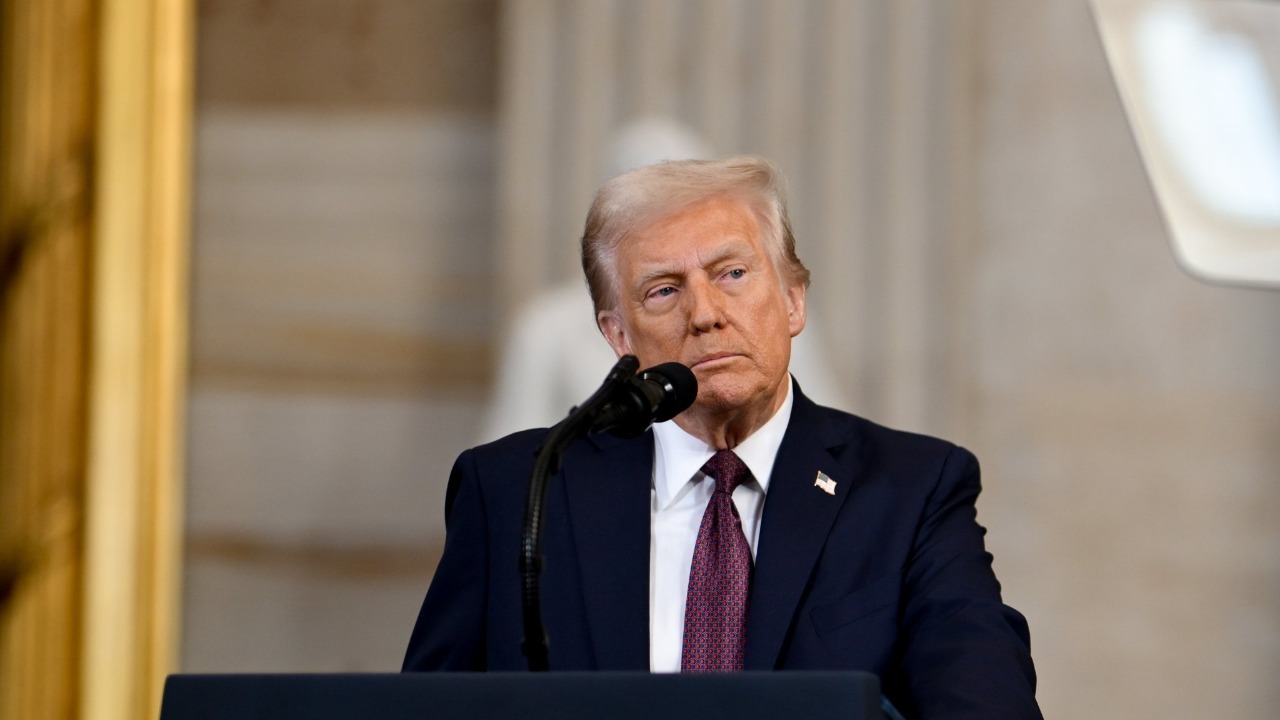

Donald Trump’s leadership style has remained one of the most debated topics in American politics, with critics arguing that his approach challenges traditional limits on presidential power while supporters view his actions as an effort to disrupt established political systems.
The debate is not only about individual policies.
It is about how much authority a president should have, how government institutions should respond to executive decisions, and how democratic systems maintain checks and balances.
Throughout Trump’s political career, his relationship with institutions, the media, courts, and political opponents has generated intense discussion about the boundaries of presidential power.
Why Critics Use the Term “Authoritarian”
Some critics describe Trump’s leadership approach as authoritarian because they believe he has challenged democratic norms and attempted to concentrate more power in the executive branch.
Their concerns often focus on issues such as:
Pressure on independent institutions.
Criticism of election processes.
Conflicts with government agencies.
Attacks on political opponents.
Supporters argue that Trump’s approach reflects a willingness to challenge institutions they believe are ineffective or unresponsive.
The disagreement reflects a larger political divide over whether aggressive leadership represents necessary reform or a threat to democratic traditions.
The Constitution of the United States establishes a system of separated powers designed to prevent any single branch of government from becoming too powerful.
The Importance of Checks and Balances
The American political system was designed around the idea that government power should be distributed.
The president leads the executive branch.
Congress creates laws and controls government funding.
Courts interpret laws and review government actions.
This structure is intended to create accountability.
Debates over presidential power often emerge when a president takes actions that opponents believe exceed traditional authority.
The Supreme Court of the United States plays an important role in resolving disputes about constitutional limits and executive actions.
Trump’s Relationship With Government Institutions
One defining feature of Trump’s political career has been his confrontational relationship with parts of the government system.
He has frequently criticized:
Federal agencies.
Government officials.
The judiciary.
Political opponents.
Supporters argue that this approach represents an attempt to challenge entrenched systems and increase accountability.
Critics argue that attacking independent institutions can weaken public trust.
The disagreement reflects a broader question faced by many democracies:
How should elected leaders challenge institutions without undermining them?
The Debate Over Executive Power
Presidents often expand the use of executive authority when they believe Congress is unable to act quickly.
This is not unique to Trump.
Previous presidents from both political parties have faced debates over executive actions involving immigration, national security, and economic policy.
The controversy arises when executive decisions are viewed as bypassing legislative processes.
The Congressional Research Service provides analysis on presidential authority and the constitutional relationship between the executive and legislative branches.
The balance between effective leadership and institutional limits remains a central issue in American government.
Election Disputes and Democratic Trust
One of the most significant controversies surrounding Trump has involved disputes over election results.
Following the 2020 presidential election, Trump and his allies challenged the outcome through legal and political efforts.
Courts across the country reviewed multiple election-related claims, with many challenges unsuccessful.
Election disputes have had lasting effects on public confidence and political debate.
The Cybersecurity and Infrastructure Security Agency (CISA) has described election security and public confidence as important parts of protecting democratic processes.
Maintaining trust in elections requires both secure systems and public acceptance of legitimate outcomes.
The Role of Media and Political Communication
Trump’s relationship with the media has also shaped discussions about his leadership.
He has frequently criticized news organizations, accusing some outlets of unfair coverage.
Journalists and media organizations have argued that criticism from powerful political leaders can create pressure on independent reporting.
Supporters argue that challenging media organizations is part of holding them accountable.
The debate reflects a larger question about the relationship between political leaders and the press.
In democratic societies, a free press is generally considered an important mechanism for public oversight.
Why Supporters Defend Trump’s Approach
Trump’s supporters often argue that claims of authoritarianism ignore the political context in which he operates.
They point to policies and actions they believe represent a direct response to voter concerns.
Supporters often emphasize:
Reducing government regulation.
Changing immigration policies.
Challenging established political structures.
Prioritizing national interests.
From this perspective, Trump’s willingness to confront institutions is viewed as evidence of strong leadership rather than a threat to democracy.
Why Critics Remain Concerned
Critics argue that democratic systems depend not only on elections but also on respect for institutions, legal processes, and peaceful transfers of power.
They argue that political leaders must accept limits on their authority even when they believe institutions are wrong.
Concerns about democratic erosion often focus on whether leaders attempt to weaken systems that provide accountability.
Researchers who study democracy often examine not only laws but also political behavior and institutional respect.
Organizations such as Freedom House analyze democratic conditions and political rights around the world.
The Global Context of Democratic Backsliding
The debate surrounding Trump is part of a wider global discussion about democracy.
Many countries have experienced tensions involving:
Strong executive leaders.
Political polarization.
Public distrust.
Challenges to independent institutions.
Democracy depends on more than holding elections.
It also depends on rules, norms, and institutions that limit the misuse of power.
Why Political Polarization Makes the Debate More Intense
The disagreement over Trump is intensified by deep political divisions in the United States.
Supporters and critics often interpret the same actions differently.
A decision viewed by one side as bold leadership may be viewed by another as an institutional threat.
Social media has amplified these disagreements by creating faster and more emotional political discussions.
The result is a political environment where debates about policy often become debates about the future direction of democracy itself.
The Importance of Historical Perspective
Questions about presidential power have existed throughout American history.
Different presidents have faced criticism over decisions involving:
Military authority.
Government surveillance.
Emergency powers.
Executive orders.
The Trump presidency has renewed these debates because of his communication style, political strategy, and relationship with institutions.
Understanding these issues requires looking beyond individual personalities and examining the broader structures of government.
The Future Debate Over Presidential Power
The discussion surrounding Trump’s leadership style will likely continue beyond individual elections.
It raises fundamental questions:
How much power should presidents have?
How should institutions respond to aggressive leadership?
How can democratic systems maintain accountability?
These questions are not limited to one political figure.
They are central challenges for any democracy.
Final Thoughts
The claim that Donald Trump is behaving like a dictator reflects a serious criticism from some opponents, while supporters reject that characterization and argue that his leadership represents a challenge to traditional political structures.
The broader debate is about power, accountability, and the limits of executive authority.
Democratic systems depend on disagreement, but they also depend on institutions strong enough to manage those disagreements.
The lasting impact of any presidency is measured not only by the policies it creates but also by how it affects the relationship between leaders, citizens, and democratic institutions.