
Slate, a new electric vehicle startup, is about to test whether a stripped-down work truck can win over buyers who care more about price and practicality than giant touchscreens. The company plans to open orders on June 24 for its bare-bones electric pickup, which targets about 150 miles of range with a standard battery and roughly 240 miles with a larger pack. Instead of chasing luxury buyers, Slate is pitching a simple, durable tool for contractors, fleets, and drivers who just want an affordable electric truck that gets the job done.
The launch drops Slate directly into a high-stakes debate over what mainstream electric vehicles should be: fully loaded status symbols, or basic machines that trade extras for lower monthly payments. Its order opening will offer an early test of how much real-world demand exists for the latter.
Key details of Slate’s minimalist electric truck and order launch
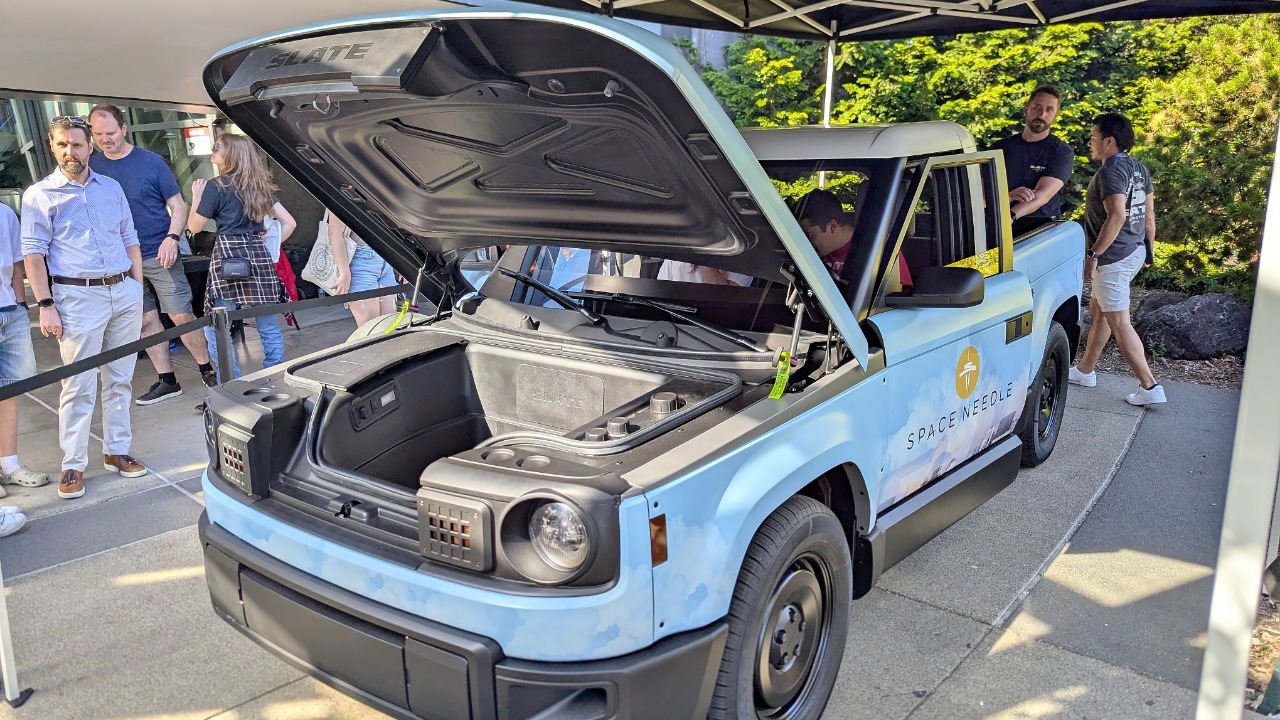
Slate describes its first model as a no-frills electric pickup with a focus on utility instead of luxury features. According to company information reported through new automaker profile, the truck is built around a simple cabin, durable materials, and a straightforward interface that keeps costs down. Rather than an oversized infotainment screen and complex driver-assistance suites, the emphasis is on basic controls, usable storage, and an open bed that can handle everyday work.
Range is the headline spec. Slate is targeting approximately 150 miles on its standard battery pack and about 240 miles with an optional larger unit, according to order details outlined in company’s ordering announcement. Those figures are aimed at daily driving and jobsite commutes rather than long-distance road trips, which aligns with Slate’s target customers: small businesses, tradespeople, and urban or suburban drivers who rarely exceed 100 miles in a day.
The truck rides on a platform that can also support an SUV variant. Reporting on the initial unveiling describes Slate’s architecture as flexible enough to underpin both a pickup and a more enclosed body style, with both sharing the same basic battery and motor setup. Early coverage of the debut notes that the vehicle is positioned as an affordable pickup or SUV alternative, with pricing and equipment kept intentionally modest, as detailed in a report on the official unveiling.
Inside, Slate’s approach is closer to a work van than a luxury EV. The cabin is expected to favor wipeable surfaces, large physical knobs, and minimal decorative trim. That aesthetic choice is directly tied to cost control. By skipping leather seats, complex ambient lighting, and multi-zone climate systems, Slate can allocate more of the bill of materials to the battery and drivetrain while keeping the sticker price as low as possible for an electric pickup.
How Slate’s bare-bones strategy differs from other electric pickups
Most electric trucks that have reached the market so far have launched at the high end, with large battery packs, powerful dual or tri-motor setups, and price tags that rival luxury sedans. Slate is betting that a significant slice of the market is more interested in a basic tool than in a rolling tech showcase. The company’s positioning, as described in the new automaker coverage, leans heavily into the idea of an electric work truck that feels familiar to drivers of older gasoline pickups.
That approach means tradeoffs. The targeted 150-mile standard range is lower than some rivals, but it allows Slate to use a smaller, cheaper battery pack. Smaller batteries reduce vehicle weight and raw material needs, which can help keep both costs and environmental impact down. For buyers who need a bit more flexibility, the roughly 240-mile extended-range pack described in the order announcement offers a middle ground without pushing the truck into premium pricing territory.
Slate’s decision to limit advanced driver-assistance and entertainment tech also sets it apart. While many EVs ship with complex software stacks and subscription-based features, Slate is pitching a more static product that should age more like a traditional pickup. For fleet managers, that simplicity can be an advantage. Fewer software systems mean fewer potential compatibility issues, simpler driver training, and less downtime from glitchy updates.
The flexible platform mentioned in the unveiling report also hints at a broader strategy. By designing a core chassis that can support both a pickup and an SUV-style body, Slate can spread development costs across multiple models. That is a common tactic among larger automakers, but for a startup, it is especially important. If the pickup gains traction with commercial buyers, the SUV variant could leverage the same parts bin and service network, improving the business case for both.
Why a stripped-down electric pickup could matter for the EV market
Slate’s launch comes as the electric vehicle market is shifting from early adopters to more price-sensitive mainstream buyers. Many shoppers are interested in going electric but are put off by high upfront prices and complex tech. A lower-cost, straightforward truck could speak directly to that group. The focus on 150 to 240 miles of range reflects how most pickup owners actually use their vehicles, particularly in trades where trucks function as mobile offices and equipment haulers rather than long-haul machines.
For small businesses, total cost of ownership can matter more than cutting-edge features. If Slate can deliver competitive pricing, predictable charging needs, and reduced maintenance, its bare-bones pickup could undercut gasoline trucks on lifetime costs. Electric powertrains have fewer moving parts and can reduce expenses on oil changes, brake wear, and fuel. When combined with a simple interior that is cheaper to repair, that equation may appeal to contractors, landscapers, and delivery operators.
There is also a broader strategic question at play: whether the next phase of EV adoption will be driven by high-margin premium models or by lean, utilitarian vehicles. Slate is clearly betting on the latter. If the June 24 order opening attracts strong interest, it could push larger automakers to revisit their own product plans and consider more basic electric pickups and SUVs that prioritize affordability.
The minimalist approach carries risk as well. Some buyers may see the lack of advanced driver-assistance systems and infotainment as a drawback, especially when many gasoline pickups now come loaded with screens and connectivity. Range expectations have also risen as more EVs surpass 250 or 300 miles on a charge. Slate will need to convince customers that for daily work, its targeted 150 and 240 mile figures are not a compromise but a smart match for real-world use.
What to watch as Slate opens orders and builds momentum
The June 24 order opening will provide the first real signal of market appetite for Slate’s concept. Reservation numbers, fleet interest, and geographic demand will all help determine how quickly the company can ramp production. If early orders skew heavily toward the larger battery pack, that could influence future trim planning and pricing strategy, especially if the 240-mile configuration becomes the de facto standard for buyers.
Another key factor will be how Slate manages manufacturing and supply chains. As a new automaker, it must secure reliable battery supplies, establish assembly capacity, and build a service network from scratch. The decision to focus on a simple, shared platform for both pickup and SUV variants, as described in the unveiling coverage, should help streamline production. Fewer configurations and options can reduce complexity on the factory floor and speed up deliveries.
Fleet partnerships will likely be central to Slate’s next steps. If the company can secure deals with regional contractors, utilities, or municipal agencies, those bulk orders could provide stable demand and valuable real-world feedback. Fleet buyers also tend to focus heavily on uptime and serviceability, which aligns with Slate’s emphasis on durable materials and straightforward mechanical layouts described in the initial profile.