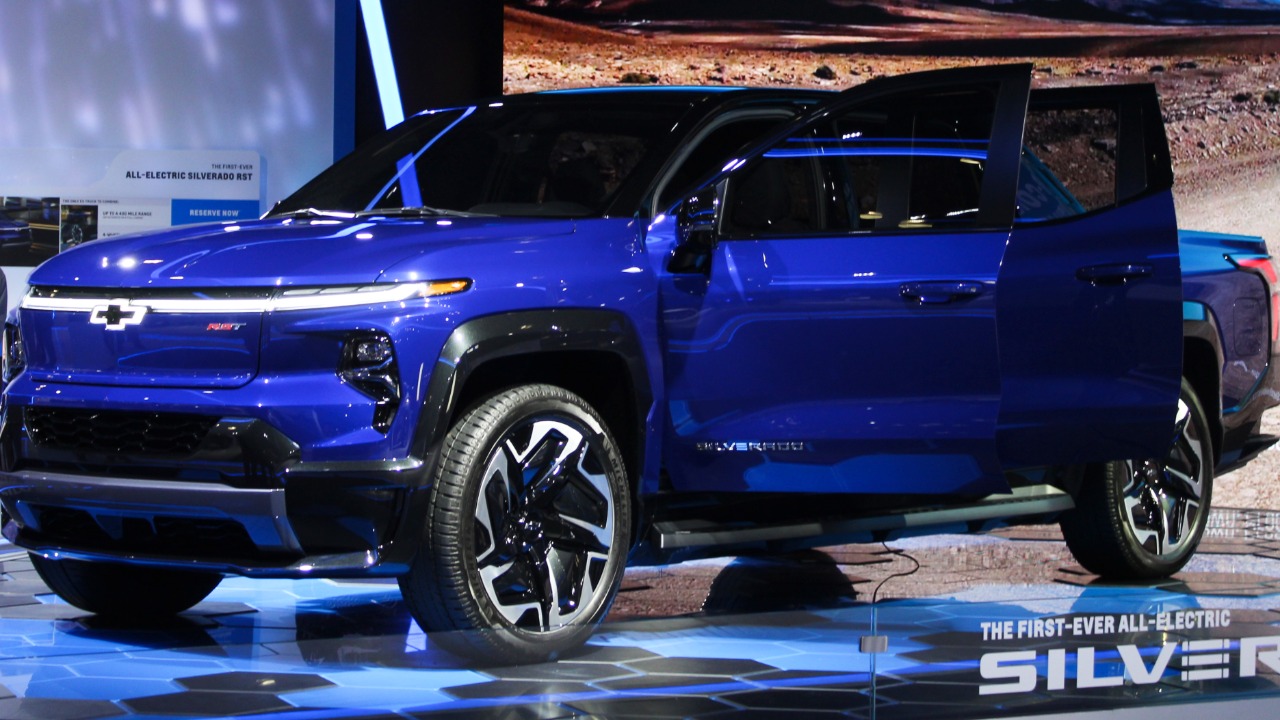

General Motors is recalling 1,191 examples of its new Chevrolet Silverado EV and GMC Sierra EV pickups because a software problem can trigger a faulty stability-control warning. The defect does not disable the trucks’ electronic stability control, but it can illuminate the dashboard alert even when the system is working normally, risking confusion for drivers and service technicians. The recall lands just as GM is trying to scale its Ultium-based electric trucks into mainstream work and fleet duty, turning a small software glitch into a broader test of trust in its EV strategy.
Details of the Silverado EV and Sierra EV recall
The recall covers a limited batch of 2024 and 2025 Chevrolet Silverado EV and 2025 GMC Sierra EV pickups, with GM reporting that 1,191 vehicles in total are affected. According to recall documents described by industry analysts, the trucks can display an electronic stability control malfunction warning even though the system itself continues to function as designed. The issue is traced to software in the brake system control module that can misinterpret certain conditions and trigger the warning light.
GM’s engineering review found that the problem is intermittent and does not change how the trucks steer, brake, or maintain stability, but the illuminated warning icon suggests a serious fault that is not actually present. Owners might believe the truck has lost a key safety feature and either park the vehicle unnecessarily or seek repairs that do not address an underlying mechanical issue. Because the defect involves a federally mandated warning indicator, GM chose to file a safety recall rather than treat it as a minor service campaign.
The affected pickups are built on GM’s Ultium platform and include both retail-oriented trims and fleet-focused versions. Reporting on the recall indicates that early production Silverado EV Work Truck models and some higher-spec trims fall within the campaign, along with initial GMC Sierra EV Denali units. A technical summary shared through GM-focused coverage notes that the fault is confined to a specific software calibration and does not extend to other Ultium vehicles that use different brake control coding.
What changed in GM’s approach with this specific software fault
GM plans to correct the issue with a software update to the brake system control module rather than a hardware replacement. Service departments will reflash the affected trucks with an updated calibration that prevents the erroneous stability-control warning from appearing when the system is operating correctly. According to recall information summarized by technical reports, the fix is expected to be relatively quick for dealers to apply, which should limit downtime for owners.
The campaign underscores how modern vehicles, especially EVs, increasingly rely on complex software layers that can create safety-adjacent problems without any mechanical failure. In this case, the physical components of the stability control system, such as wheel-speed sensors, hydraulic modulators, and steering-angle inputs, continue to operate as intended. The problem arises in how the control module interprets data and decides when to command the warning lamp. That distinction matters for regulators, since the warning indicator itself is part of the safety system defined under federal rules.
GM’s handling of the recall also reflects a broader shift in how automakers respond to software-related issues. Instead of waiting for a pattern of field failures, the company appears to have moved after internal testing and limited customer reports identified the false warning behavior. Analysts reviewing the recall documentation suggest that the company is trying to demonstrate a more proactive stance on EV quality, particularly after earlier challenges with other battery-electric models. The quick move to a formal recall, rather than a quiet service bulletin, signals that GM wants a clear record of addressing even perception-based safety concerns.
Why the stability-control warning problem matters for GM’s EV rollout
On paper, a misleading dashboard light might sound minor compared with high-voltage battery problems or brake failures. For early buyers of expensive electric pickups, however, a spurious stability-control alert cuts directly into confidence in the vehicle’s electronics. Stability control is a core safety feature that drivers expect to function silently in the background. When the truck claims that system is malfunctioning, owners may question what else in the software stack could be unreliable.
The Silverado EV and Sierra EV are central to GM’s effort to translate its truck dominance into the electric era. These pickups are marketed as high-tech work tools, with large battery packs, advanced driver-assistance features, and heavy integration of software for everything from towing aids to charging management. A recall that stems from a software calibration miscue reinforces the perception that EVs are computers on wheels, where bugs can surface in places drivers associate with traditional mechanical reliability. Coverage from truck-focused outlets has already framed the issue as another reminder that early adopters often serve as de facto beta testers.
Timing also matters. GM is in the middle of ramping up production of Ultium-based trucks for both retail customers and large commercial fleets, including utilities and delivery companies. Fleet buyers typically prioritize uptime and predictable service schedules. A recall that requires every affected truck to visit a dealer, even for a short software update, can disrupt those plans and add administrative overhead. While the number of vehicles involved is small compared with GM’s overall truck volume, the clientele includes influential customers whose feedback can shape broader adoption of electric work vehicles.
Regulators and safety advocates are watching how automakers handle software-heavy safety systems as well. Federal rules were written around hardware components and straightforward warning indicators, not complex code that can misinterpret sensor data. When a vehicle signals a safety-system failure that does not exist, it raises questions about how those indicators should be validated and audited. GM’s decision to treat the false stability-control warning as a recall-worthy defect sets a precedent that other manufacturers may feel pressure to follow when similar issues arise.
What comes next for GM, dealers, and EV truck owners
For owners of affected Silverado EV and Sierra EV pickups, the immediate next step is a visit to an authorized dealer for the brake control module update. GM will notify customers by mail, and dealers will perform the software reflash at no charge. Based on the technical scope described in recall summaries, the procedure should not require parts replacement, which should help service departments move trucks through quickly.
Some EVs in GM’s portfolio support over-the-air updates for certain modules, but the recall documentation indicates that this particular fix will be handled through dealerships. That choice suggests either that the relevant brake system software is not yet enabled for remote updates, or that GM and regulators prefer the added verification that comes with an in-person service visit for any safety-related calibration. As GM expands its connected-vehicle capabilities, the company faces a strategic decision about which safety fixes can be pushed wirelessly and which should remain under dealer control.
Looking ahead, GM is likely to scrutinize its validation processes for safety-critical software even more closely. The false stability-control warning problem emerged early in the life of the Silverado EV and Sierra EV, which may have limited the number of trucks built with the affected calibration. However, as production scales into tens of thousands of units, even small software oversights can quickly translate into large recalls. Engineers working on future Ultium-based models will be under pressure to improve test coverage for scenarios that might trigger incorrect warnings, not only outright system failures.
The recall also feeds into a broader conversation about how automakers communicate with EV customers. Owners who see a stability-control alert may reasonably worry that their truck is unsafe to drive, even if GM’s investigation concludes that the system still functions normally. Clear messaging in recall notices, dealer explanations, and digital owner portals will be essential to prevent confusion or unnecessary fear. Some observers argue that EV manufacturers should consider more descriptive in-vehicle messages that distinguish between a confirmed malfunction and a software-detected anomaly, though such changes would require careful coordination with safety regulators.