
For SUV buyers who plan to keep a vehicle for a decade or more, reliability is not a luxury feature; it is the whole point. A small group of models has built a reputation for crossing 300,000 miles without a major mechanical crisis, turning higher upfront prices into long-term value. These high-mileage workhorses share common traits in engineering, maintenance needs, and ownership costs that set them apart from the rest of the market.
How a handful of SUVs earned 300,000‑mile reputations
Long-distance durability is rarely an accident. The SUVs that routinely reach 300,000 miles tend to have conservative powertrains, proven components, and a long track record of incremental refinement. Data that tracks vehicles past 200,000 miles, such as the models highlighted among vehicles proven to, consistently features the same names, and those nameplates often go far beyond that threshold when maintained correctly.
Body-on-frame construction remains a common thread. Traditional SUVs built on truck platforms, such as full-size models used for towing and off-road duty, are designed to handle heavy loads and rough roads. This structure tolerates wear that would fatigue lighter unibody designs, which helps explain why owners routinely report odometer readings well into the 300,000‑mile range on long-running models. A stout ladder frame, combined with simple steel suspension components, can be rebuilt or refreshed over time without requiring an entirely new vehicle.
Powertrain choices also matter. High-mileage SUVs usually rely on naturally aspirated V6 or V8 engines that prioritize durability over outright efficiency. These engines often use conservative compression ratios, port fuel injection, and proven automatic transmissions with relatively few gears compared with newer designs. While they may trail modern turbocharged four-cylinders in fuel economy, their simpler hardware reduces the number of potential failure points over hundreds of thousands of miles.
Automakers that keep a platform in production for many years quietly refine weak spots. Over multiple model cycles, they update gaskets, cooling components, and electronics that were trouble-prone in early versions. By the time an SUV develops a reputation as a 300,000‑mile candidate, its underlying architecture has usually been stress-tested in fleets, off-road use, and heavy towing, with running changes that address real-world failures.
Specific SUVs that routinely cross the 300,000‑mile mark
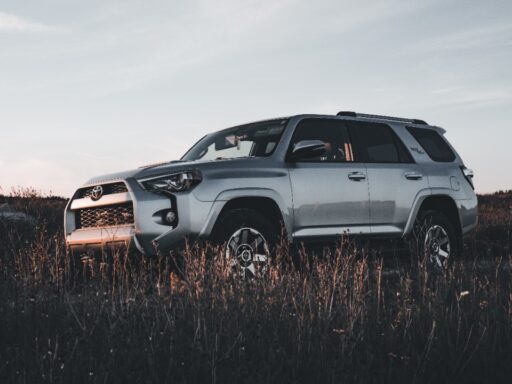
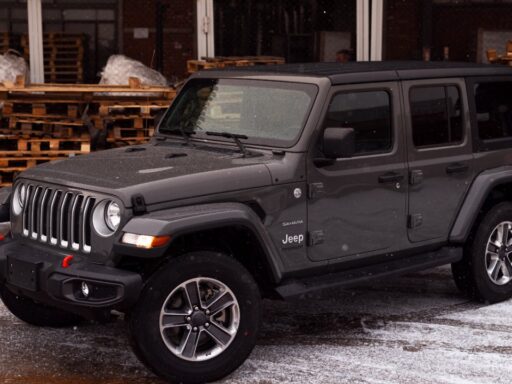
Within that broader pattern, several specific SUVs stand out. Long-running midsize models with truck-based platforms are frequent high-mileage champions. Owners who keep up with basic maintenance often share stories of these vehicles reaching 300,000 miles on original engines and transmissions, with only routine wear items such as brakes, shocks, and belts replaced along the way.
Full-size SUVs built on half-ton pickup frames also appear again and again in longevity data. Their heavy-duty cooling systems, large transmissions, and robust rear axles are designed for towing trailers and carrying families, which translates into a large safety margin in everyday driving. When used mostly for commuting and road trips, that overengineering helps components last far beyond the typical 150,000‑mile trade-in point.
Some crossovers have joined this high-mileage club as well. Although they ride on car-based unibody platforms, a few models pair reliable V6 engines with conservative automatic transmissions and simple all-wheel-drive systems. When these crossovers avoid complex air suspensions or dual-clutch gearboxes, they can rival traditional SUVs for longevity while offering better fuel economy and a smoother ride.
Fleet use provides another clue. SUVs that serve as police vehicles, government transports, or commercial shuttles often accumulate extreme mileage in a short time. When agencies consistently buy the same model year after year, it signals confidence in that SUV’s ability to survive high idle hours, harsh climates, and constant stop-and-go driving. Retired fleet vehicles with 200,000 miles that still run reliably suggest that private owners, who typically drive more gently, can reasonably expect even longer service lives.
Why ultra-durable SUVs matter more in the current market
Longevity has taken on new weight as vehicle prices and financing costs climb. With average transaction prices rising and more buyers stretching loans over six or seven years, an SUV that can run to 300,000 miles without a major repair offers a form of financial insulation. Owners who keep a durable SUV for 12 to 15 years can spread that initial cost over a far longer period, often avoiding one or two replacement cycles compared with less reliable models.
Used-vehicle dynamics reinforce the appeal. High-mileage SUVs with strong reliability records hold their value because second and third owners trust that they can safely buy at 150,000 miles and still get many years of service. That confidence narrows depreciation curves and can make a new purchase easier to justify, since owners know they can recover more of the cost if they eventually sell.
Maintenance budgets also shift. While any 300,000‑mile SUV will need consumables such as tires, fluids, and suspension parts, the absence of major engine or transmission failures dramatically changes the cost profile. Instead of facing a single repair that can exceed the vehicle’s market value, owners spread smaller, predictable expenses over time. This pattern especially benefits families who rely on a single vehicle and cannot absorb the shock of a sudden multi-thousand-dollar repair.
There is an environmental angle as well. Extending the useful life of an SUV reduces the frequency of manufacturing new vehicles, a process that carries significant carbon and resource costs. Keeping one durable SUV on the road for 300,000 miles, instead of cycling through two or three less reliable models, cuts the embedded emissions associated with production, shipping, and scrappage. While fuel economy still matters, the total lifecycle footprint improves when a vehicle remains in service for longer.
How owners keep these SUVs out of the shop
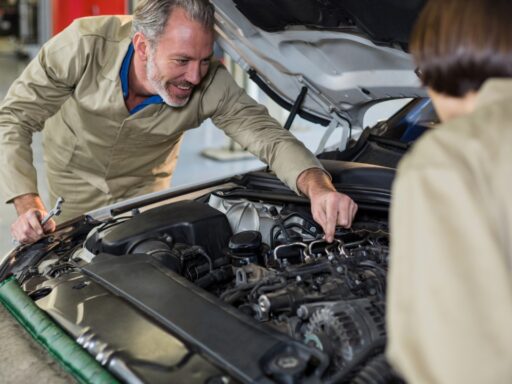
Even the most overbuilt SUV will not reach 300,000 miles without disciplined maintenance. Owners who achieve that milestone tend to follow oil change intervals closely, use the correct fluid specifications, and replace timing belts or chains on schedule. Many also treat transmission and differential services as non-negotiable, especially on four-wheel-drive models that operate under heavy loads or in severe climates.
Addressing small issues early is another shared habit. High-mileage owners often repair minor coolant leaks, worn bushings, or early-stage misfires before they cascade into larger failures. That approach keeps stress off major components and avoids the kind of deferred maintenance that can turn a reliable SUV into a money pit in its second decade.
Driving style plays a quiet but significant role. SUVs that reach 300,000 miles are usually driven with mechanical sympathy, with smooth acceleration, limited full-throttle towing, and moderate cruising speeds. Cold starts, especially in winter, are handled with short warm-up periods before heavy throttle. Over hundreds of thousands of miles, those habits reduce wear on piston rings, bearings, and transmissions.
Finally, parts quality matters. When suspension components, sensors, or gaskets eventually fail, owners who choose high-quality replacements, often original equipment or equivalent, help preserve the SUV’s long-term reliability. Cheaper parts may save money in the short term but can introduce new failure points that undermine the vehicle’s reputation for durability.
What the next generation of long-lasting SUVs may look like
The traits that define today’s 300,000‑mile SUVs are evolving as the industry shifts toward electrification and more complex driver-assistance systems. Electric SUVs, for example, eliminate traditional engines and transmissions, which removes many historical failure points. Their drivetrains have fewer moving parts, and early data from high-mileage electric fleets suggests that motors and gearboxes can run for hundreds of thousands of miles with minimal intervention.
At the same time, batteries introduce a new long-term variable. For an electric SUV to match the 300,000‑mile benchmark without a major repair, its battery pack must retain usable range and avoid costly replacement. Advances in battery chemistry, thermal management, and fast-charging controls will determine whether the next generation of electric SUVs can build the same trust that long-running internal combustion models enjoy today.