
Carlsbad, New Mexico, is bracing for temperatures that could reach 108 degrees as a punishing heat wave tightens its grip on the interior West. The forecast high would push the city toward record territory, underscoring how quickly early summer heat is escalating across the region.
Residents, local officials, and energy operators are all watching the thermometer, since a prolonged stretch near or above 105 degrees can strain power systems, dry out rangeland, and raise health risks well before the heart of summer.
Heat builds over Carlsbad and the wider interior West
Forecasts for Carlsbad call for a peak near 108 degrees as a dome of high pressure intensifies over the Western United States. The pattern traps hot, dry air over the same area for days at a time, allowing temperatures to climb several degrees higher with each afternoon. In Carlsbad, which already sits in a warm desert basin, that setup often translates into triple digit highs and very warm nights.
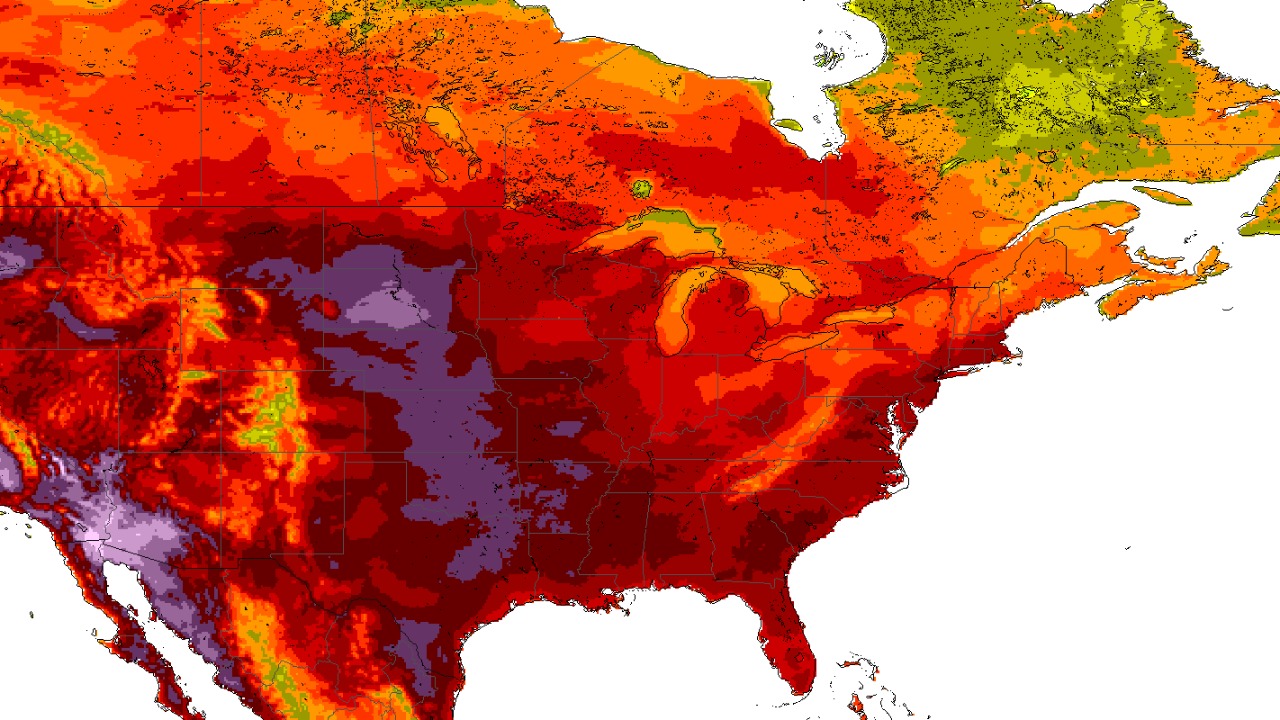
The projected 108 degree reading comes as many locations from southern New Mexico to the lower Colorado River Valley are also expected to flirt with or exceed 105 degrees. In some valleys and canyons, the heat index can climb even higher because of low air movement and reflected sunlight from pavement and rock. Together, those factors turn cities like Carlsbad into localized heat islands where temperatures stay elevated well after sunset.
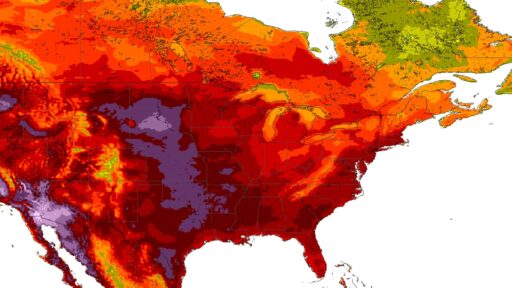
Regional forecasts describe a broad, persistent heat event stretching from West Texas through New Mexico and into parts of Arizona, Utah, and Nevada. In that zone, daytime highs above 100 degrees are expected to be common, with the hottest pockets pushing into the 110 degree range. Carlsbad sits near the eastern edge of that core, which helps explain why its forecast is so extreme compared with some higher elevation communities nearby.
Meteorologists point to a strengthening ridge of high pressure that is both expansive and vertically deep. This feature suppresses cloud formation, which means nearly full sun from midmorning through late afternoon. With little moisture in the air, the sun’s energy goes directly into heating the ground and the air above it, a setup that favors rapid warming on consecutive days.
The same pattern has been linked to earlier hot spells across the Southwest this year, and its reappearance now suggests the region may be entering a stretch where intense heat waves recur with shorter breaks in between. For Carlsbad, that raises the odds that 108 degrees will not be a one day outlier but part of a broader run of very hot afternoons.
Why an extreme 108 degree day in Carlsbad has outsized consequences
Carlsbad’s projected high matters because it falls in a range where heat becomes dangerous for people who work outside or lack reliable cooling. Public health guidance often treats 105 degrees as a threshold where heat illnesses such as heat exhaustion and heat stroke become much more likely, especially for older adults, children, and those with chronic medical conditions. When the forecast climbs into the upper 100s, that risk accelerates.
Many residents in Carlsbad are employed in outdoor sectors such as oil and gas production, construction, and agriculture. Long shifts on drilling pads, road projects, or ranchland under a 108 degree sun can quickly lead to dehydration and overheating if employers do not adjust schedules or provide shaded rest breaks and water. Emergency departments in hot weather regions often see spikes in heat related visits during similar events.
High temperatures of this magnitude also place heavy demand on air conditioning, which can strain local power infrastructure. When thousands of households and industrial sites run cooling systems at full output through the late afternoon and evening, utilities must keep enough generation and transmission capacity online to avoid rolling outages. Any failure can be especially disruptive in a city where the outside air is hot enough to become dangerous within a short time if indoor cooling fails.
Carlsbad’s economy adds another layer of vulnerability. The city is a hub for energy production and industrial activity in southeastern New Mexico, with large facilities that rely on continuous power and safe working conditions. Extreme heat can force operators to slow certain processes, modify work shifts, or invest in additional cooling for equipment and control rooms, all of which carry financial costs.
Water demand also tends to climb during heat waves, as residents irrigate landscaping, livestock require more supply, and industrial users run cooling systems harder. In an arid region where groundwater and river flows are already under pressure, a stretch of days near 108 degrees can intensify competition for limited resources. Over the longer term, repeated hot spells contribute to soil moisture loss and vegetation stress that feed into wildfire risk across the broader region.
The projected high in Carlsbad fits into a pattern of intensifying Western heat documented over recent years. Climate assessments have linked rising average temperatures to more frequent and severe heat waves, particularly in interior desert and semi arid zones. When a city that is already accustomed to hot summers begins to flirt with upper 100s more often, it signals that the baseline is shifting in a way that affects planning for housing, infrastructure, and public health.
Local officials and forecasters are urging residents to take the forecast seriously. Recommended steps include limiting outdoor activity during the hottest part of the day, checking on neighbors who might not have reliable air conditioning, and never leaving children or pets in parked vehicles. For travelers passing through Carlsbad on highways that cross the region, the 108 degree forecast is a reminder to carry extra water and to anticipate the possibility of vehicle overheating or tire failures on superheated pavement.
The broader Western heat wave has drawn attention because it is not confined to a single state or short burst of hot weather. Instead, it appears as part of a larger pattern of high pressure that has been building over the interior West and intensifying with each passing day. In that context, Carlsbad’s 108 degree forecast functions as a visible marker of how severe the pattern has become.
How Carlsbad and the region may navigate the heat in the days ahead
Looking beyond the immediate forecast, the key question for Carlsbad is how long the extreme heat will persist and whether the city will see any meaningful nighttime relief. Extended heat waves, where minimum temperatures stay elevated, are often more dangerous than single day spikes because they deny residents the chance to cool down and recover. If overnight lows remain in the upper 70s or low 80s, vulnerable people face a higher risk of cumulative heat stress.
Forecasters tracking the Western ridge of high pressure expect it to linger, although subtle shifts in its position can nudge temperatures a few degrees up or down in specific locations. For Carlsbad, a slight eastward drift could keep highs near or above 105 degrees for several days, while any weakening of the ridge would allow modest cooling and possibly some cloud cover. At this stage, the pattern still favors more hot days than cool ones.
Local agencies are likely to respond with a mix of short term and longer term measures. In the near term, that can include opening cooling centers, extending pool and library hours, and coordinating with community organizations to reach residents who lack home air conditioning. Employers may adjust work schedules so that the most physically demanding tasks occur in the early morning or evening instead of midafternoon.
At the same time, planners in Carlsbad and across southeastern New Mexico are watching how this heat wave interacts with longer running trends. Repeated episodes of 105 to 110 degree heat encourage discussions about building codes that favor better insulation, incentives for high efficiency air conditioning, and urban design that adds shade and reflective surfaces to reduce local heat buildup.