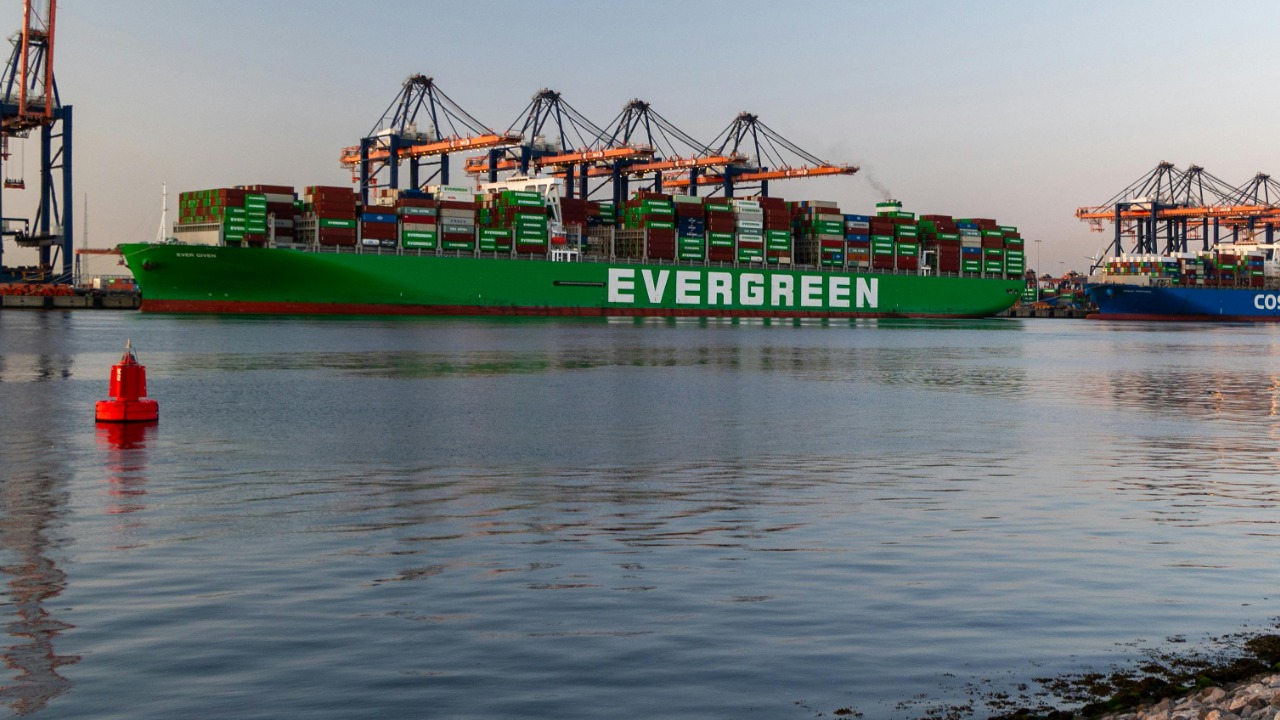

The newest generation of ultra-large container vessels can carry more than 24,000 standard containers at a time, turning each voyage into a floating logistics hub. Their scale has quietly reshaped how goods move, how ports are built, and how fragile global supply chains can become when something this big goes wrong.
How container ships grew into 24,000-box giants
Container ships began as relatively modest cargo carriers in the second half of the twentieth century, built around the simple idea of stacking standardized steel boxes on deck and in holds. A standard twenty-foot equivalent unit, or TEU, became the basic measure of capacity, and ship designs evolved to maximize how many of these units could be stowed safely and efficiently. As global trade expanded, shipowners kept stretching hulls and widening beams to fit more containers without changing the basic logic of the box-based system described in guides to container ships.
During the 1990s and early 2000s, capacity climbed from a few thousand TEU into the five-digit range as carriers chased economies of scale on long-haul routes between Asia and Europe or North America. Each new class of vessel nudged dimensions higher, from so-called Panamax ships that could just squeeze through the old Panama Canal locks to post-Panamax and then ultra-large designs that ignored canal limits and focused instead on deep-water hub ports. Naval architects optimized hull forms, propulsion systems, and deck layouts so operators could move more cargo per unit of fuel and crew.
The leap to ships able to carry more than 24,000 containers came once builders pushed length, width, and height to near practical limits for open-ocean service. These giants stack containers in towering rows above deck and in cavernous below-deck cell guides, with overall capacity measured in the mid-20,000 TEU range. To keep such loads stable, designers rely on sophisticated load planning, high-strength lashing systems, and powerful engines that can maintain schedule reliability even when fully loaded.
Scale is not just a matter of size for its own sake. Each additional row of containers and each extra tier above deck can translate into lower slot costs for carriers, which in turn can reduce per-unit shipping costs for manufacturers and retailers. The result is a fleet of record-setting vessels that sit at the top of a carefully tiered hierarchy, with smaller feeder ships carrying boxes from regional ports to the deep-water hubs that can handle these giants.
Why the 24,000-container threshold matters now
The ability to move more than 24,000 containers in a single sailing has transformed the economics of global trade. On the busiest routes, a single ultra-large ship can replace two or three smaller vessels, cutting fuel use per container and consolidating crew, maintenance, and charter costs. For large cargo owners that can fill significant portions of a ship, this scale supports just-in-time supply chains that depend on predictable, low-cost ocean transport.
The same concentration of cargo, however, heightens risk. When a ship of this size is delayed by congestion, weather, or mechanical problems, tens of thousands of containers are held up at once. The blockage of a major canal by a large container vessel showed how quickly a single incident can ripple across schedules, leaving ships queueing for passage and cargo stranded far from destination markets. The sheer volume on each voyage means that any disruption can affect retailers, factories, and consumers across several continents simultaneously.
Port infrastructure has been forced to keep pace. Only a limited number of terminals have the deep water, long berths, and high-capacity cranes needed to work a 24,000-TEU-class ship efficiently. These facilities must handle intense peaks of activity when a giant vessel arrives, then sit relatively quieter between calls. Investments in stronger quays, taller gantry cranes, expanded yard space, and digital planning tools are all driven by the need to turn these huge ships around quickly without clogging local road and rail links.
Environmental impact is drawing growing scrutiny as well. Ultra-large ships can be more fuel efficient per container than smaller vessels, but their total emissions are still substantial. Regulators and industry groups are pushing for cleaner fuels, slower steaming speeds, and new propulsion technologies. When a single ship carries such a large share of trade on a route, choices about its fuel and operating profile carry outsized weight in emissions inventories and climate policy debates.
Safety and cargo integrity present another set of challenges. Stacking containers high above deck raises the stakes for lashing failures and rough-weather incidents. Investigations into container losses at sea have pointed to issues such as misdeclared weights, uneven loading, and extreme rolling motions that can occur on very wide hulls. With more than 24,000 boxes aboard, even a small percentage of damaged or lost containers can represent a significant financial and environmental cost.
Why container ships may not grow much beyond today’s giants
Although shipyards have demonstrated that vessels can now carry more than 24,000 containers, several constraints suggest that this may be near the upper practical limit. Analysts of ship design and port operations argue that further gains in capacity would require disproportionately large investments in terminals, channels, and supporting infrastructure. Many of the ports that handle the largest ships already operate close to the depth and crane height limits described in assessments of why container ships.
Hydrodynamics and structural engineering also impose boundaries. As hulls grow longer and wider, bending loads increase and the ship’s behavior in heavy seas becomes harder to manage. Designers must balance cargo capacity against structural strength, maneuverability, and fuel efficiency. At some point, adding another row of containers or another tier above deck creates more problems than savings, especially when insurance and classification rules are taken into account.
Operational complexity is another brake on growth. Planning the stowage of more than 24,000 containers for multiple port calls requires advanced software and close coordination between carriers, terminals, and inland transport providers. Each port call becomes a large-scale puzzle in which missteps can cascade into delays and congestion. Carriers are already experimenting with ways to spread risk and improve reliability, including more flexible schedules, additional smaller ships on some routes, and alliances that share capacity across fleets.
There is also a strategic shift in how shippers think about resilience. After years of disruption, some cargo owners are questioning the wisdom of relying on a few mega-vessels that call at a limited set of hubs. Diversifying routes, using a mix of ship sizes, and bringing production closer to end markets are all ways to reduce exposure to single points of failure. That shift in demand could limit appetite for even larger ships, regardless of what is technically possible in naval architecture.
What the future holds for mega-container shipping
Given these constraints, the next phase of container shipping is likely to focus less on building bigger hulls and more on making existing giants cleaner, smarter, and more reliable. Shipowners are investing in alternative fuels such as liquefied natural gas, methanol, and ammonia, along with energy-saving technologies like air lubrication systems and optimized hull coatings. For vessels that already carry more than 24,000 containers, even modest efficiency improvements can translate into meaningful emissions reductions across a trade lane.
Digitalization will also shape how these ships are used. Real-time tracking of containers, predictive maintenance for engines and cranes, and advanced berth planning tools can help ports and carriers handle high-volume calls with fewer surprises. Better data sharing between shipping lines, terminals, rail operators, and trucking companies can smooth the peaks that currently strain local infrastructure when a mega-ship arrives.
Port strategies are evolving in response. Some regions are doubling down on hub-and-spoke models, deepening channels and expanding terminals to attract the largest ships and the alliances that operate them. Others are exploring more distributed networks that rely on mid-size vessels and a larger number of ports, trading pure scale for flexibility and regional resilience. Policy decisions on dredging, land use, and public investment will influence which approach gains ground.