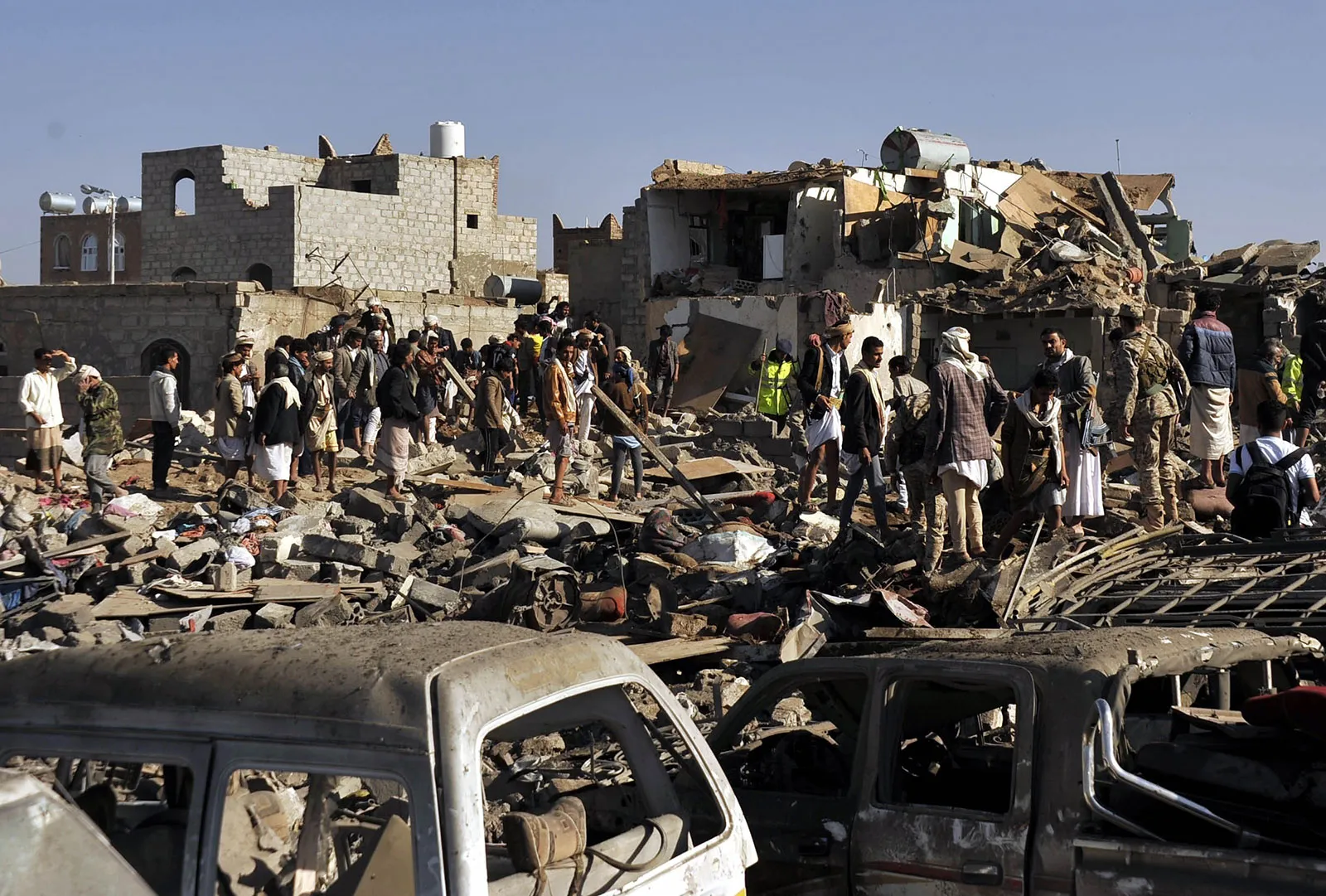

Yemen’s long period of “no war, no peace” is showing signs of breaking down. Military forces are mobilising, clashes have returned to several front lines, and the Houthis have expanded their confrontation with Saudi Arabia through missile, drone and maritime operations.
The Houthis have survived more than a decade of warfare against Yemen’s internationally recognised government, a Saudi-led coalition and repeated American, British and Israeli air strikes. They still control the capital, Sanaa, and much of Yemen’s heavily populated northwest. Yet another nationwide conflict may unfold under conditions significantly different from those that helped the movement consolidate its power.
Recent fighting in Dhale reportedly caused more than 30 casualties, while government and Houthi forces have been building up along a front stretching from the Red Sea coast towards the Saudi border. Reuters described the preparations as the most serious since the informal calm established after the 2022 truce.
The Anti-Houthi Camp Is Less Divided
One of the Houthis’ greatest advantages during the earlier war was the fragmentation of their opponents. Yemen’s government camp contained political parties, tribal forces, military units and southern separatists with competing objectives. Saudi Arabia and the United Arab Emirates also supported different factions, weakening the possibility of a unified campaign.
That environment has changed. Saudi Arabia has become the leading external power coordinating government-aligned forces, while the influence of the UAE-backed Southern Transitional Council has been reduced following recent political and military developments in southern Yemen.
Analysts cited in the original Al Jazeera examination of Yemen’s changing balance said the Presidential Leadership Council now appears less divided and more capable of coordinated decision-making. Greater unity does not guarantee battlefield success, but it could prevent the rivalries that repeatedly interrupted earlier anti-Houthi operations.
A coordinated campaign could apply pressure across several fronts instead of launching disconnected offensives. It could also improve the distribution of weapons, intelligence, air support and financial resources among government-aligned forces.
Tribal Opposition Is Becoming More Organised
The emergence of an anti-Houthi tribal alliance in al-Jawf could also make a renewed conflict more difficult for the movement. Al-Jawf lies east of Sanaa and has strategic importance because of its proximity to Houthi-controlled territory, Saudi Arabia and the neighbouring governorate of Marib.
Tribal relationships have always influenced Yemen’s wars. The Houthis built their power partly through alliances, negotiated submissions and agreements with communities outside their original stronghold in Saada. Organised tribal opposition could undermine that model by providing government forces with local fighters, intelligence, supply routes and social legitimacy.
Yemeni analysts told Al Jazeera that the developing alliance represents an unusual level of unity among tribes weakened by years of conflict and political fragmentation. Should fighting expand, those groups could support operations closer to the Houthis’ northern centre of power rather than limiting confrontation to distant southern front lines.
The durability of that unity remains uncertain. Tribal alliances can shift rapidly according to local grievances, political promises and battlefield conditions. Nevertheless, their emergence creates an additional challenge the Houthis did not face in the same organised form during earlier phases of the war.
Saudi Arabia May Fight Differently This Time
Saudi Arabia entered Yemen’s war in 2015 expecting a relatively rapid campaign that would restore the internationally recognised government. Instead, the intervention became a prolonged and costly conflict that failed to remove the Houthis from Sanaa.
A renewed Saudi role would likely be shaped by those earlier failures. Rather than relying predominantly on air strikes, Riyadh could place greater emphasis on unified Yemeni ground forces, intelligence, maritime security and pressure on Houthi supply networks.
Saudi calculations have also changed because the Houthis are again targeting the kingdom directly. The movement has claimed attacks against Saudi infrastructure and declared restrictions on Saudi-linked shipping through the Bab el-Mandeb Strait. Saudi Arabia has warned that threats against vessels will be met firmly.
The kingdom has major economic projects and international events connected to its Vision 2030 programme. Continued missile attacks, threats to airports and disruption of oil exports could convince Saudi leaders that postponing confrontation creates greater long-term risk than military escalation.
The Red Sea Campaign Has Changed International Attitudes
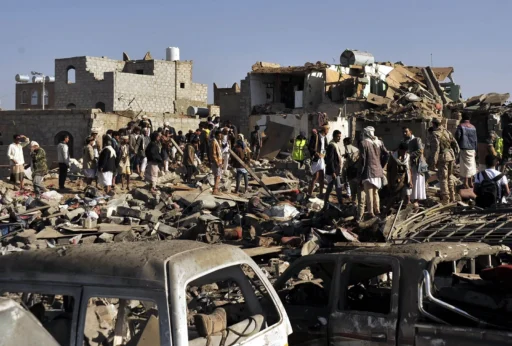
The Houthis previously benefited from international criticism of the Saudi-led coalition, particularly over civilian casualties, infrastructure damage and restrictions affecting humanitarian supplies.
That scrutiny has not disappeared. All parties remain legally responsible for protecting civilians. However, international attitudes towards the Houthis have hardened following their attacks on commercial shipping, strikes towards Israel and detention of United Nations and humanitarian personnel.
The movement attacked more than 100 vessels during its earlier Red Sea campaign, according to the Associated Press. Some targeted ships had little apparent connection to Israel, raising questions about the Houthis’ targeting claims and increasing shipping and insurance costs across the region.
Bab el-Mandeb connects the Red Sea with the Gulf of Aden and carries roughly 12 percent of global trade, including about a quarter of container traffic. Disruption can force ships to travel around the Cape of Good Hope, adding one or two weeks to journeys between Europe and Asia. The strategic importance of the route gives more governments a direct interest in weakening Houthi maritime capabilities.
A new Saudi-backed campaign could consequently receive greater diplomatic tolerance or external military assistance than the intervention launched in 2015.
Iran May Be Less Able to Provide Support
The Houthis retain a close relationship with Iran, which has provided political backing, military knowledge and assistance connected to missiles, drones and other weapons. However, regional warfare and pressure on Tehran could affect Iran’s ability to sustain the same level of support.
An analysis from the Sana’a Center for Strategic Studies argues that changes across Iran’s regional network may force the Houthis to reconsider their future position. They could become more independent, seek new international relationships or attempt to establish themselves as a leading force within the remaining “Axis of Resistance.”
Reduced Iranian capacity would not make the Houthis defenceless. The movement has developed local manufacturing, smuggling networks, experienced commanders and domestic revenue systems. However, disruptions to external expertise and specialised components could become increasingly important during a prolonged high-intensity war.
The Houthis Still Hold Major Advantages
A different war would not necessarily produce a Houthi defeat. The movement remains one of Yemen’s most organised military and political forces.
It has unified leadership, significant combat experience, fortified mountain positions and an extensive missile and drone arsenal. Its opponents may be more coordinated than before, but they still contain groups with different ambitions for Yemen’s political future.
The Houthis have also repeatedly used foreign military intervention to strengthen their nationalist narrative. External attacks can allow the movement to present itself as the defender of Yemeni sovereignty rather than one side in a domestic power struggle. Research published by War on the Rocks warns that outside pressure can reinforce Houthi recruitment and political messaging when civilian suffering becomes associated with foreign powers.
The outcome would therefore depend not only on weapons and troop numbers but also on whether anti-Houthi forces can maintain unity, protect civilians and offer a credible political alternative in areas they capture.
Civilians Would Pay the Highest Price
Any return to nationwide war would deepen an already severe humanitarian emergency. The United Nations projects that more than 21 million people may require assistance during 2026, while separate Security Council reporting has placed the number above 22 million. Food insecurity, damaged health services, displacement and declining humanitarian funding have left millions vulnerable even without full-scale fighting.
The United Nations’ 2026 humanitarian plan for Yemen warns that the country faces overlapping risks from conflict, economic deterioration, disease and climate shocks. Renewed air strikes, blockades and ground offensives would restrict aid access and place additional pressure on ports, roads, hospitals and water systems.
The UN special envoy has continued meeting Yemeni, Saudi and Omani representatives to preserve the relative calm achieved after the 2022 truce. The organisation has warned that recent events are moving in the opposite direction from de-escalation.
A More Difficult War Would Not Necessarily Be a Shorter One
The Houthis could enter another conflict facing stronger coordination among their enemies, growing tribal resistance, greater international hostility and uncertainty surrounding Iranian support.
Those changes may make territorial expansion more difficult and expose Houthi-controlled areas to pressure from several directions. They do not guarantee that the movement can be defeated or forced to surrender.
A renewed war could instead create another prolonged contest in which neither side can secure a decisive victory. Yemen would then experience the destructive consequences of full-scale conflict without achieving the political settlement needed to prevent the next one.