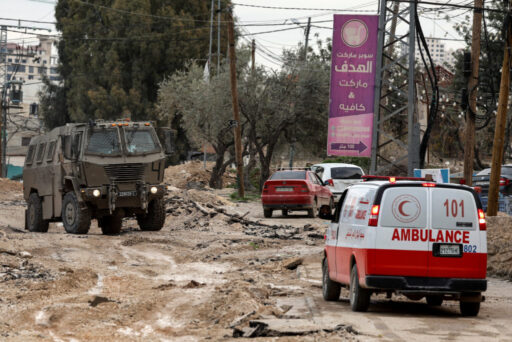
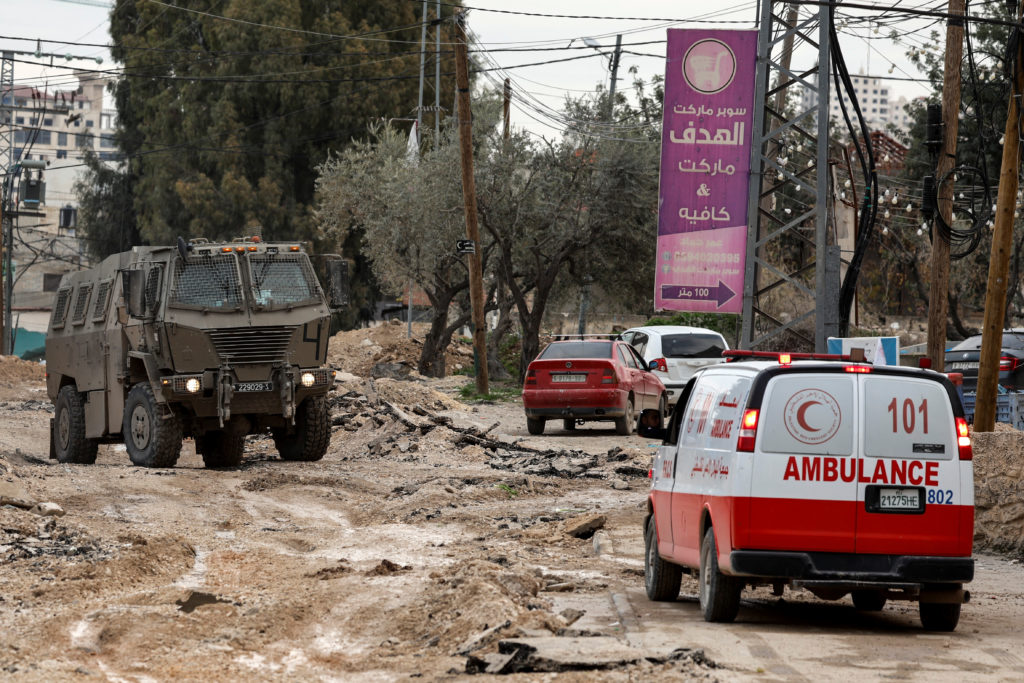

Israeli military closures around Nablus have left Palestinian patients facing long delays, blocked roads and unpredictable checkpoint inspections as they attempt to reach hospitals. Ambulances have reportedly been turned back or held for extended periods, while patients requiring urgent and routine treatment have been unable to travel freely between communities.
The restrictions were imposed after deadly violence near the village of Tal on July 24, 2026, where four Palestinians and two Israelis were killed. Israel’s military said it was pursuing suspects and preparing extensive counterterrorism activity. Palestinian residents said the confrontation began when Israeli settlers attempted to enter homes in the village. Roadblocks were subsequently established around Tal, Nablus and surrounding communities.
For patients, the practical consequence is that a journey that would normally take minutes may become an uncertain wait with no guaranteed route to treatment.
Ambulances Are Being Delayed at Checkpoints
Physicians for Human Rights Israel said the closures had effectively sealed off cities and villages, preventing medical teams from responding normally. Even checkpoints that temporarily reopened were reportedly conducting individual vehicle inspections, producing lengthy queues and delays.
An unborn Palestinian baby reportedly died after soldiers delayed an ambulance at the Awarta checkpoint. The vehicle had been dispatched from Qaryut to carry a pregnant woman in critical condition to a hospital in Nablus. The case was reported by AFP and cited by Arab News in its coverage of the closures.
Other pregnant women were reportedly forced to give birth before reaching a hospital. Physicians for Human Rights Israel said two delivered inside ambulances, while another gave birth at a clinic in Aqraba after medical teams could not evacuate her. In a separate case, an ambulance was turned back near an Israeli settlement after being denied passage.
These incidents show why restrictions affecting medical vehicles cannot be treated like ordinary traffic delays. A pregnant woman, trauma patient or person experiencing a cardiac emergency cannot simply postpone the journey until a checkpoint reopens.
Dialysis Patients Cannot Safely Miss Treatment
The closures have also affected patients whose conditions may not appear immediately life-threatening but still require treatment on a strict schedule.
The Palestine Red Crescent Society said roadblocks prevented 12 dialysis patients from reaching treatment. Dialysis removes waste products and excess fluid from the blood when a person’s kidneys can no longer perform that function adequately. Missing treatment can lead to dangerous fluid accumulation, electrolyte imbalances and other serious complications.
The Red Crescent opened 72 first-aid points across the northern and southern West Bank to reduce some of the access gaps. These temporary points may provide basic emergency assistance, but they cannot replace hospitals, dialysis centres, intensive-care units or specialist treatment.
The disruption therefore extends beyond ambulances responding to visible emergencies. Cancer appointments, surgery, rehabilitation, mental-health care, pregnancy monitoring and the management of chronic illnesses can all become harder when movement between towns is restricted.
The Nablus Hospital Raid Increased Fear
Medical access concerns intensified after Israeli forces entered Nablus Specialty Hospital while searching for injured suspects connected to the Tal confrontation.
The hospital’s director told the Associated Press that more than 50 armed soldiers and officers entered the facility, bound and questioned staff and patients, searched departments and arrested a seriously injured man. He said women and children inside the hospital were frightened by the operation. The Israeli military said it had detained suspects and searched more than 300 locations, although its statement cited by the AP did not specifically address the hospital director’s account.
The Israeli military separately told Reuters that two injured men had been apprehended at a Nablus hospital and transferred to security forces. Palestinian officials alleged that soldiers assaulted emergency-department staff during the raid.
Physicians for Human Rights Israel argued that entering an operating hospital in this manner undermined medical neutrality and disrupted the treatment of patients. The organisation said hospitals should not become locations where military activity intimidates healthcare workers or compromises care.
The Latest Closures Are Part of a Larger System
Movement restrictions in the West Bank did not begin with the July violence. Checkpoints, road gates, earth mounds, concrete blocks and permit requirements have shaped Palestinian travel for years.
The UN Office for the Coordination of Humanitarian Affairs documented 925 movement obstacles across the West Bank, including East Jerusalem, during a survey completed in December 2025. That was the highest number recorded in 20 years and approximately 43% above the two-decade annual average. The barriers permanently or intermittently affected the movement of about 3.4 million Palestinians.
Checkpoints and road gates represented nearly 60% of the documented obstacles. They do not only affect travel between the West Bank and Israel. Many divide Palestinian towns, villages, workplaces, schools and medical facilities from one another.
The Israeli government and military say movement controls are necessary to prevent attacks and locate armed suspects. Humanitarian and human-rights organisations argue that broad, unpredictable closures frequently affect entire civilian populations rather than only individuals suspected of violent activity.
Healthcare Obstruction Was Already Widespread
The current Nablus closures are especially concerning because the West Bank’s healthcare network was already operating under serious access pressure.
The World Health Organization recorded 233 attacks or interference incidents affecting healthcare in the West Bank during 2025. These affected 25 health facilities and 165 ambulances. Approximately 84% involved obstructed access, including checkpoint delays, vehicle searches, harassment of medical workers and restrictions on ambulance movement.
The same UN assessment found that 36% of more than 87,000 patient applications for permits to access East Jerusalem or Israeli medical facilities in 2025 were denied or remained pending. In 2022, the corresponding proportion was 18%.
East Jerusalem contains major hospitals offering specialist services that may not be available elsewhere in the West Bank. Delayed permits can therefore interrupt treatment even when a patient is not affected by a newly imposed road closure.
Patients Often Do Not Know Whether They Will Arrive
Médecins Sans Frontières has described a broader system in which checkpoints, road closures and military operations make even routine travel unpredictable.
In a July 2026 account, MSF described a woman from Azzoun Atma whose two-year-old daughter died in 2011 after the village gate remained closed during a medical emergency. The organisation also documented the woman’s more recent journey while pregnant, when she had to travel at night through an uncertain route to reach treatment.
MSF said patients leaving home for an appointment may not know whether they will reach the clinic or return that evening. Its teams have suspended some mobile activities in Qalqilya and Tubas because staff movement and safety could not be guaranteed. Patients who previously received care closer to home must now attempt the difficult journey to Nablus.
These restrictions also affect mental-health services. Therapy generally requires continuity, privacy and direct interaction. Appointments become less effective when patients repeatedly cancel because checkpoints are closed or when the journey itself exposes them to additional fear and stress.
Medical Transport Has Special Protection
International humanitarian law provides specific protection to the wounded, sick, medical workers, hospitals and medical vehicles during armed conflict. The International Committee of the Red Cross explains that transports carrying wounded or sick people must be respected and protected in the same manner as mobile medical units.
The ICRC’s explanation of humanitarian law in Israel and the occupied territories emphasises that the collection and treatment of wounded people and the movement of ambulances through checkpoints are governed by humanitarian obligations.
That protection does not mean military authorities can never conduct a security check. It does mean that checks, searches and movement restrictions must not unnecessarily prevent sick or wounded people from receiving timely care. Whether a specific incident constitutes a legal violation depends on its circumstances, but preventable delays that endanger patients raise serious humanitarian and legal questions.
Closures Can Harm an Entire Health System
A functioning health system depends on movement. Doctors and nurses must reach hospitals. Medicines, oxygen and laboratory supplies must be delivered. Ambulances must collect patients, and patients must attend follow-up appointments.
When one road is closed, traffic may be diverted onto longer and less suitable routes. When several entrances are blocked simultaneously, hospitals can lose access to both patients and staff. Emergency services may establish temporary medical points, but the wider system becomes increasingly fragmented.
OCHA reported that humanitarian organisations had documented 230 access incidents across the West Bank by the end of May 2026. Checkpoints and road restrictions were interfering not only with healthcare but also with aid delivery and other humanitarian operations.
The Human Cost Cannot Be Measured Only in Checkpoint Numbers
The number of checkpoints provides one measure of the restrictions, but it does not capture the uncertainty experienced by patients.
A person undergoing dialysis may not know whether treatment will be missed. A pregnant woman may have to decide whether to begin a dangerous journey before labour becomes urgent. An ambulance team may reach a closed gate without knowing whether it will reopen in five minutes or five hours.
The closures around Nablus followed a deadly and disputed confrontation, and Israel maintains that its operations are intended to prevent further violence. Yet measures imposed in the name of security can create additional danger when they prevent civilians from reaching medical care.
For West Bank patients, freedom of movement is not an abstract political issue. It can determine whether an ambulance arrives, whether a hospital remains accessible and whether treatment begins before it is too late.