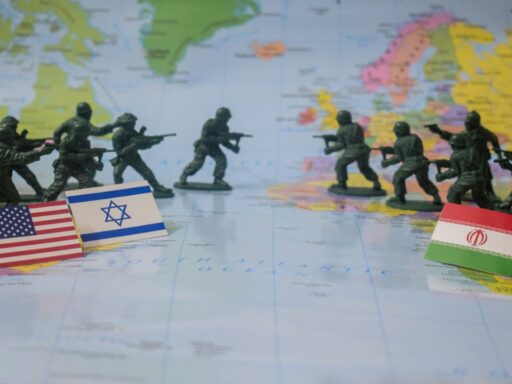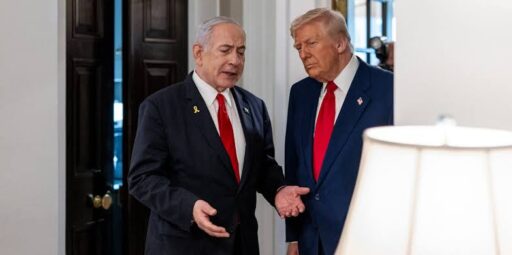
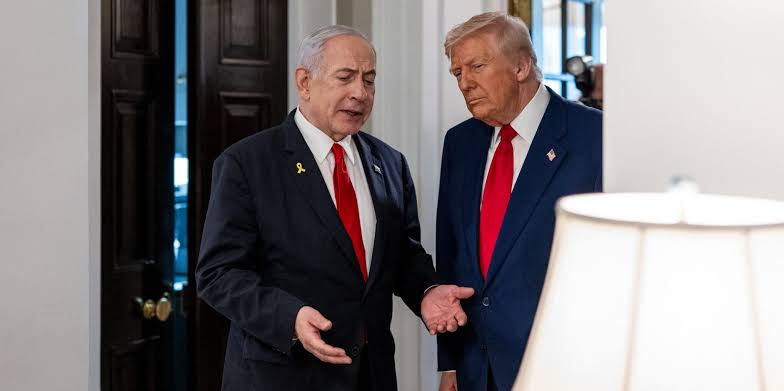

US President Donald Trump publicly expressed irritation with Israeli Prime Minister Benjamin Netanyahu shortly before the two leaders met at the White House, exposing fresh strain in a relationship that has remained strategically close but increasingly unpredictable.
The immediate disagreement concerned reports that Netanyahu planned to present intelligence about activity at Pickaxe Mountain, a deeply buried facility near Iran’s Natanz nuclear complex. Trump questioned why the Israeli leader’s planned message had appeared in the media before being discussed privately.
In an interview with Fox News, Trump said he already understood what was happening at the Iranian site and suggested Netanyahu was publicising the intelligence because he wanted the United States to remain militarily involved. Trump’s most pointed complaint was not simply about the information itself, but about the decision to announce the expected discussion publicly. The remarks were reported in detail by Reuters in its coverage of the Trump-Netanyahu meeting.
The exchange provided an unusually direct indication that Trump did not want Netanyahu to appear to be shaping American policy through media pressure.
Pickaxe Mountain Has Become the Latest Point of Disagreement
Pickaxe Mountain is the name commonly used for a heavily protected underground complex near Natanz, one of the most important centres associated with Iran’s nuclear programme.
The site has attracted renewed attention because of reports that Iran may be expanding underground infrastructure or moving nuclear-related equipment there. Its depth and location beneath a mountain could make it significantly harder to damage than an ordinary surface facility.
Netanyahu reportedly intended to share Israeli intelligence suggesting that Iran was rebuilding its nuclear capabilities while presenting itself as willing to negotiate. Trump responded by saying the United States was already monitoring the site and did not require a public warning from the Israeli prime minister.
An independent analysis from the Institute for Science and International Security notes that construction at the complex began around 2020 and that Iran originally described its underground halls as a replacement for an above-ground centrifuge assembly facility destroyed at Natanz. The precise current purpose of every underground area has not been independently verified.
Iran maintains that its nuclear activities are peaceful. Questions about its programme have become harder to resolve through inspections because international monitoring has been disrupted by the conflict and restrictions on access.
Trump Wants Space for Diplomacy With Iran
The dispute reflects a larger difference over how the United States should approach Iran.
Trump recently paused American attacks to create additional room for negotiations. US Ambassador to the United Nations Mike Waltz said the president was giving diplomatic talks “a little bit of room” after an escalating period of strikes. A senior administration official also said diplomacy remained Trump’s preferred outcome, while warning that military pressure could resume if Iran failed to negotiate seriously.
Trump subsequently said Washington was engaged in “good talks” with Tehran and that a possible agreement remained achievable. His comments suggested that he wanted to preserve flexibility rather than commit immediately to another major operation. The latest status of those negotiations was outlined in Reuters’ report on the US-Iran discussions.
Netanyahu has taken a more sceptical position. He has repeatedly argued that Iranian nuclear infrastructure must be dismantled and that negotiations should not provide Tehran with enough time to rebuild damaged facilities.
The difference is not necessarily over the stated objective. Both leaders say Iran must not obtain a nuclear weapon. Their disagreement concerns the timing, reliability and limits of diplomacy.
Netanyahu’s Influence in Washington Appears to Be Declining
When the United States and Israel launched military operations against Iran in February 2026, Trump and Netanyahu appeared closely aligned. Their governments coordinated frequently, and both leaders presented the campaign as a joint effort to weaken Iran’s nuclear and military capabilities.
That coordination has since become less consistent.
According to Axios’ account of the changing relationship, the leaders spoke almost daily during the early period of the conflict but communicated much less frequently in the weeks before the White House meeting. Netanyahu reportedly began relying more heavily on Secretary of State Marco Rubio for information about Trump’s plans.
Trump has also rejected or resisted several Israeli preferences. Netanyahu unsuccessfully objected to an American plan involving F-35 aircraft for Turkey, while the Israeli government was reportedly surprised by aspects of a US civil nuclear agreement with Saudi Arabia.
These developments suggest that Washington continues to consider Israeli security concerns but is less willing to allow Netanyahu to determine the direction of broader American policy.
The Relationship Has Already Survived Serious Arguments
Trump and Netanyahu have experienced political and personal disagreements before. Their relationship has repeatedly moved between strong public praise and visible frustration.
Reuters reported that an angry telephone conversation in June became public after Trump used extremely harsh language about Netanyahu. Trump later confirmed the substance of the report, making the disagreement difficult to dismiss as ordinary diplomatic speculation.
Trump has also attempted to restrain Israeli action in Lebanon when he believed further strikes could undermine negotiations involving Iran-backed Hezbollah. Netanyahu, by contrast, has argued that continuing military pressure is necessary to prevent armed groups from recovering.
These arguments reveal a fundamental tension. Netanyahu tends to view military pressure as the condition that makes diplomacy possible. Trump may use force aggressively, but he also wants the freedom to suspend operations and claim credit for a negotiated settlement.
Domestic Politics Raised the Stakes for Both Leaders
The meeting took place while both leaders were facing political pressure at home.
Netanyahu is approaching an Israeli election and has struggled in opinion polling. Appearing beside an American president has traditionally helped Israeli leaders demonstrate influence and international standing. A warm White House reception could therefore support Netanyahu’s attempt to present himself as the leader best positioned to manage Israel’s most important alliance.
Sources cited by Reuters said Netanyahu hoped to secure Trump’s support ahead of the October 27 election. Trump, however, had not offered an explicit endorsement before the meeting.
Trump faces a different political problem. The conflict with Iran has brought economic disruption, higher prices and criticism from parts of his political movement that oppose prolonged American involvement in another Middle Eastern war. The Associated Press preview of the meeting described Trump as being under pressure to limit the conflict before the US midterm elections.
Allowing Netanyahu to appear to dictate American military policy would therefore create both strategic and domestic political risks for Trump.
Iran Was Not the Only Issue on the Agenda
The two leaders were also expected to discuss Lebanon, Gaza and the possible expansion of the Abraham Accords.
Israel has agreed to allow Lebanese forces to deploy in selected southern communities through a limited programme intended to test whether the Lebanese army can provide security in areas previously dominated by Hezbollah. Washington wants that process to expand while reducing the likelihood of renewed Israeli operations disrupting diplomatic progress.
The Abraham Accords remain another major priority. These agreements established diplomatic relations between Israel and several Arab states during Trump’s first term. Their original framework is available through the US State Department’s Abraham Accords archive.
Trump wants Saudi Arabia to join the accords. Riyadh has continued to connect formal recognition of Israel with progress towards Palestinian statehood, creating an obstacle that cannot be resolved through US-Israeli discussions alone.
Smiling Photographs Did Not Erase the Differences
Despite Trump’s criticism before the meeting, photographs released afterwards showed the two leaders smiling together in the Oval Office. Vice President JD Vance, Rubio and Defense Secretary Pete Hegseth also attended.
White House Press Secretary Karoline Leavitt described the private discussion as positive and productive. Netanyahu similarly presented it as a successful meeting.
The cordial images demonstrated that neither leader wanted the disagreement to become a complete diplomatic rupture. The United States and Israel remain closely connected through military cooperation, intelligence sharing and regional strategy.
However, a successful photo opportunity does not mean the underlying tensions have disappeared. Trump wants control over the timing of US military decisions and diplomatic announcements. Netanyahu wants Washington to remain committed to sustained pressure on Iran and its regional allies.
Trump’s public frustration was therefore more than a passing personal complaint. It was a warning about who sets American policy. Netanyahu may remain a valued partner, but the White House does not want him publicly creating expectations that the United States will automatically follow Israel into the next stage of the conflict.