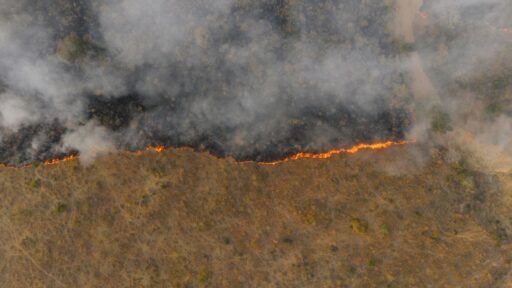
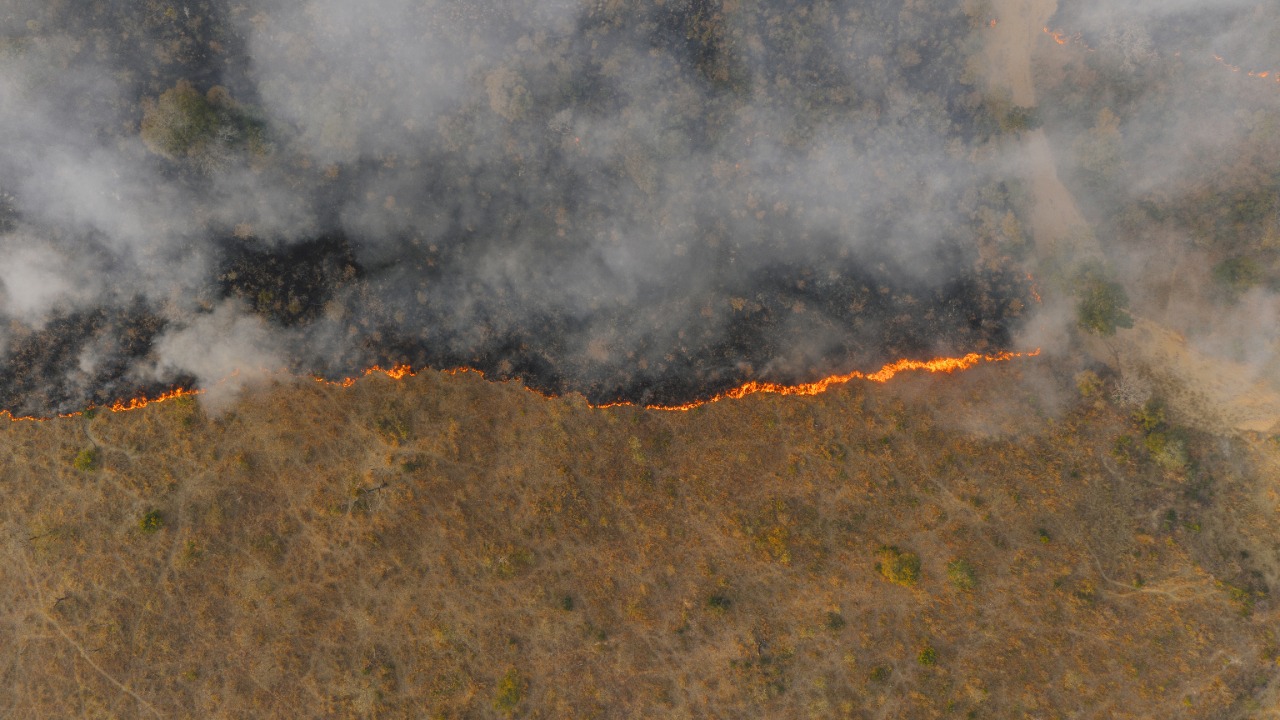

A fast-moving wildfire in eastern Washington forced the entire town of Medical Lake to evacuate, closed both directions of Interstate 90 and destroyed hundreds of buildings as strong winds drove flames through dry grass, timber and residential areas.
The Gray Fire began shortly after noon on August 18, 2023, west of Medical Lake, approximately 15 miles from Spokane. Within hours, it had spread across thousands of acres and prompted Level 3 “Go Now” evacuation orders for the town’s roughly 4,800 residents.
Although the event is being recirculated in current headlines, it was not a new 2026 wildfire. The evacuation and full interstate closure occurred in August 2023.
Interstate 90 Was Closed in Both Directions
Authorities closed a section of Interstate 90 as flames and heavy smoke approached the highway.
Westbound traffic was stopped near the U.S. Route 2 interchange in Spokane, while eastbound traffic was closed near the Tyler and State Route 904 interchange. State Route 902, which connects Medical Lake with I-90, was also shut down.
The closure disrupted one of Washington’s most important east-west transportation routes. I-90 carries local commuters, commercial freight and long-distance travelers between Spokane, central Washington and the Seattle region.
Drivers were urged to avoid the Medical Lake area because rapidly changing fire conditions made established detours uncertain. Parts of the interstate remained affected until authorities determined that fire, smoke and emergency operations no longer posed an immediate danger.
Medical Lake Residents Were Ordered to Leave
Emergency officials placed Medical Lake under the highest evacuation level as winds pushed the fire toward homes.
Residents received little time to gather belongings before leaving. Some were alerted by emergency messages, while officers and first responders moved through neighborhoods warning people to evacuate immediately.
The evacuation area expanded to include communities around Silver Lake, Clear Lake and Four Lakes. The nearby city of Cheney was placed under a lower-level evacuation warning as officials monitored the fire’s direction.
Medical Lake’s schools, businesses and residential neighborhoods were emptied as people sought shelter with relatives, in hotels or at emergency facilities opened outside the fire zone.
Hospitals and Care Facilities Were Threatened
The fire also threatened Eastern State Hospital and Lakeland Village Residential Habilitation Center, two major state-operated facilities in Medical Lake.
National Guard personnel were called in to help move patients and staff. Many Lakeland Village residents were transferred to Eastern State Hospital, where officials initially sheltered people in place while keeping buses available in case a wider evacuation became necessary.
Moving patients from institutional facilities is more complicated than an ordinary household evacuation. Some residents require medical supervision, mobility assistance, medication and specialized transportation.
The proximity of the fire placed significant pressure on staff members who had to protect vulnerable patients while also dealing with road closures, smoke and rapidly changing evacuation zones.
The Fire Destroyed Hundreds of Structures
By the morning after the fire began, officials said at least 185 structures had been destroyed. The number later increased as damage-assessment teams entered burned neighborhoods.
The final toll included more than 250 structures, with homes, garages, barns and other buildings lost. One person died in connection with the Gray Fire.
Some residents returned to find entire blocks reduced to foundations, burned vehicles and metal debris. Utility lines, trees and local roads were also damaged.
The destruction made the Gray Fire one of Washington’s most damaging residential wildfires, even though its total burned acreage was smaller than that of many remote forest fires.
Strong Winds Caused Explosive Growth
Winds reaching approximately 35 mph helped the fire spread rapidly through dry grass, timber and wheat fields.
The region had experienced extremely hot weather before the fire began, leaving vegetation highly flammable. When cooler weather approached, the changing weather pattern produced strong winds that pushed flames toward populated areas.
Wind can carry burning embers far ahead of the main fire front. Those embers may ignite roofs, decks, vegetation and wooden structures before the main flames arrive.
The combination of dry fuel and powerful wind meant firefighters could not rely solely on containing the edge of the original fire. New spot fires could appear across roads and defensive lines with little warning.
The Fire Grew to More Than 10,000 Acres
The Gray Fire eventually burned approximately 10,085 acres.
Containment remained at zero during the fire’s early and most destructive phase. Crews gradually strengthened containment lines as winds weakened and weather conditions improved.
Interstate 90, State Route 902 and State Route 904 eventually reopened as authorities restored access to the area. The fire reached full containment in early September 2023.
Containment does not mean every flame has been extinguished. It means firefighters have established control lines around the fire that they believe will stop further spread under expected conditions.
Hot spots can continue burning inside a contained area for days or weeks, particularly in tree roots, debris piles and damaged structures.
Investigators Later Identified an Electrical Cause
The fire’s cause was initially unknown, but a later investigation linked it to equipment owned by Inland Power and Light.
Investigators determined that sparks from a faulty outdoor light ignited nearby vegetation. Lawsuits were later filed alleging that the utility’s equipment started the fire.
Electrical equipment can become a wildfire ignition source when damaged components produce sparks or hot material near dry grass and vegetation.
Utilities across fire-prone regions increasingly inspect equipment, clear vegetation and consider planned power shutoffs during periods of extreme fire weather. These measures can reduce risk, but they can also interrupt electricity for homes, businesses and essential services.
The Gray Fire Was Part of a Wider Washington Emergency
The Gray Fire was not the only major wildfire burning in eastern Washington at the time.
The Oregon Road Fire near Elk also destroyed homes, forced evacuations and caused a death. Together, the fires destroyed hundreds of residences and prompted Washington’s governor to declare a statewide emergency.
The two fires placed simultaneous demands on firefighting aircraft, emergency shelters, law enforcement and medical resources.
Smoke from the fires also reduced air quality across the region, exposing residents outside the evacuation zones to unhealthy levels of fine particulate pollution.
Wildfire Smoke Can Travel Far Beyond the Flames
People do not need to live directly beside a wildfire to experience health effects.
Fine particles in wildfire smoke can travel across cities and state lines. They can irritate the eyes and respiratory system and may worsen asthma, chronic obstructive pulmonary disease and cardiovascular conditions.
People in smoky areas are generally advised to remain indoors with doors and windows closed when possible. Air conditioners should be placed on a recirculation setting, and portable air cleaners can help reduce indoor particle levels.
Current smoke forecasts and air-quality readings are available through the federal AirNow Fire and Smoke Map.
Why Entire Town Evacuations Become Necessary
Officials may evacuate a whole community when a fire is moving too quickly to predict which individual streets will remain safe.
Waiting until flames reach each neighborhood can create traffic congestion and leave residents trapped on narrow roads. An early town-wide evacuation gives people more time to leave before smoke, fallen trees or emergency vehicles block escape routes.
Medical Lake’s connection to surrounding communities also depends heavily on a limited number of major roads. The closure of State Route 902 and Interstate 90 made rapid evacuation planning even more important.
Residents in wildfire-prone areas should know more than one route out of their neighborhood. They should also keep fuel in their vehicles and avoid waiting for visible flames before responding to an official evacuation order.
What Level 3 “Go Now” Means
Washington uses a three-level evacuation system.
A Level 3 order means danger is immediate and residents should leave without delay. Emergency services may not be able to return later to rescue people who decide to remain behind.
A Level 2 notice means residents should be ready to leave at short notice, while Level 1 advises people to stay alert and begin preparing.
Conditions can change quickly, so someone under a Level 2 warning should not assume there will always be enough time to pack after the order is upgraded.
How Households Can Prepare for a Fast Evacuation
An emergency bag can reduce the time needed to leave during a wildfire.
Important documents, medications, chargers, water, basic clothing and supplies for children or pets should be easy to collect. Residents should also photograph their property and possessions in advance for insurance purposes.
Family members should agree on a meeting place outside the neighborhood in case they become separated. Emergency alerts should be enabled on mobile phones, and residents should follow local fire and sheriff’s offices for official instructions.
General wildfire preparation guidance is available through the federal Ready.gov wildfire resource.
The Main Lesson From the Medical Lake Fire
The Gray Fire showed how quickly a relatively ordinary summer day can turn into a major evacuation and transportation emergency.
Within hours of ignition, the fire forced thousands of people from their homes, threatened state hospitals, closed both directions of Interstate 90 and destroyed large sections of Medical Lake.
The event occurred on August 18, 2023, rather than during the current 2026 fire season. Its continued circulation reflects how dramatic the evacuation and highway closure were, but readers should not mistake the historical footage or reports for a new Washington emergency.