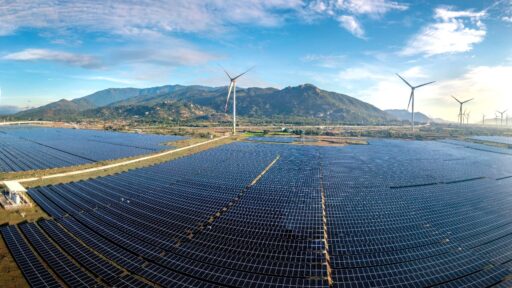
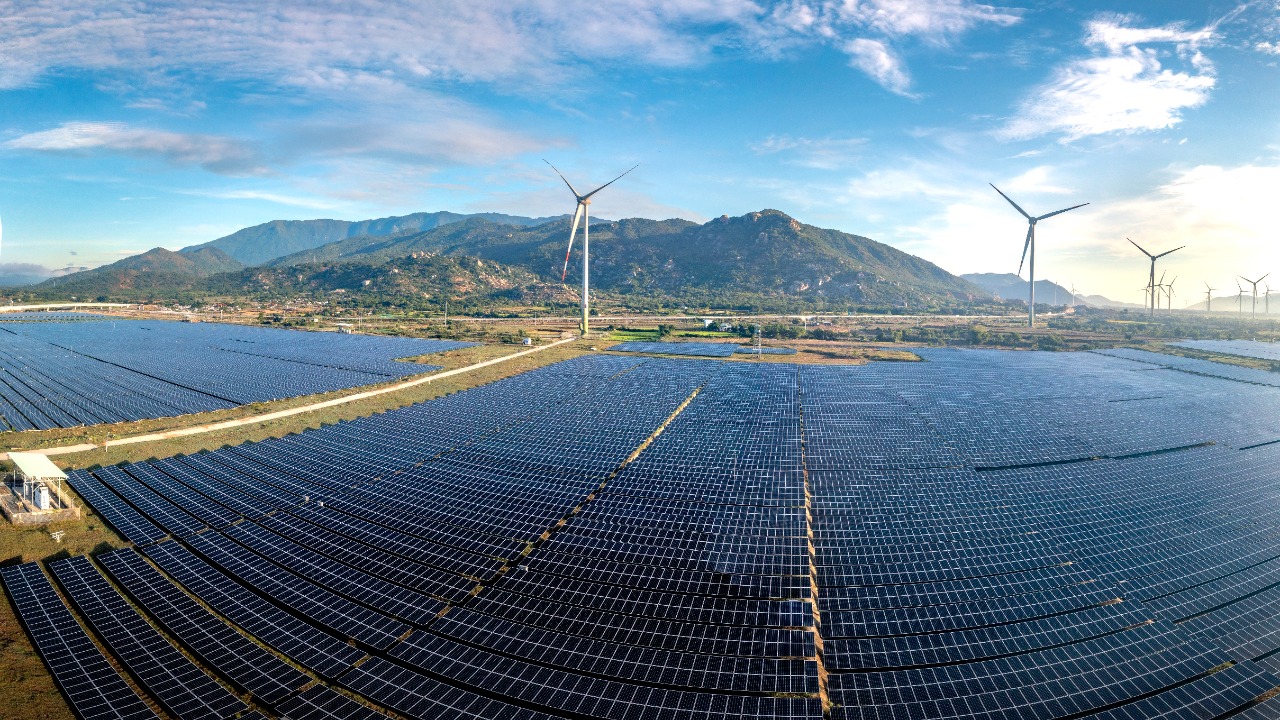

Solar power has passed wind power as the largest source of clean-power capacity in the United States, marking a major shift in how the country is building its future electricity system. The milestone came as developers continued adding large amounts of utility-scale solar while wind installations slowed sharply.
According to the American Clean Power Association’s Clean Power Quarterly Market Report for Q1 2026, more than 3.6 gigawatts of new utility-scale solar capacity came online in the first quarter of 2026. That pushed total operating utility-scale solar capacity to 161.1 gigawatts, allowing solar to move ahead of wind as the country’s largest clean-power resource by installed capacity.
This does not mean solar generates more electricity than wind every year yet. Wind still often produces more total electricity because wind farms can generate through the night and may have higher capacity factors in many regions. But in terms of installed clean-power capacity, solar has now taken the lead.
Why This Matters
Installed capacity measures how much power a resource can produce at full output. It is not the same as actual generation, because solar panels only produce when sunlight is available and wind turbines only produce when wind conditions are right. Still, capacity is important because it shows where new investment is going and what the future grid is being built around.
Solar passing wind shows that the U.S. power sector is moving deeper into a solar-led phase. Utility-scale solar farms are being built across Texas, California, the Southeast, the Midwest, and other regions. Rooftop solar and community solar are also contributing to the broader solar boom, though the milestone reported by the American Clean Power Association focuses on utility-scale clean power.
The shift is especially important because electricity demand is rising again after years of relatively flat growth. Data centers, artificial intelligence, manufacturing, electric vehicles, air conditioning, and electrification are putting new pressure on the grid. Solar is becoming one of the fastest tools available to add new power.
Solar’s Growth Is Moving Faster Than Wind
The first quarter of 2026 showed the gap clearly. ACP reported that developers brought 6.4 gigawatts of new utility-scale solar, wind, and energy storage online during the quarter. Solar accounted for more than half of that total, while wind added only 415 megawatts.
That difference explains why solar moved ahead. Wind helped build the early clean-energy era in the United States, especially in states such as Texas, Iowa, Oklahoma, Kansas, and the Dakotas. But wind development has slowed because of permitting challenges, transmission delays, supply-chain issues, local opposition, tax-credit uncertainty, and siting limits.
Solar projects can often be built faster. They can be developed in many more regions, scaled from small community projects to massive utility farms, and paired directly with battery storage. That flexibility has made solar the preferred choice for many developers and utilities trying to add capacity quickly.
Capacity Is Not the Same as Generation
The headline is powerful, but it needs context. Solar has passed wind in installed clean-power capacity, not necessarily in annual electricity generation. Wind turbines often produce a higher percentage of their maximum possible output over the year than solar panels because wind can blow at night and during multiple seasons.
Climate Central’s analysis of U.S. solar and wind generation in 2025 found that wind still produced 54% of combined U.S. wind and solar electricity in 2025, while solar produced 46%. That gap is narrowing quickly because solar grew much faster than wind, but it shows why capacity and generation should not be confused.
In simple terms, solar has more installed nameplate power now, but wind still remains a huge contributor to actual electricity production. The next question is whether solar’s rapid growth will allow it to pass wind in generation as well.
Why Solar Is Winning New Construction
Solar has several advantages in today’s energy market. Panels have become cheaper over the past decade, construction timelines are shorter than many other power plants, and projects can be built in modular stages. A developer can add more panels, expand a site, or pair the project with batteries as economics change.
Solar also fits well with peak electricity demand in many parts of the country. Hot summer afternoons create high air-conditioning demand, and solar output often rises during the same period. That makes solar valuable in states where summer cooling drives grid stress.
The International Energy Agency and other energy analysts have repeatedly noted that solar has become one of the cheapest sources of new electricity in many markets. That cost advantage helps explain why utilities, corporations, and independent developers keep signing solar deals even when policy support becomes uncertain.
Batteries Are Helping Solar Grow
Solar’s biggest weakness is timing. It does not generate at night, and output falls when clouds move in or the sun sets. Battery storage helps solve part of that problem by storing solar power during the day and releasing it later.
The same ACP report found that energy storage additions were also strong in Q1 2026, with 2.382 gigawatts of new storage capacity added. That matters because solar and batteries increasingly work as a package. A solar farm with batteries can supply power after sunset, reduce grid stress, and provide backup services.
Energy storage also makes solar more useful for utilities planning around peak demand. Instead of treating solar as only a midday resource, grid operators can shift some of that energy into evening hours when people return home, cook dinner, charge devices, and turn on air conditioning.
Wind Is Not Disappearing
Solar passing wind does not mean wind is failing. Wind remains one of the most important clean-energy resources in the United States. It produces large amounts of electricity, especially in the central plains and other high-wind regions. It also complements solar because wind can be stronger at night and during seasons when solar output is lower.
The U.S. grid works better with a mix of resources. Solar, wind, batteries, hydropower, nuclear, geothermal, demand response, and transmission all play different roles. A solar-only grid would face major challenges after sunset and during cloudy periods. A wind-only grid would face calm periods and regional variability.
The milestone is not a funeral for wind. It is a sign that solar is growing faster right now.
Why Wind Development Has Slowed
Wind projects face several challenges that solar does not always face at the same scale. Wind turbines are tall, visible, and sometimes controversial in rural communities. Some projects face opposition over views, noise, wildlife, shadow flicker, aviation concerns, radar interference, and land-use conflicts.
Transmission is another major issue. Many of the best wind resources are far from major cities. Building new power lines across multiple states can take years because of permitting, landowner negotiations, utility planning, and local resistance.
Offshore wind has faced its own difficulties, including high costs, inflation, supply-chain problems, contract renegotiations, port constraints, and political pushback. Those obstacles have slowed a sector that once looked ready for rapid expansion along the East Coast.
Solar Also Faces Its Own Barriers
Solar’s rise does not mean it has an easy path. Large solar farms require land, interconnection approvals, equipment supply chains, transformers, inverters, labor, financing, and local permits. Some rural communities are pushing back against big solar projects because of concerns about farmland, views, property values, drainage, and local identity.
Solar developers also face grid-connection delays. Many projects sit in interconnection queues for years before they can connect to the grid. Even if panels are cheap, a project cannot deliver electricity without transmission access and utility approval.
Policy uncertainty is another concern. Reuters recently warned that cutting wind and solar subsidies could make U.S. electricity more expensive because these resources are among the fastest and cheapest ways to add new power as demand rises. If incentives become unstable, developers may delay or cancel projects.
Clean Power Is Now a Grid Reliability Issue
Clean power is often discussed as a climate issue, but it is increasingly a reliability issue. The United States needs more electricity supply. Data centers, AI computing, semiconductor plants, electrified factories, heat pumps, and electric vehicles are changing demand forecasts.
Utilities once planned for slow, predictable growth. Now many regions are seeing faster load growth than expected. Building new gas plants, nuclear plants, long-distance transmission, and large hydropower projects can take many years. Solar and batteries can often be deployed faster.
That speed makes solar attractive even to buyers focused less on climate and more on cost and reliability. If the grid needs power quickly, solar is one of the few resources that can scale at today’s pace.
Texas Shows the New Energy Mix
Texas is one of the best examples of the new power landscape. The state built the country’s largest wind fleet, then rapidly expanded solar and batteries. Solar helps meet daytime summer demand, while wind remains a major source of electricity, especially during certain overnight and seasonal periods.
Texas also shows why clean energy growth is not limited to traditionally progressive states. Developers build where resources are strong, land is available, demand is rising, and market rules allow projects to earn revenue.
Solar’s rise is therefore not just a California story. It is a national market story, with red states and blue states both participating for economic and reliability reasons.
Solar’s Lead Could Grow Quickly
Solar’s lead over wind may widen if current development trends continue. The pipeline for new utility-scale solar and storage is large, while wind installations remain slower. PV Magazine, citing ACP’s Q1 2026 report, noted that utility-scale solar surpassed wind after adding 3.625 gigawatts in the quarter compared with 415 megawatts of wind.
That does not guarantee a straight path. Tariffs, policy changes, permitting disputes, equipment shortages, and grid bottlenecks can slow solar. But the momentum is strong because solar has become one of the default choices for new electricity generation.
The clean-power race is no longer about whether solar can compete. It is about whether the grid can absorb, store, and transmit enough solar power to keep up with the pace of development.
Why Transmission Is the Next Big Test
Solar and wind both need better transmission. The best renewable resources are often not located exactly where electricity demand is highest. Transmission lines move power from sunny or windy regions to cities, factories, and data centers.
Without new transmission, some regions may end up with too much solar at midday and not enough clean power in the evening or during peak demand. Grid congestion can force solar farms to curtail output, meaning they are capable of generating electricity but cannot deliver it because the grid is constrained.
A clean-power system needs more than panels and turbines. It needs wires, substations, transformers, batteries, smart grid controls, and faster permitting.
The Policy Fight Is Getting Sharper
Solar’s milestone arrives during a politically tense moment for U.S. energy. Some policymakers want to accelerate clean power to cut emissions and meet rising demand. Others want to reduce subsidies, boost fossil fuels, or slow renewable permitting.
That tension creates uncertainty for developers. Energy projects require long-term planning, financing, and supply contracts. When tax rules, tariffs, and permitting standards change frequently, companies become cautious.
The policy question is not only about climate targets. It is about electricity prices, grid reliability, manufacturing, construction jobs, rural tax revenue, and global energy competition. Solar’s growth is now big enough that slowing it could affect the broader power market.
What This Means for Electricity Customers
For customers, solar’s rise could help lower or stabilize power costs over time, especially in regions where solar is replacing more expensive peak generation. Solar has no fuel cost, so once a project is built, it is not exposed to natural gas price swings.
However, customers may still see higher bills if grid upgrades, transmission projects, storage investments, and utility infrastructure costs rise. Clean power can be cheap at the generation level while the total grid still needs expensive modernization.
The long-term benefit depends on planning. Solar must be paired with storage, flexible demand, transmission, and other firm resources so the system remains reliable when the sun is not shining.
Why Corporations Are Driving Demand
Large companies are major buyers of clean power. Tech firms, manufacturers, retailers, and data-center operators sign power purchase agreements to meet sustainability goals and secure long-term electricity prices.
AI data centers are especially important because they need enormous amounts of electricity. Some tech companies are pursuing nuclear, geothermal, gas with carbon capture, wind, and solar, but solar remains attractive because it can be built quickly and contracted at large scale.
This corporate demand gives solar another growth engine beyond state mandates or federal tax credits. Even when politics shift, big electricity buyers still need power.
Solar Is Changing the Shape of the Grid
As solar grows, it changes the daily rhythm of electricity supply. Midday power becomes more abundant in solar-heavy regions. Evening demand becomes more challenging as the sun sets. This is why utilities talk about ramping resources that can quickly fill the gap after solar output drops.
Batteries, hydropower, flexible gas plants, demand response, and regional power sharing can help manage that transition. The more solar the country builds, the more important those balancing tools become.
This is not a reason to stop solar growth. It is a reason to plan for the next stage of the grid.
Why Clean-Power Capacity Is More Than a Statistic
Solar passing wind is symbolic, but it also reflects real investment. Every gigawatt represents land leases, construction jobs, electrical work, manufacturing orders, financing, interconnection studies, tax revenue, and grid planning.
The clean-energy transition is often described as a future goal, but this milestone shows it is already reshaping infrastructure. The U.S. is not simply discussing solar growth. It is building it at scale.
The question now is whether the country can build the supporting system fast enough.
Final Takeaway
Solar has passed wind as the largest source of U.S. clean-power capacity, according to the American Clean Power Association’s Q1 2026 market report. More than 3.6 gigawatts of new utility-scale solar came online in the first quarter, pushing total operating utility-scale solar capacity to 161.1 gigawatts and moving solar ahead of wind by installed capacity.
The milestone does not mean solar produces more electricity than wind every year yet. Wind still remains a major generator because it can run at night and often has higher annual output per unit of capacity. But the direction is clear: solar is now the fastest-growing clean-power resource in the United States, and batteries are making it more useful to the grid.
The next challenge is not proving that solar can grow. It is building the transmission, storage, permitting systems, and policy stability needed to turn that capacity into reliable power for homes, factories, data centers, and the next phase of the American economy.