
The largest power grid in the United States came under extreme pressure as a powerful heat wave spread across the East, forcing millions of homes and businesses to run air conditioning at the same time. PJM Interconnection, the grid operator serving about 67 million people across the Mid-Atlantic, parts of the Midwest, the South, and Washington, D.C., reported that demand reached historic levels during the early July heat surge.
According to Reuters, PJM said its unrestricted peak load reached 168 gigawatts on July 2, setting an all-time record in a preliminary report. That number shows how intense the pressure became as temperatures climbed and air conditioners ran heavily across the region.
Earlier PJM data showed that emergency conservation actions likely kept measured demand below the old 2006 record in some reporting formats, but later analysis highlighted the underlying unrestricted demand that broke the all-time mark. Either way, the message is the same: the grid was pushed to one of its most demanding moments in modern history.
Why PJM Matters So Much
PJM is not a small regional utility. It is the country’s largest grid operator by load served and one of the most important electricity markets in the world. It coordinates power across states including Pennsylvania, New Jersey, Maryland, Delaware, Virginia, West Virginia, Ohio, parts of Illinois, Indiana, Kentucky, Michigan, North Carolina, Tennessee, and the District of Columbia.
When PJM struggles, the impact can reach millions of customers, thousands of businesses, major cities, hospitals, factories, data centers, schools, and transportation systems. A PJM emergency is not just a technical grid event. It is a regional economic and public-safety issue.
The heat wave showed how quickly normal electricity demand can turn into a reliability test when temperatures rise across many states at once.
What “Peak Demand” Means
Peak demand is the highest amount of electricity customers need at one time. It usually happens during extreme weather, when millions of people run heating or cooling systems together. In the summer, air conditioning is the biggest driver.
A grid must balance supply and demand every second. If customers need more electricity than available generators and transmission lines can deliver, the system can become unstable. Grid operators must then use emergency tools, including demand response, reserve power, imports, export limits, and public conservation appeals.
Peak demand is therefore more than a number. It is the moment when the system reveals whether it has enough power, enough wires, enough reserves, and enough flexibility.
Heat Made Air Conditioning the Main Driver
The early July heat wave blanketed much of the eastern U.S. with dangerous temperatures. High humidity made conditions feel even worse, and nighttime temperatures stayed warm in many areas, limiting relief.
When heat builds over a wide region, electricity demand rises in waves. Homes cool bedrooms and living spaces. Office buildings run chillers. Stores, warehouses, hospitals, restaurants, schools, and factories use more power to keep indoor spaces safe and functional.
That is why heat waves are so challenging for grid operators. Demand rises across nearly every customer class at once, and the peak often arrives in the late afternoon or early evening when solar output is already declining in some areas but air-conditioning demand remains high.
Emergency Conservation Helped Avoid a Worse Situation
PJM used emergency electricity-reduction measures during the heat wave. These include demand-response programs that pay participating customers to cut electricity use during critical hours. Large commercial or industrial customers may reduce operations, shift usage, adjust cooling, or run backup systems to relieve pressure on the grid.
Reuters reported separately that PJM said emergency conservation measures likely kept electricity demand from breaking its 2006 record under one preliminary demand measure, with peak instantaneous load reaching about 162,700 megawatts between 5 p.m. and 6 p.m. on July 2. PJM said demand would likely have exceeded the old record without those actions.
This is important because the grid did not simply meet the heat wave casually. It needed emergency tools to keep the system balanced.
Power Prices Spiked Dramatically
The heat wave did not only test reliability. It also caused extreme price spikes inside PJM’s market. Reuters reported that PJM briefly paid up to $28,000 per megawatt for balancing services during the heat wave, more than 100 times the average cost this year.
Balancing services help keep electricity supply and demand aligned second by second. These services are essential because even small imbalances can create serious reliability problems if they persist.
The price spike exposed deeper problems. PJM cited reserve deficits and transmission congestion near Baltimore, Delaware, and northern Virginia. Those areas matter because northern Virginia is home to the world’s largest concentration of data centers, and data-center demand has become one of the biggest new pressures on the grid.
Data Centers Are Changing the Electricity Map
For decades, U.S. electricity demand grew slowly. That is changing. Artificial intelligence, cloud computing, cryptocurrency operations, semiconductor manufacturing, electric vehicles, heat pumps, and industrial electrification are pushing demand higher.
Data centers are especially important in PJM because northern Virginia has become the global hub for cloud and AI infrastructure. These facilities consume enormous amounts of electricity around the clock, not just during heat waves. When extreme weather arrives, that constant demand sits on top of air-conditioning load from homes and businesses.
The U.S. Energy Information Administration says national power consumption is expected to keep rising in 2026 and 2027, driven by AI data centers and electrification. Its forecast, reported by Reuters, projects U.S. power demand rising from a record 4,195 billion kilowatt-hours in 2025 to 4,269 billion kilowatt-hours in 2026 and 4,399 billion kilowatt-hours in 2027.
That means the July grid stress was not a one-off event. It was a preview of a more power-hungry future.
The Commercial Sector Is Becoming the New Demand Leader
One of the most striking changes is that commercial electricity demand is expected to outpace residential demand in 2026 for the first time on record, according to the same EIA outlook. That shift reflects the rise of data centers, warehouses, offices, cooling needs, and digital infrastructure.
Historically, summer grid peaks were often discussed in terms of households turning on air conditioning. That still matters, but it is no longer the full story. The new grid peak is shaped by homes, businesses, factories, and data infrastructure all pulling hard at the same time.
This makes planning harder. Grid operators must prepare not only for hotter afternoons but also for permanent load growth that does not disappear after the heat wave ends.
Why Transmission Became a Bottleneck
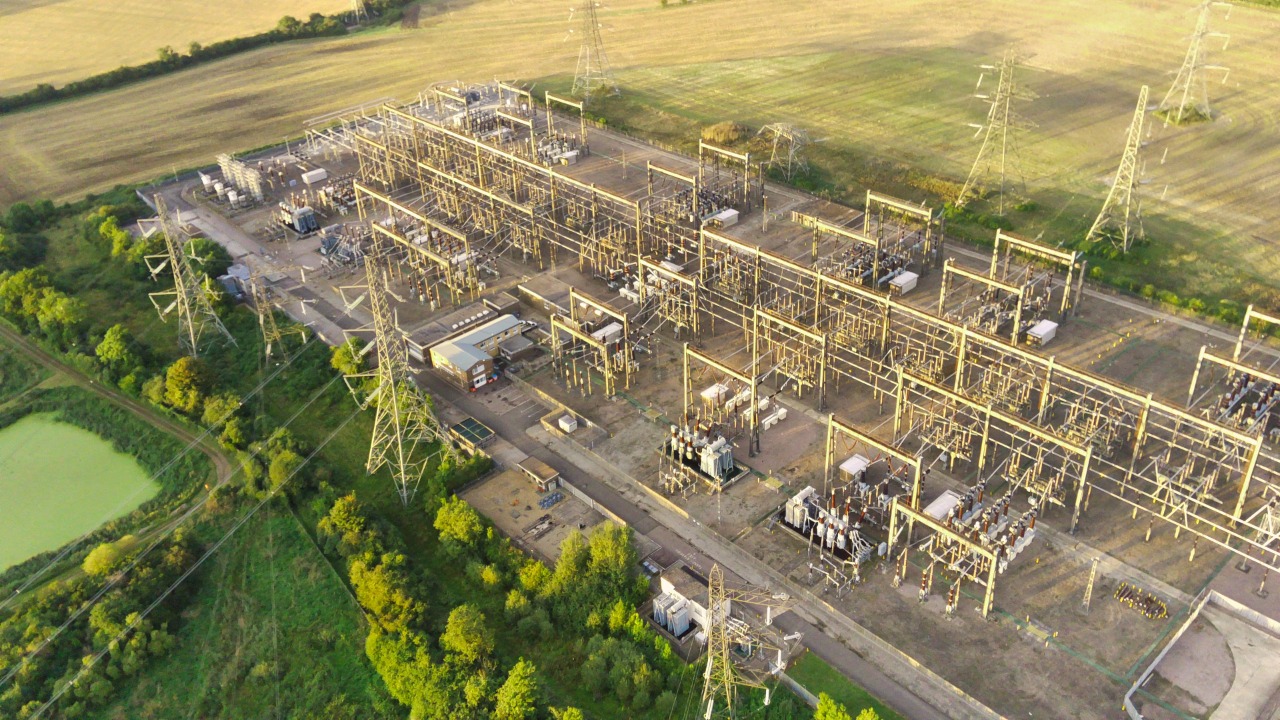
Power plants may be available somewhere in the region, but electricity still has to move through transmission lines to reach customers. During the heat wave, PJM reported congestion on power lines serving areas such as greater Baltimore, Delaware, and northern Virginia.
Transmission congestion means the grid cannot move enough electricity into a constrained area without overloading lines or violating reliability limits. When that happens, local prices can surge, emergency resources may be needed, and grid operators may have fewer options.
This is one of the biggest lessons from the heat wave. Building generation is not enough. The grid also needs stronger transmission, better planning, faster interconnection, and upgraded local delivery systems.
Why Reserve Margins Matter
A power grid needs extra supply above expected demand. This cushion is called reserve margin. It protects the system when power plants unexpectedly fail, demand rises faster than forecast, transmission lines become constrained, or imports are limited.
When reserves get tight, grid operators move through emergency procedures. They may call demand response, ask generators to postpone maintenance, import power, restrict exports, or warn customers to conserve. In extreme cases, they may order controlled outages to avoid a wider blackout.
PJM’s heat-wave actions showed that reserve margins are becoming more important as demand rises and new resources take time to connect.
Power Plant Outages Add Pressure
Extreme heat can make power plants and transmission equipment less efficient. Some generators may trip offline or operate below full capacity. Transmission lines can sag under heat, reducing how much electricity they can safely carry. Cooling water constraints can affect thermal plants.
This creates a dangerous combination. Heat increases demand while also stressing the infrastructure needed to supply that demand. That is why grid operators treat heat waves as reliability events, not just weather events.
A hot day is manageable when the system has plenty of spare capacity. A hot day becomes dangerous when reserves are tight, lines are congested, and demand is setting records.
Why Consumers May Feel It in Their Bills
Wholesale market spikes do not always show up immediately in a household bill, but they eventually affect costs. Utilities and suppliers buy electricity and grid services, and those costs are passed through in different ways depending on state rules and customer contracts.
PJM’s capacity-market prices have also surged, increasing the cost of ensuring enough power is available during future peak periods. Reuters reported that PJM capacity prices for peak-demand readiness have risen by more than 1,000% since 2024.
Consumers may not see a line item labeled “heat wave grid stress,” but the cost of building, maintaining, and balancing the system eventually appears in electricity rates.
Why Reliability Is Becoming a Public-Health Issue
During extreme heat, electricity is not just a convenience. It is a public-health necessity. Air conditioning can prevent heat exhaustion, heat stroke, and death, especially for older adults, children, outdoor workers, people with chronic illness, and low-income households without good cooling access.
A large blackout during a heat wave can quickly become deadly. Elevators stop, medical devices fail, refrigerated medicines spoil, water systems may lose pressure, and people trapped in hot buildings may have nowhere safe to go.
That is why grid reliability is now closely tied to climate adaptation. As heat waves become more intense, the grid must be able to protect people during the exact conditions that stress it most.
Why Clean Energy Alone Is Not the Whole Answer
Renewable energy is growing quickly, and solar can help meet daytime cooling demand. Wind, batteries, nuclear, hydropower, gas plants, demand response, and transmission all play different roles. But no single resource solves the whole problem.
Solar output can be strong during hot afternoons, but demand may remain high into the evening. Wind output varies. Batteries can shift energy but need enough stored power. Gas plants can ramp quickly but depend on fuel supply and may face emissions limits. Nuclear provides steady power but cannot be built quickly.
The future grid needs a mix of resources plus better demand management. The July PJM stress showed that reliability depends on diversity, flexibility, and speed.
Demand Response Is Becoming More Valuable
Demand response used to sound like a niche tool. Now it is becoming central to grid reliability. Paying customers to reduce usage during critical hours can be cheaper and faster than building new power plants that run only a few times per year.
Large customers can lower demand by adjusting cooling, delaying industrial processes, shifting computing workloads, or using onsite resources. Households can participate through smart thermostats, time-of-use rates, and utility programs.
Demand response does not mean asking people to suffer through dangerous heat. It means managing nonessential load intelligently so the grid can protect essential service.
What Households Can Do During Grid Alerts
When a grid alert is issued, households can help by raising thermostats a few degrees, delaying laundry or dishwashing, closing blinds, avoiding oven use, charging devices earlier in the day, and reducing unnecessary lighting. These actions matter most during peak hours, usually late afternoon and early evening.
People should not turn off cooling if it would create a health risk. Safety comes first. But small changes across millions of homes can reduce demand enough to avoid emergency conditions.
The goal is not individual sacrifice as a permanent solution. It is short-term coordination during the few hours when the grid is under maximum strain.
Why New Power Projects Are Delayed
PJM has a large queue of proposed power projects, including solar, wind, batteries, gas, and other resources. But many projects wait years for interconnection studies, transmission upgrades, permits, financing, and equipment. That delay slows the addition of new supply even as demand grows quickly.
This mismatch is one of the grid’s biggest problems. Data centers can sometimes be planned and built faster than the power infrastructure needed to serve them. If large loads connect faster than new generation and transmission, reliability pressure rises.
Fixing the queue, speeding transmission, and coordinating large-load approvals will be essential if PJM wants to avoid repeated emergency conditions.
Why This Record Is a Warning
The record demand is not just a bragging point or a technical statistic. It is a warning that the power system is entering a new era. Extreme heat is becoming more intense, electricity demand is growing, and aging infrastructure must carry more load than ever.
The Edison Electric Institute said U.S. electricity output reached 100,996 gigawatt-hours during the week ending July 4, the first time weekly U.S. generation topped 100,000 gigawatt-hours, according to Reuters. That national record reinforces the same point: the whole country is using more electricity during extreme heat.
PJM’s record is therefore part of a broader national shift.
Final Takeaway
The largest U.S. power grid, PJM Interconnection, was pushed into historic demand territory as extreme heat blanketed the East and air-conditioning use surged. PJM reported an unrestricted peak load of 168 gigawatts on July 2, while emergency conservation and demand-response actions helped manage measured load and avoid worse reliability stress.
The heat wave also exposed deeper grid challenges: transmission congestion, reserve shortages, data-center growth, rising balancing costs, and higher future capacity prices. Electricity demand is no longer flat. AI data centers, electrification, industrial growth, and hotter weather are making the grid work harder.
The lesson is clear. The U.S. needs more generation, stronger transmission, faster project approvals, better demand response, and smarter planning before the next heat wave arrives. Extreme heat is no longer just a weather problem. It is now one of the biggest tests of America’s power infrastructure.