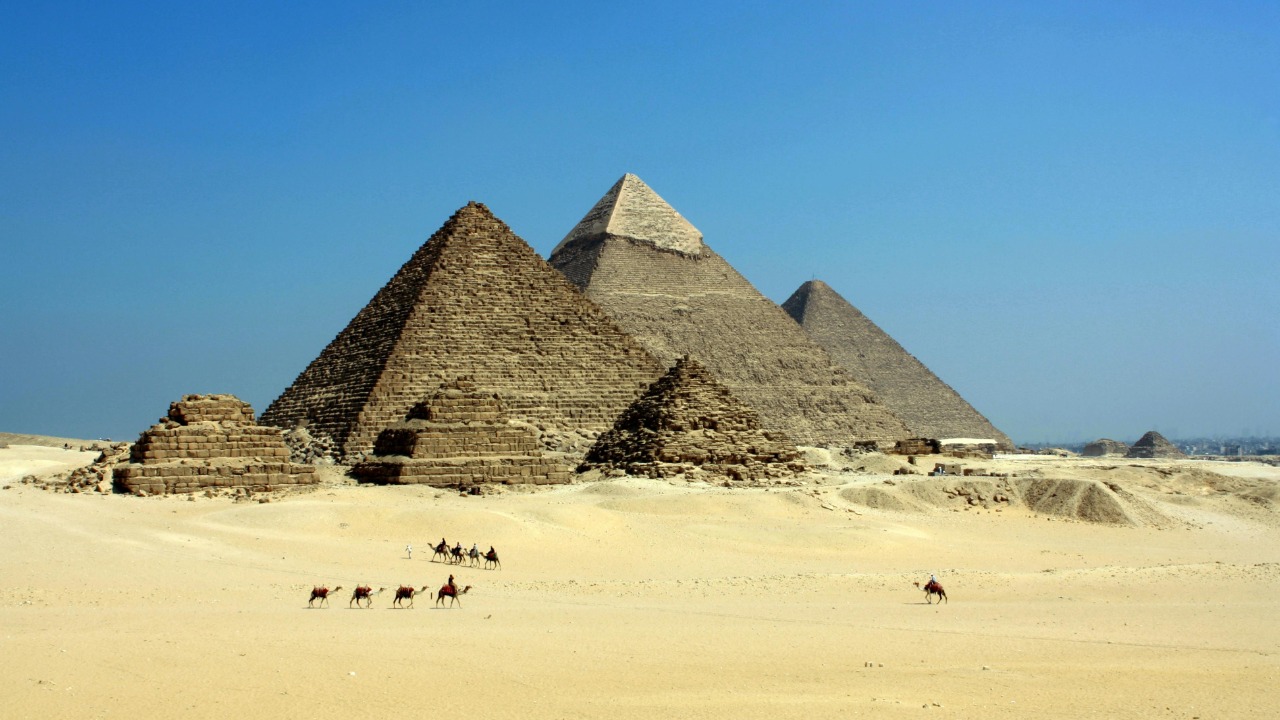

New radar and satellite scans at the Giza Plateau are reviving one of archaeology’s most contested ideas: that the pyramids sit above a vast network of hidden structures. Researchers say fresh data points to geometric patterns, voids and possible built spaces beneath and around the Great Pyramid, suggesting a far more complex site than the visible monuments alone. The claims have energized enthusiasts and unsettled skeptics who want to see raw data, not just dramatic interpretations.
More than a new tourist attraction is at stake. If even a fraction of these subsurface features prove to be man-made, they could reshape what scholars think they know about Old Kingdom engineering, ritual and city planning around the Giza necropolis.
New radar readings and a fresh look beneath Giza
The latest wave of attention began with a satellite radar study that used synthetic aperture radar to peer beneath the desert surface around the Great Pyramid. The team behind the work reported extensive linear and rectangular anomalies that they interpret as “vast underground structures” aligned with the known pyramid complex. According to the description of the project, the radar signatures suggest possible corridors, chambers and large cavities that extend beyond previously mapped tomb shafts, prompting headlines about a hidden complex beneath the plateau. The claims are summarized in coverage of the satellite radar study.
Ground based scans inside the Great Pyramid itself have already shown that noninvasive technology can uncover real surprises. Muon tomography and endoscopic cameras revealed a hidden corridor and a sealed chamber behind the familiar stonework, confirming that even the most studied monument at Giza still holds undiscovered spaces. Reporting on these findings notes that the hidden corridor sits above the main entrance and that the sealed volume behind it has yet to be opened or explored physically.
These confirmed voids inside the pyramid lend some support to more expansive interpretations of external radar anomalies. If a monument that has been crawled over by archaeologists for more than a century can still conceal a corridor, proponents argue, then broad bands of unexcavated bedrock around the plateau might reasonably hide additional built spaces or infrastructure. Critics counter that interior muon data is far more precise than satellite radar readings of the desert, which can easily be distorted by natural fractures, ancient riverbeds or modern construction.
Competing claims of “hidden cities” around the plateau
The radar study has merged with a longer running narrative about entire buried settlements around Giza. Some researchers and popular writers have described the anomalies as evidence of a “second hidden city” beneath or adjacent to the pyramids, a phrase that has spread quickly in coverage of the work. One report describes scientists doubling down on the claim that subsurface patterns represent planned streets, large halls and clusters of rooms, rather than random geology, and frames this as a challenge to more conservative Egyptological models. The language of a second hidden city has captured public imagination, even as many specialists urge caution.
Archaeologists who work in Egypt have long known that the visible temples and pyramids sit within a wider ritual and residential zone. Excavations south of the Sphinx and around the workers’ village have already revealed barracks, bakeries and administrative buildings that supported pyramid construction. Coverage in an archaeology focused outlet stresses that Giza is part of a broader pattern of complex sites across Egypt, where layers of occupation and ritual reuse can stack on top of one another. A report on archaeology around the notes that even well known monuments often sit above earlier structures or later intrusions, complicating any simple reading of what lies below.
Within that context, talk of a “city” beneath Giza may be more a matter of vocabulary than of discovery. A dense cluster of tombs, service tunnels, storage magazines and shrines could look like an urban grid in radar imagery, even if it does not match a modern idea of streets and houses. The real test will come from targeted excavations that can ground truth specific anomalies and determine whether they represent natural limestone features, isolated chambers or a coherent built environment.
Why the new claims are resonating now
The surge of interest in hidden structures at Giza reflects several overlapping trends. Noninvasive survey technologies have advanced rapidly, from satellite radar to muon detectors and ground penetrating radar, making it possible to scan large areas without digging. These tools are particularly attractive in Egypt, where authorities must balance research with conservation and tourism. Every new void or anomaly that can be mapped before a single stone is moved reduces the risk of damaging decorated surfaces or destabilizing ancient walls.
Public fascination with the pyramids has also never really cooled, and social media amplifies any suggestion of lost chambers or secret tunnels. Claims of vast underground structures fit neatly into long standing narratives about hidden knowledge and alternative histories. The difference now is that these stories are anchored, at least in part, in real datasets, even if interpretations vary widely. When a radar image or muon scan shows a clear void, the debate shifts from “is there something there” to “what exactly is it” and “how should it be explored.”
The political and economic context also matters. Egypt depends heavily on heritage tourism, and new discoveries at Giza can translate directly into visitor interest and revenue. Announcing a hidden corridor inside the Great Pyramid or hinting at a buried complex nearby gives officials a way to refresh the narrative of a site that many travelers assume they already know. At the same time, Egyptian antiquities authorities have to manage expectations, since overpromising and underdelivering on spectacular claims can damage credibility with both the public and the academic community.
Within Egyptology, the radar reports plug into ongoing debates about how centralized and planned Old Kingdom projects really were. If the anomalies around Giza turn out to be an integrated network of tunnels, storage spaces and ritual chambers, that would support a view of the pyramid complex as a tightly organized machine for royal cult and logistics. If, instead, the anomalies resolve into scattered tomb shafts and natural voids, the picture remains closer to current models of a monumental core surrounded by a more organic sprawl of burials and service structures.
How researchers might verify what lies beneath
The next phase for the Giza radar claims will hinge on methodical verification. Archaeologists and geophysicists will need to combine multiple survey techniques, cross checking satellite radar signatures with ground penetrating radar, electrical resistivity and, where feasible, muon tomography. By layering these datasets, teams can narrow down targets that consistently appear as voids or solid built features, then design limited test excavations that minimize disruption.
Inside the Great Pyramid, the sealed chamber behind the newly identified corridor presents a more contained challenge. Engineers and conservators must decide whether to drill a small hole to insert cameras, as was done for earlier voids, or to leave the space untouched for now. Any intervention will be closely watched, both for what it reveals and for how it balances curiosity with preservation. The experience of opening previous sealed spaces, which sometimes yielded modest finds rather than treasure, may encourage a slower, more data driven approach.
Outside the pyramid, the radar anomalies that have been described as underground structures will likely be triaged according to risk and potential payoff. Features that lie beneath modern infrastructure or heavily visited paths may be left for future generations with better tools. Others, especially those on the plateau’s periphery, could be sampled through narrow shafts or existing tomb entrances, allowing researchers to “peek” into suspected corridors without large trenches.