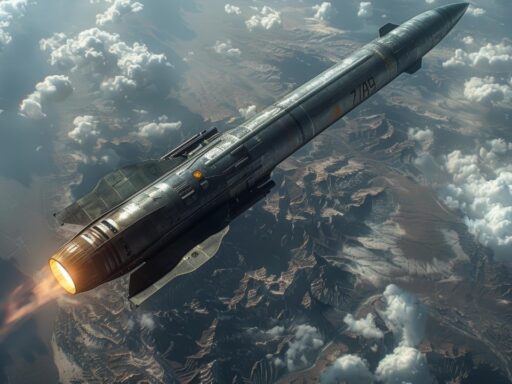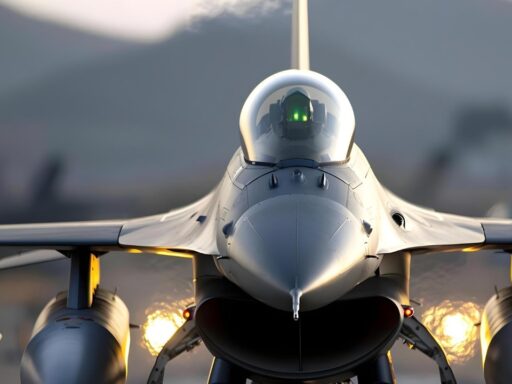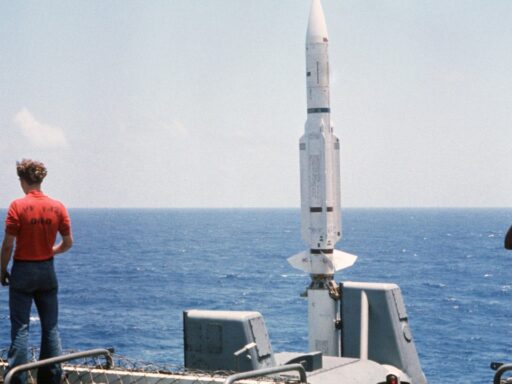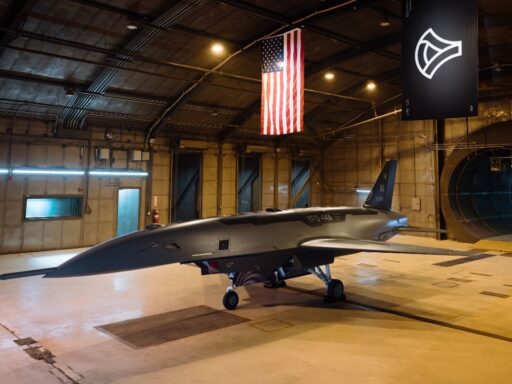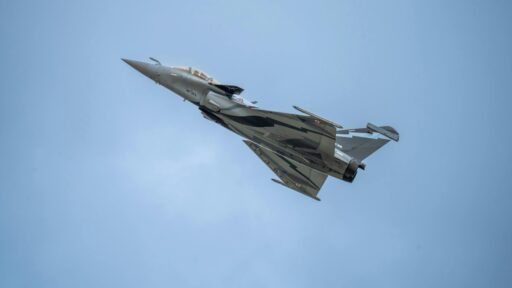
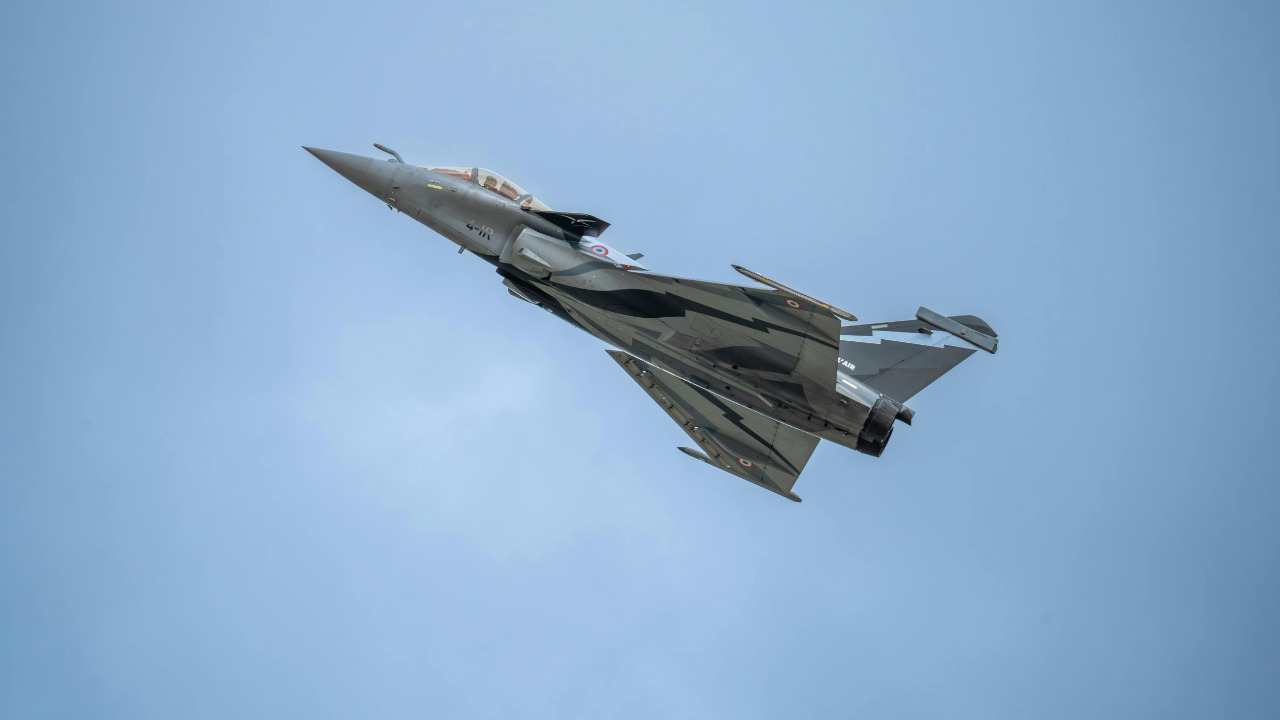

The US Navy is moving its first air-launched hypersonic strike capability onto one of its most familiar workhorses, the F/A-18 Super Hornet. A new missile program known as Blackbeard will give carrier air wings a weapon that flies at hypersonic speed and can be fired from existing fighters instead of niche bombers or ground batteries. The decision signals a shift toward hypersonic weapons that fit into the Navy’s current force structure rather than requiring entirely new platforms.
Blackbeard is emerging as the Pentagon races to field practical hypersonic systems while cutting programs that have grown too slow or expensive. By tying this missile to the Super Hornet, the Navy is betting on a faster path from contract to carrier deck.
How Blackbeard reshaped the Navy’s hypersonic plans
The centerpiece of the shift is a Navy contract with hypersonic weapon startup Castelion, which secured a $105 million deal to develop an air-launched missile for the F/A-18. According to contract details, the company is tasked with designing, building, and flight testing a missile that can reach hypersonic speeds while fitting under the Super Hornet’s wings. That requirement alone sets Blackbeard apart from earlier Navy hypersonic efforts that focused on large boost-glide systems carried by destroyers or submarines.
Reporting on the program describes Blackbeard as a two-stage weapon, with a booster that accelerates the missile to high speed and a second stage that sustains hypersonic flight. The design is intended to give carrier air wings a long-range strike option that can be launched from existing flight decks without heavy modification. Coverage of the program notes that the missile is being engineered to fit within the F/A-18’s established weight and size limits, which suggests a focus on compatibility rather than a clean-sheet aircraft and weapon combination.
The Navy’s choice of a startup for this role also signals a structural change in how hypersonic programs are being sourced. Instead of relying solely on large primes, the service is turning to smaller firms that specialize in rapid prototyping and flight testing. Reports on Castelion’s Blackbeard work describe an aggressive schedule that aims to move from design to flight tests in a compressed timeline, with the goal of producing operational missiles before the end of the decade.
Blackbeard also sits alongside the Pentagon’s broader MACE initiative, which aims to procure thousands of affordable hypersonic and high-speed weapons. The Navy’s decision to align its first fighter-launched hypersonic missile with that push for quantity and cost control reflects a move away from one-off experimental rounds toward scalable production.
Why arming Super Hornets with Blackbeard matters now
The timing of Blackbeard’s emergence is shaped by both external threats and internal budget pressure. The Pentagon’s MACE program envisions as many as 4,500 hypersonic-capable missiles across the services, with an emphasis on weapons that are cheaper and more numerous than earlier boutique designs. Analysts note that the program is intended to deliver a mix of air, sea, and ground-launched weapons that can be produced at scale, and that Blackbeard fits neatly into this push for thousands of missiles rather than dozens.
For the Navy, putting a hypersonic missile on the F/A-18 gives carrier strike groups a way to threaten high-value targets at long range while staying outside the densest air defenses. A Super Hornet carrying Blackbeard could launch from a carrier deck, climb to altitude, and fire from well beyond the reach of many surface-to-air systems. That extends the reach of the carrier air wing without requiring a new aircraft type or a specialized bomber.
Blackbeard also arrives as the services try to make hypersonic weapons more mobile and survivable. The Army and Navy have been adapting hypersonic launchers to trucks and other mobile platforms, turning what began as large, fixed batteries into more flexible systems. Reporting on new launch concepts describes efforts to place hypersonic weapons on mobile launchers that can disperse and relocate quickly. An air-launched missile on the Super Hornet is a natural extension of that logic, since carrier decks and forward airfields already provide mobile basing for naval aviation.
There is also a competitive dimension. China and Russia have both fielded or tested hypersonic weapons that can threaten ships and bases at long range. US officials have been under pressure to respond with systems that are not only technically impressive but also operationally practical. By choosing a missile that fits on a widely deployed fighter, the Navy can bring hypersonic capability into regular exercises, deployments, and deterrence patrols, rather than confining it to a small number of specialized units.
Blackbeard is not the only air-launched hypersonic project in the US portfolio. The Air Force and Navy have explored concepts for hypersonic cruise missiles and boost-glide systems carried by bombers and fighters, including a program to arm the F-35 with a weapon known as Mako. That effort, focused on a compact missile that fits inside the F-35’s weapons bay, illustrates how designers are trying to match hypersonic performance with existing aircraft constraints. Reporting on Mako for the shows a similar emphasis on integrating new missiles into current fleets rather than building new aircraft around them.
In that context, Blackbeard is part of a broader shift toward hypersonic weapons that are smaller, more modular, and more tightly integrated with frontline platforms. The Super Hornet’s large installed base across the fleet makes it an attractive first host, even as the Navy transitions some squadrons to the F-35C.
Next steps for Blackbeard and carrier-based hypersonic strike
The path from contract award to operational deployment will run through a series of design reviews, ground tests, and flight trials. Castelion is expected to build multiple test articles of the Blackbeard missile, validate its booster and second-stage propulsion, and then conduct live launches from F/A-18s. The goal is to prove that the missile can separate cleanly, achieve stable hypersonic flight, and hit targets at the planned range.
Integrating the weapon with the Super Hornet will require more than just physical fit. The missile’s guidance, targeting, and datalink systems must interface with the aircraft’s existing sensors and mission computers. That integration will likely draw on experience from other advanced missiles, including the Navy’s work on an air-launched hypersonic anti-ship cruise missile for future fighters. Reporting on that separate effort has highlighted challenges in balancing speed, range, and warhead size within the constraints of fighter hardpoints, a set of tradeoffs that Blackbeard’s designers will have to navigate as well.
Looking beyond the F/A-18, Blackbeard could influence how the Navy arms its next generation of aircraft. If the missile proves reliable and affordable, it might be adapted for other platforms or serve as the basis for a family of related weapons. The logic behind the MACE program, which seeks common components and shared propulsion across multiple missile types, suggests that lessons from Blackbeard could feed into future designs that serve both carrier aviation and land-based forces.
The Army and Navy experiments with truck-mounted and shipboard hypersonic launchers hint at another possibility. A missile that is compact enough for a Super Hornet might also be adaptable to vertical launch cells on surface combatants or to containerized launchers on auxiliary ships. That kind of cross-platform compatibility would make it easier to reach the large numbers envisioned under the MACE plan, since the same production lines could feed multiple services and mission sets.
At the same time, the Navy will have to weigh Blackbeard against other hypersonic options in development. The services have already canceled or restructured several programs that failed to meet performance or cost targets. Analysts following the MACE portfolio have warned that the Pentagon cannot afford a stable of bespoke hypersonic missiles that each serve only a narrow role. Blackbeard’s success will likely hinge on whether it can deliver both performance and price in a way that fits the drive for scalable production rather than boutique procurement.