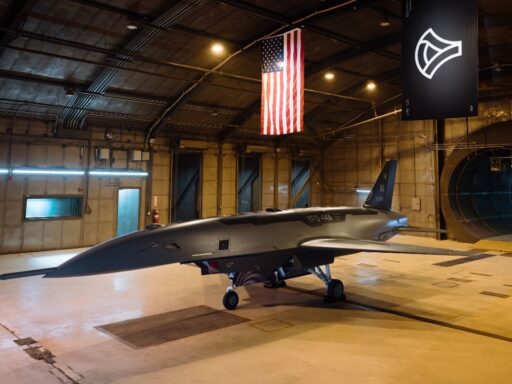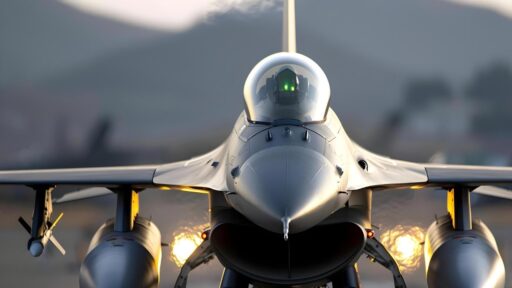
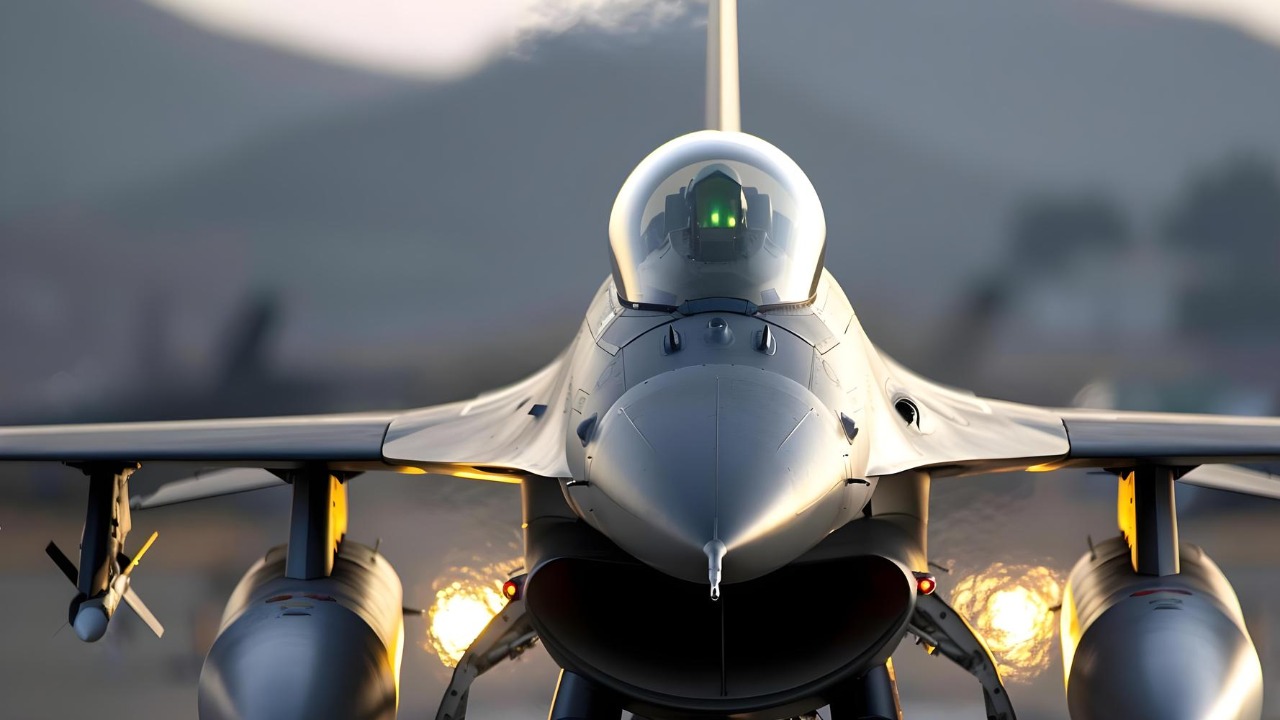

The FQ-44 is the U.S. Air Force’s latest attempt to turn the abstract idea of “loyal wingman” drones into a mass-produced combat asset that can fly and fight alongside crewed jets at a fraction of the cost. Rather than chasing a handful of exquisite prototypes, the program is structured to buy large numbers of expendable but capable aircraft that can be risked on missions too dangerous for pilots. The result is a robot wingman designed from the outset around scale, attrition and budget discipline.
How the FQ-44 concept evolved into a mass-production robot wingman
The FQ-44 sits inside the Air Force’s Collaborative Combat Aircraft family, a set of uncrewed platforms intended to operate with fighters such as the F-35 and the Next Generation Air Dominance aircraft. Earlier work on loyal wingman drones focused on bespoke demonstrators that proved autonomy and teaming concepts but did not translate easily into affordable production fleets. The FQ-44 flips that logic, treating production and unit cost as design drivers rather than afterthoughts.
According to contract information on FQ-42A and FQ-44A, the Air Force structured its first CCA production awards around two baseline models, with the FQ-44A positioned as a higher-end but still cost-constrained option. The service signaled that it wants not dozens but hundreds of airframes, and it expects rapid learning curves in manufacturing and software as industry ramps up. That scale requirement has shaped everything from airframe materials to propulsion choices.
Instead of loading the FQ-44 with every possible sensor and weapon, planners have emphasized modular payload bays and open-architecture mission systems. The goal is to let the same basic air vehicle serve as a sensor node, decoy, jammer or weapons truck depending on the package bolted on for a specific sortie. This modularity is central to the “cheap mass” idea: the Air Force can buy a common chassis in bulk, then tailor smaller batches with specialized kits as needs evolve.
The autonomy stack is another area where the FQ-44 differs from older uncrewed aircraft. Legacy drones such as the MQ-9 rely heavily on remote pilots and high-bandwidth links, which are vulnerable to jamming and latency. By contrast, the CCA family is being designed to operate with more onboard decision-making so that a flight of FQ-44s can hold formation, navigate contested airspace and execute preplanned tactics even when connections to human controllers are degraded. In this construct, the human pilot in a lead fighter becomes more of a mission commander than a stick-and-rudder operator for each drone.
Why a cheap, attritable wingman matters in a missile-saturated Pacific fight
The strategic logic behind the FQ-44 is most obvious in a potential conflict with China, where both sides expect dense layers of long-range missiles and integrated air defenses. Reporting on U.S. planning for a Western Pacific war describes a race between precision munitions and survivable aircraft, with American forces worried that their current fleet of crewed jets and tankers could be outlasted by Chinese missile inventories. In that scenario, a force built around a small number of extremely expensive fighters and bombers risks being ground down faster than it can be replaced.
Analysts who track uncrewed combat aircraft argue that “robot wingmen” such as the FQ-44 are the Air Force’s answer to that problem. By fielding large numbers of relatively low-cost drones that can absorb losses and keep flying, the service aims to create a more resilient air order of battle that can survive repeated missile salvos and still generate combat power. A detailed look at the concept describes how these aircraft are intended to help U.S. forces outlast China’s missiles in a prolonged fight.
In practical terms, that means using FQ-44s for the riskiest jobs at the forward edge of the battlespace. A formation of crewed fighters could stay farther from hostile air defenses, while their uncrewed partners press closer to identify targets, soak up enemy radar emissions and, when ordered, launch weapons. If a wave of surface-to-air missiles or long-range air-to-air missiles is inbound, commanders can maneuver the drones into the threat envelope first, forcing the adversary to waste expensive interceptors on cheaper airframes.
The economics behind this trade are as important as the tactics. A modern stealth fighter with a trained pilot represents a vast investment of money and time, and each loss is strategically painful. If the FQ-44 can be built and fielded for a fraction of that cost, the Air Force can accept attrition that would be unacceptable with crewed aircraft. That changes how planners think about saturation attacks, decoy tactics and the overall tempo of operations in a high-end war.
The presence of autonomous wingmen also reshapes pilot workload and survivability. Instead of flying into dense defenses alone, a pilot could command a small “pack” of FQ-44s that extend sensor range, provide extra weapons and offer physical shielding against incoming missiles. In theory, this teaming should let a smaller number of crewed fighters punch above their weight, which matters in any scenario where basing access is limited and sortie generation is constrained by logistics.
Industrial, doctrinal and ethical questions that will shape what comes next
Even if the FQ-44’s basic concept is sound, its future hinges on production realities and doctrinal choices. The Air Force has signaled that it wants to move from development into serial manufacturing quickly, but the industrial base must absorb new workloads while still building crewed aircraft, munitions and support systems. Any delays in setting up efficient assembly lines for FQ-44 airframes or integrating mission systems could slow the scale-up that gives the concept its value.
Software will be at least as decisive as hardware. The CCA family depends on autonomy algorithms that are smart enough to handle complex air combat tasks yet predictable and controllable under the laws of armed conflict. Developers are working on “human-on-the-loop” models in which the drones execute preapproved behaviors but still require human authorization for lethal actions. How that balance is implemented in the FQ-44 will influence trust from pilots and commanders and will shape rules of engagement in any future conflict.
Doctrine is still catching up with the technology. Integrating FQ-44s into existing squadrons raises questions about training, command relationships and maintenance. Fighter pilots will need new tactics to manage mixed formations of crewed and uncrewed aircraft, and ground crews will have to learn how to service more numerous but simpler airframes. Air operations centers must adapt their planning tools and communications architectures so they can task and retask swarms of drones alongside traditional assets.
There are also unresolved questions about how allies and partners might plug into a CCA-centric force. If the United States fields large numbers of FQ-44s in the Pacific, allied air forces operating F-35s or other Western fighters might want to integrate with those uncrewed systems. That would require agreements on data links, autonomy behaviors and shared targeting processes, all under tight security constraints. The more interoperable the system becomes, the more deterrent value it may have, but the harder it is to manage technology transfer and cyber risk.
Ethical and political debates will follow the FQ-44 into any operational theater. Even with humans retaining control over lethal decisions, the image of swarms of armed drones flying ahead of crewed jets will raise concerns about accountability when things go wrong. Civilian leaders will need clear explanations of how these systems are tested, how they fail and how responsibility is assigned in complex engagements. Those questions will matter for domestic support as well as for how adversaries frame any incidents in the information domain.
For now, the FQ-44 represents a bet that quantity, smart autonomy and modular design can restore an American advantage in high-intensity air warfare without bankrupting the defense budget. If production ramps as planned and the aircraft perform as advertised, future air campaigns could feature formations where a handful of pilots orchestrate dozens of uncrewed teammates. If the concept stumbles on cost, complexity or trust, the Air Force may find itself searching again for a way to scale combat air power at a price it can sustain.