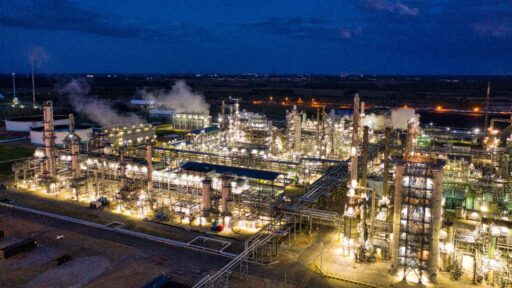
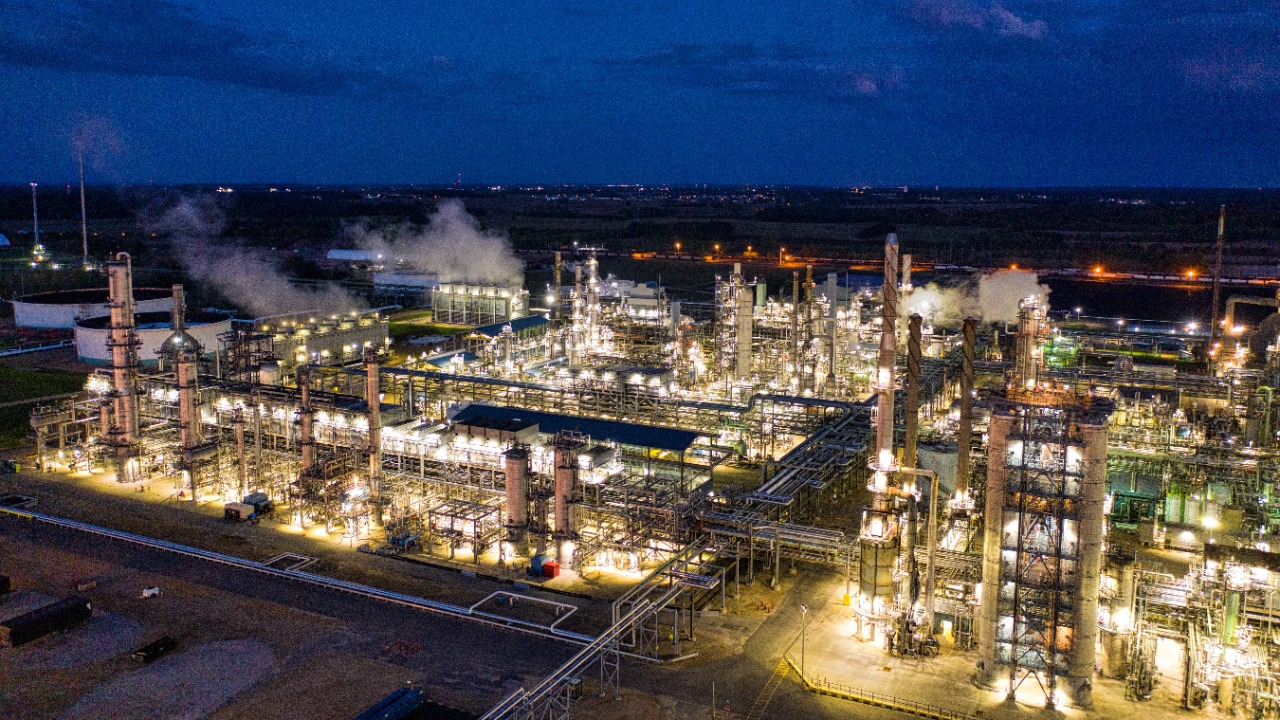

Ukraine says its long-range forces have struck two major oil refineries deep inside Russia, extending a campaign designed to disrupt fuel production, military logistics and a crucial source of revenue for Moscow’s war effort.
President Volodymyr Zelenskyy identified the targets as the Bashneft-Novoil refinery in Russia’s Bashkortostan republic and the Slavneft-YANOS refinery in the Yaroslavl region. Bashneft-Novoil is more than 1,300 kilometres, or roughly 800 miles, from the front line, while the Yaroslavl facility lies almost 700 kilometres from the Ukrainian border.
Russian authorities confirmed a major drone attack in Yaroslavl and a fire at the refinery. Moscow had not immediately provided comparable confirmation of damage at Bashneft-Novoil, meaning the full results of Ukraine’s operation remained unclear.
Fire Breaks Out at the Yaroslavl Refinery
Yaroslavl regional governor Mikhail Yevrayev said Russian air defences and electronic-warfare units had intercepted 93 drones during what he described as the largest Ukrainian drone attack yet on the region.
According to Yevrayev, falling drone debris struck oil-storage tanks at the refinery and started a fire. Four people received shrapnel injuries, while three private homes caught fire and several residential buildings sustained damage. Emergency crews were deployed to contain the blaze.
Videos circulating online appeared to show thick black smoke above the industrial site, although the footage and the exact extent of the damage had not been independently verified when the attack was first reported.
That distinction matters. A fire in storage tanks can interrupt operations and destroy finished products, but it does not necessarily mean that the refinery’s main processing units have been disabled. An attack on a crude-distillation unit, catalytic cracker or hydrotreater would usually have a more prolonged impact on output.
Slavneft-YANOS Is One of Russia’s Largest Refineries
The Slavneft-YANOS refinery is located near Yaroslavl, approximately 250 kilometres northeast of Moscow. It can process about 15 million metric tonnes of crude oil annually, equivalent to roughly 300,000 barrels per day.
The plant produces petrol, diesel, jet fuel, liquefied petroleum gas, bitumen, fuel oil and other petroleum products. Its size makes it important not only to the regional economy but also to Russia’s broader fuel-distribution system.
Ukraine has targeted the refinery before. Previous attacks have reportedly forced production suspensions or damaged parts of the facility, demonstrating that distance from Ukraine no longer guarantees protection from long-range drones.
Repeated strikes can become more disruptive than a single dramatic explosion. A refinery that has recently repaired damaged equipment may face new delays, while spare components, specialist labour and fire-control resources become increasingly difficult to allocate across multiple affected plants.
Bashneft-Novoil Is an Even Deeper Target
The second refinery named by Zelenskyy, Bashneft-Novoil, is located in Ufa, the capital of Bashkortostan. The facility can process more than seven million tonnes of crude oil annually and forms part of a much larger refining and petrochemical complex in the region.
Bashneft-Novoil produces fuels, lubricants, bitumen and other petroleum products. It has also been attacked previously, reflecting Ukraine’s growing ability to reach industrial targets well beyond Russia’s border regions.
There was no immediate Russian confirmation of significant damage from the latest reported strike in Bashkortostan. Without satellite imagery, company statements or evidence of an operational shutdown, claims about the exact outcome should therefore remain cautious.
Together, the two targeted refineries have nameplate processing capacity exceeding 22 million tonnes of crude annually. Their combined importance helps explain why Ukraine highlighted the operation even before the long-term damage had been established.
Why Ukraine Keeps Targeting Oil Refineries
Russia earns substantial revenue from producing and selling oil. Refineries also convert crude into the petrol, diesel and aviation fuel required by civilian consumers, transport companies and military forces.
Ukraine’s strategy is not necessarily to stop Russian oil extraction directly. It is attempting to make that oil more difficult to process, distribute and use.
A damaged refinery can reduce the domestic supply of motor fuel, force longer transportation routes and require expensive repairs. It can also increase pressure on other refineries, which may be asked to raise production while facing their own maintenance schedules and security threats.
Zelenskyy has described attacks on Russian energy infrastructure as Ukrainian “long-range sanctions,” arguing that they place direct economic pressure on the country financing and supplying the invasion. Ukraine has said that Russian oil facilities support military operations and should therefore be regarded as legitimate wartime targets.
The Campaign Has Already Pressured Russia’s Fuel Market
Ukraine intensified attacks against Russian refineries, depots, pipelines and export infrastructure during 2026. Facilities in Omsk, Perm, Ryazan, Saratov, Ufa, Yaroslavl and several other regions have reported fires, shutdowns or operational disruption.
Reuters reported in July that Russia’s domestic petrol production had fallen to around 65 percent of capacity amid the accumulated refinery attacks. Fuel shortages became particularly serious in occupied Crimea and appeared in several Russian regions, prompting authorities to restrict some diesel exports and take steps to stabilise supplies.
The latest attacks arrived just as Russian refinery throughput had begun recovering. Russia’s crude and condensate production increased by around 100,000 barrels per day in July, rising above nine million barrels per day, partly because refineries were processing more oil again. Industry sources warned that escalating drone attacks in late July and early August could reverse that improvement.
Russia planned to raise crude exports from its western ports in August as refinery outages made more unprocessed oil available. However, port capacity, tanker availability and transportation constraints limit how easily every unused barrel can be redirected overseas.
Refinery Strikes Do Not Automatically Stop Oil Revenue
The economic effect of attacking refineries is more complicated than simply removing oil from the global market.
When a refinery stops operating, Russia may export more crude oil instead of converting it into fuel domestically. That can preserve some export revenue, particularly when international buyers remain available.
However, crude oil and refined products serve different markets. Russia may still experience domestic petrol or diesel shortages even if its total crude exports remain strong. Exporting extra crude also depends on sufficient pipelines, ports and tankers, all of which have capacity limits.
The greatest pressure therefore comes when several parts of the system are affected simultaneously: refineries cannot process normally, ports cannot absorb all displaced crude, tankers are unavailable and fuel shortages force government intervention.
Ukraine has expanded its operations beyond refineries by claiming attacks on oil terminals, pumping stations, tankers and vessels belonging to Russia’s so-called shadow fleet. Zelenskyy also said Ukrainian forces struck Russian patrol boats and shadow-fleet vessels during the latest round of operations, although he provided few details.
Russia Reported a Massive Nationwide Drone Assault
Russia’s Defence Ministry said its air defences intercepted 605 Ukrainian drones over Russian territory during the overnight attack. Such claims are difficult to verify independently, and Russian authorities commonly describe damage as being caused by falling debris after drones are intercepted.
The scale of the reported assault shows how the war’s geography has changed. Ukraine is increasingly using large numbers of relatively inexpensive unmanned aircraft to force Russia to defend industrial facilities hundreds or thousands of kilometres from the front.
Protecting such a large territory requires radar systems, electronic warfare, mobile air-defence teams and interceptor missiles. Every system positioned around an inland refinery is one that cannot be used elsewhere.
Even intercepted drones can create disruption. Airports may suspend operations, workers may be evacuated, fires can start from debris and industrial plants may temporarily halt production while inspections are completed.
The Strikes Came Amid Continuing Russian Attacks on Ukraine
The refinery operation occurred as Russia continued launching missiles, glide bombs and attack drones against Ukrainian cities.
Ukraine’s air force said Russia fired four missiles and 101 long-range drones during the same overnight period. At least three civilians were killed and 22 were wounded in attacks across several Ukrainian regions, according to local authorities cited by the Associated Press.
The Kyiv region was also observing a day of mourning after a Russian missile-and-drone attack killed 17 people the previous day. The United Nations reported that 1,396 civilians were killed and 7,978 injured in Ukraine during the first half of 2026, reflecting a substantial increase from the same period a year earlier.
This wider context shows that the refinery strikes form part of an escalating long-range war in which both sides are attempting to damage infrastructure far behind the front.
The Real Impact Will Depend on Repair Time
The immediate images from Yaroslavl were dramatic, but the strategic importance of the strikes will depend on what was damaged and how quickly Russia can restore normal operations.
Burned storage tanks may be replaced more quickly than specialised processing equipment. Damage to control systems, distillation units or complex imported machinery could produce a longer shutdown, particularly when sanctions restrict access to replacement components.
Confirmation may come through satellite imagery, reduced refinery throughput, changes in regional fuel prices or industry reports showing that production units have been taken offline.
For Ukraine, the operation demonstrates growing reach and an ability to threaten important sites far inside Russian territory. For Russia, it creates another requirement to defend a vast energy network that remains central to both its civilian economy and military campaign.
The two refinery strikes may not transform the war individually. Their significance lies in repetition. Each new attack raises repair costs, spreads air defences more thinly and increases the possibility that temporary disruptions will develop into sustained pressure on Russia’s fuel system.