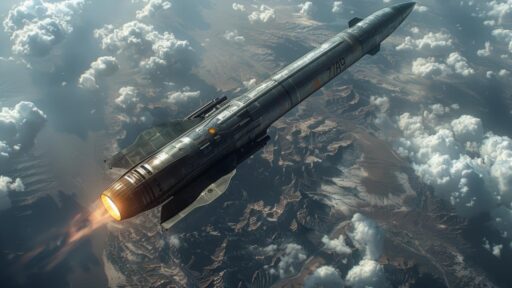
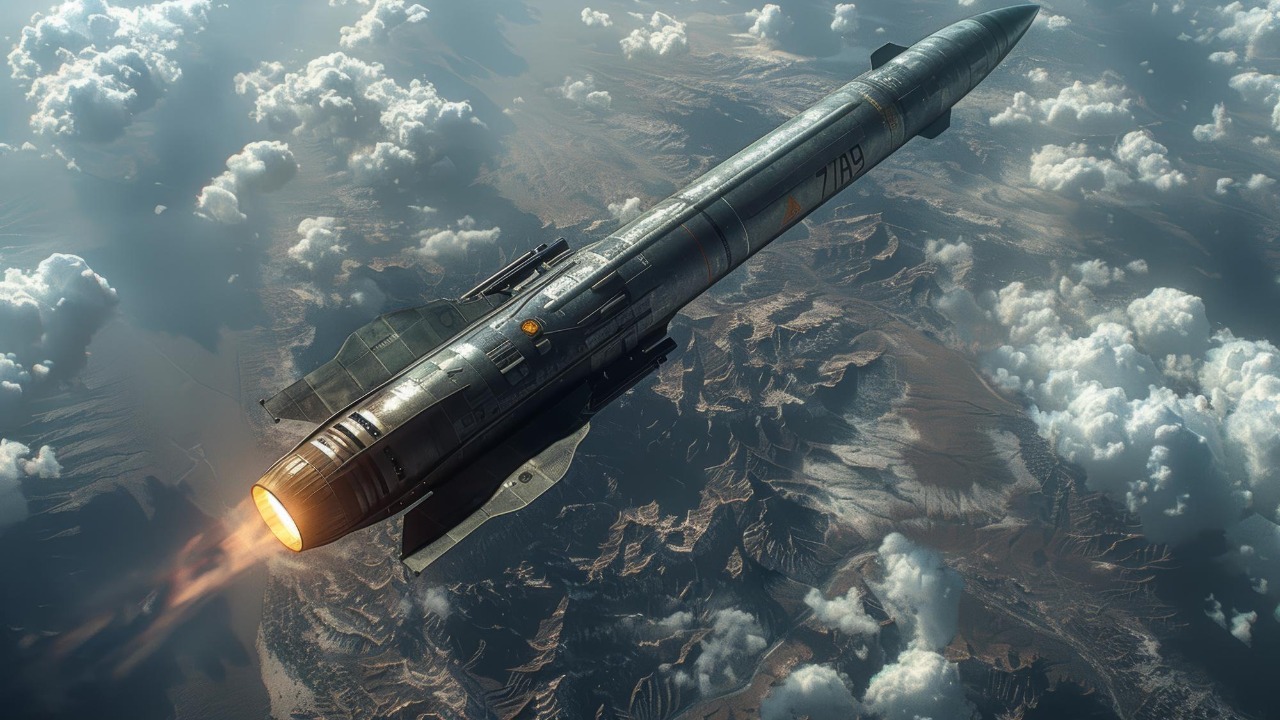

The US Navy is moving to put a new class of air-launched hypersonic missile, known as Blackbeard, on the F/A-18 Super Hornet, turning a workhorse strike fighter into a testbed for extreme-speed weapons. The decision links a cutting-edge startup program to one of the fleet’s most familiar jets and underscores how urgently the service wants a carrier-based hypersonic punch.
Instead of waiting for a brand-new aircraft, the Navy is betting that a tailored missile and a rapid-development model can give carrier air wings a long-range, high-speed option in the near term. That choice carries big implications for how quickly the United States can respond to rival hypersonic arsenals at sea.
How Blackbeard and the Super Hornet became the Navy’s new pairing
The Blackbeard missile originates from Castelion, a hypersonic weapon startup that secured a $105 million Navy to develop an air-launched system for the F/A-18. The award covers design, integration and testing, and it explicitly centers on giving the Super Hornet a weapon that can reach hypersonic speeds while staying compatible with the jet’s existing hardpoints and carrier operations.
As part of that push, the Navy has already ordered 50 Blackbeard missiles for its Super Hornet squadrons. This initial batch is intended to support flight testing, tactics development and early operational capability, rather than full-scale fleet armament. Even so, a concrete production order moves the project out of the concept phase and into hardware that has to be stored, loaded and flown from carriers.
Castelion’s design approach, according to recent reporting on, leans on modular components and commercially influenced manufacturing. The company aims to shorten development cycles by building around proven propulsion and guidance technologies, then optimizing for the size, weight and balance limits of the F/A-18. That philosophy is meant to avoid the long, expensive detours that have plagued some other hypersonic efforts.
Blackbeard also sits inside a broader Navy effort to field thousands of advanced missiles through the Maritime Accelerated Capability Enabler, or MACE, program. The service has signaled that it could eventually acquire up to 4,500 hypersonic missiles under MACE, a figure that includes Blackbeard and other designs. Linking Blackbeard to a high-volume initiative suggests the Navy sees it as more than a boutique science project.
Design shifts that set Blackbeard apart from earlier hypersonic efforts
Unlike some larger boost-glide systems that require heavy bombers or specialized launchers, Blackbeard is being tailored from the start for a carrier-capable fighter. That constraint drives several design choices, from overall length and diameter to how the missile’s center of gravity interacts with the F/A-18’s wing and fuselage pylons.
Program reporting indicates that Blackbeard is expected to reach hypersonic speeds while still fitting within the loadout patterns that Super Hornet crews already use for long-range strike. By contrast, the Navy’s earlier air-launched hypersonic work has often focused on larger, more complex weapons that would be difficult to operate routinely from crowded carrier decks. Blackbeard’s configuration aims to reduce that friction so deck crews can treat it more like a high-end missile than a one-off science experiment.
At the same time, the Navy has been maturing a separate air-launched hypersonic anti-ship cruise missile concept that recently made a significant step forward. That effort appears focused on a more specialized maritime strike role, with a strong emphasis on anti-ship targeting and survivability in dense air defenses. Blackbeard, by comparison, is being framed as a flexible hypersonic option that can support both maritime and land-attack missions from the carrier air wing.
The Blackbeard program also reflects a shift in how the Navy works with industry. Castelion, as a startup, is expected to move faster and accept more technical risk than traditional prime contractors. The $105 million contract structure, paired with an early production order of 50 missiles, creates a test case for whether a smaller firm can deliver frontline hypersonic capability at speed and scale.
Why putting hypersonic weapons on Super Hornets matters now
Arming the F/A-18 with a hypersonic missile changes the geometry of a carrier air wing’s reach. A Super Hornet already carries long-range subsonic cruise missiles, but a hypersonic weapon compresses the time between launch and impact and complicates an adversary’s ability to track and intercept the strike. In a Pacific scenario, that combination of range and speed could help carriers hold distant surface groups or land targets at risk while staying outside the densest threat zones.
The timing reflects pressure from competitors. China and Russia have both fielded or tested hypersonic systems that can threaten surface ships and fixed installations. The Navy’s own inventory, by contrast, has lagged on air-launched hypersonic options. By choosing to integrate Blackbeard on the Super Hornet, the service is effectively saying it cannot wait for a next-generation carrier fighter to catch up.
The Super Hornet is also a practical choice. It already forms the backbone of carrier air wings, with established logistics chains, training pipelines and maintenance infrastructure. Integrating Blackbeard on an aircraft that squadrons know well reduces the number of variables in early operational testing. Pilots can focus on the missile’s performance and tactics rather than learning an entirely new airframe at the same time.
There is a budget angle as well. The MACE program’s ambition to field up to 4,500 hypersonic missiles signals a shift from small-batch prototypes to inventory weapons that can be bought, stocked and used in quantity. For that to work, at least some of those missiles must fit on aircraft that the Navy already owns in large numbers. Blackbeard on the F/A-18 aligns with that logic, effectively turning a legacy platform into a bridge toward a larger hypersonic arsenal.
Operational and strategic ripple effects for carrier air wings
Once Blackbeard is fully integrated, carrier strike groups will have to rethink how they plan missions. A hypersonic missile from a Super Hornet could arrive on target far ahead of accompanying subsonic weapons, which affects everything from suppression of enemy air defenses to coordinated maritime strikes. Air wings will need new playbooks for sequencing hypersonic shots with electronic warfare, decoys and follow-on salvos.
Deck operations will also evolve. Hypersonic missiles tend to be more sensitive to handling, storage conditions and preflight checks than legacy munitions. Ordnance crews will have to incorporate new safety procedures and diagnostics into already packed flight deck routines. The Navy’s decision to start with 50 missiles for test and early use gives it room to refine those processes before any larger buy under MACE.
Strategically, a carrier-based hypersonic option could influence how adversaries deploy their own high-value assets. Surface action groups, long-range radar sites and command nodes that previously relied on distance and layered defenses may have to disperse or invest in new tracking and interception capabilities. Even a modest number of operational Blackbeard missiles on forward-deployed carriers could alter regional calculations.
What comes next for Blackbeard and the Super Hornet fleet
The near-term path for Blackbeard runs through integration testing, live-fire events and tactics development with fleet squadrons. The $105 million development contract and the initial 50-missile order create a clear benchmark: Castelion must prove that its design can be carried, launched and guided effectively from the F/A-18 in realistic conditions.
If those milestones go well, the Navy will face decisions about scaling production under the broader MACE framework. The stated ambition to acquire up to 4,500 hypersonic missiles across multiple types means Blackbeard will likely compete for funding and priority against other designs. Performance in early fleet trials, unit cost and ease of maintenance will all factor into how large a share of that future inventory the missile secures.
There is also the question of how long the Super Hornet remains the primary airframe for this class of weapon. As the Navy pursues its next-generation carrier fighter, it will have to decide whether to port Blackbeard or its successors to that platform or to treat the missile as a capability tailored mainly to the current fleet. For now, the focus is on getting a credible hypersonic strike option to sea as quickly as possible.