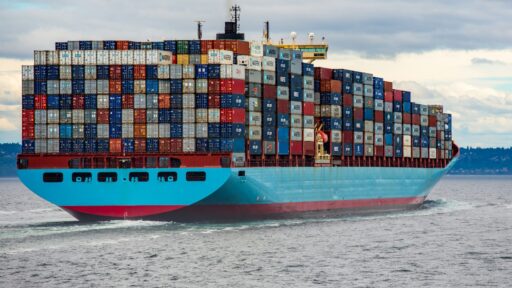
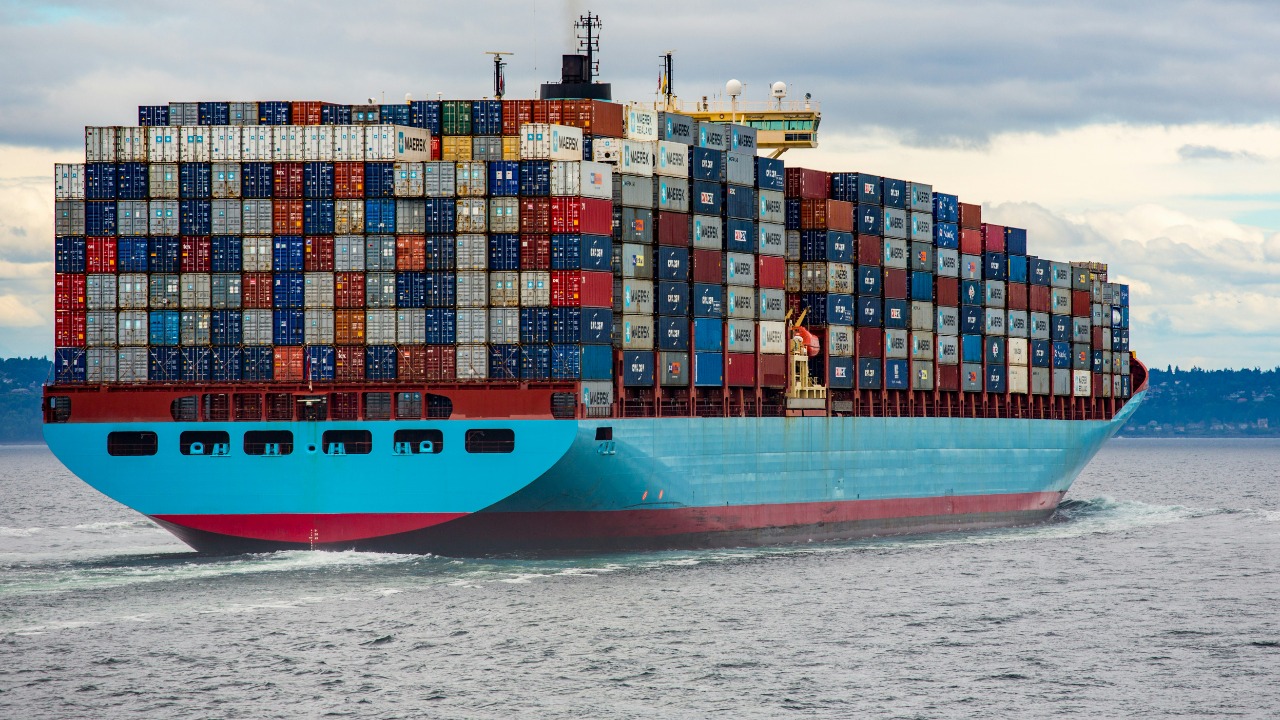

The largest container ships in the world can now carry more than 24,000 steel boxes at once, turning a single vessel into a floating warehouse that moves goods across oceans at massive scale. These ships are so large that they can stretch about 400 meters in length, carry stacks of containers above and below deck, and transport products for thousands of businesses in one voyage.
One of the best-known examples is the MSC Irina class. According to Offshore Energy, MSC Irina has a capacity of 24,346 TEU, measures 399.99 meters long, and has a beam of 61.3 meters. That makes it one of the largest container ships ever delivered and a symbol of how far global shipping has grown.
The phrase “24,000 steel boxes” usually refers to TEU, or twenty-foot equivalent units. A TEU is a standard measurement based on one 20-foot shipping container. A 40-foot container counts as two TEU. This measurement lets shipping companies compare vessel capacity even when ships carry a mix of 20-foot and 40-foot containers.
What Does 24,000 TEU Really Mean?
The number sounds impressive, but it is hard to picture. A ship with space for more than 24,000 TEU can carry the equivalent of more than 24,000 standard 20-foot containers. In real-world shipping, many containers are 40 feet long, so the physical number of boxes may be lower than the TEU figure. Still, the scale is enormous.
The World Shipping Council explains that container shipping is measured in TEU because containers come in different sizes but need a common unit for capacity, trade volume, and fleet comparison. This standardized system is one reason global shipping can operate so efficiently. A container can move from a factory to a truck, from a truck to a port, from a port to a ship, and then back onto rail or road at the destination.
This standardization is one of the most important inventions in modern trade. Before container shipping, cargo had to be loaded and unloaded piece by piece. That was slow, expensive, and labor-heavy. Containers changed the system by turning goods into standardized units that could be stacked, locked, tracked, and moved quickly.
Why Ships Keep Getting Bigger
The reason container ships have grown so large is simple: scale can lower transport cost per container. If one massive ship can carry more cargo in a single voyage, shipping lines can spread fuel, crew, port fees, and operating costs across thousands of containers. That can make long-distance trade more efficient.
Large vessels are especially useful on major east-west trade routes between Asia, Europe, and North America. These routes move huge volumes of electronics, clothing, machinery, furniture, parts, retail goods, industrial products, and consumer items. The demand is high enough to support ultra-large container vessels.
The International Chamber of Shipping notes that shipping carries around 90 percent of world trade. Container ships are a major part of that system because they move manufactured goods and retail products through global supply chains.
Bigger ships help shipping companies handle enormous volumes, but they also create new challenges. Ports must have deep water, long berths, huge cranes, strong yard operations, and fast inland connections to handle them. A ship may be capable of carrying 24,000 TEU, but not every port can receive it.
How Containers Are Stacked on Ships
Container ships are designed like giant floating grids. Containers are loaded into slots below deck and stacked above deck in carefully planned rows. Each container must be placed according to weight, destination, balance, hazardous-material rules, and unloading sequence.
This planning is not random. A container ship cannot simply be filled like a warehouse. Heavy containers usually need to be placed lower for stability. Containers going to later ports may need to be placed below or behind containers going to earlier ports. Refrigerated containers need power connections. Dangerous goods must be separated according to safety rules.
A large ship carrying thousands of containers requires advanced stowage planning software and careful coordination between shipping lines, terminal operators, and ports. If containers are placed incorrectly, unloading can become slower, stability can be affected, and safety risks can increase.
The Engineering Behind Mega Ships
A container ship that carries more than 24,000 TEU is an engineering achievement. It must be long enough and wide enough to hold thousands of containers, but also strong enough to handle waves, wind, twisting forces, engine vibration, and heavy cargo loads.
The structure must manage stress along the hull as the ship moves through rough seas. The engine and propulsion system must move a vessel that weighs hundreds of thousands of tons when fully loaded. The ship must also meet rules for navigation, fire safety, emissions, crew safety, and cargo handling.
The International Maritime Organization sets global standards for shipping safety, environmental protection, and maritime security. As ships become larger, compliance with safety and environmental rules becomes even more important because the impact of an incident can be much bigger.
Why Ports Need to Be Upgraded
Not every port can handle the largest container ships. Ultra-large vessels need deep channels, wide turning basins, long berths, high-capacity cranes, strong mooring systems, and enough yard space to process thousands of containers quickly.
When a mega ship arrives, it can unload and load huge numbers of containers in a short time. That creates pressure on the port, truck gates, rail systems, warehouses, customs operations, and local roads. If the port cannot process containers fast enough, congestion can spread through the supply chain.
Ports that want to attract the largest vessels often invest in deeper dredging, taller cranes, automation, digital tracking systems, and rail connections. The goal is not only to receive the ship, but to keep cargo moving after it leaves the vessel.
Bigger Ships Can Reduce Costs, But Not Always Delays
Mega ships can reduce shipping costs per container when everything works smoothly. But when things go wrong, the disruption can also be bigger. A delayed ultra-large ship can affect thousands of containers at once. A port backlog can grow quickly when several mega ships arrive close together.
The COVID-era supply chain crisis showed how container shipping delays can ripple through the global economy. A lack of containers, port congestion, labor shortages, and demand swings caused major delays and higher freight rates. Larger ships helped move huge volumes, but they could not solve every bottleneck.
The lesson is that ship size is only one part of supply chain performance. Ports, rail, trucking, warehouses, customs, labor, weather, and consumer demand all matter. A 24,000-TEU vessel is powerful, but it still depends on the rest of the logistics system.
Why Mega Ships Matter to Consumers
Most people never see a container ship up close, but they benefit from them every day. The phone in your hand, the laptop on your desk, the clothes in your closet, the furniture in your home, and the parts used in your car may have moved through container shipping at some point.
Mega ships help make global products more available and often cheaper. By moving goods in bulk across oceans, they support the retail supply chains that fill stores and online warehouses. They also support manufacturers that depend on parts and materials from different countries.
At the same time, dependence on container shipping means global events can affect local prices and product availability. A port strike, canal disruption, storm, war risk, vessel accident, or sudden demand surge can delay goods and raise costs. The bigger the ships and the more concentrated the routes, the more visible these disruptions can become.
Environmental Questions Around Bigger Ships
Large container ships can be more fuel-efficient per container than smaller vessels because they spread fuel use over more cargo. However, shipping still produces greenhouse gas emissions, air pollution, and other environmental impacts.
The shipping industry is under pressure to reduce emissions through cleaner fuels, more efficient engines, better routing, shore power, slow steaming, and new ship designs. The International Maritime Organization’s greenhouse gas strategy aims to reduce emissions from international shipping and move the sector toward cleaner operations.
Mega ships can be part of that efficiency story, but they are not a complete solution. A very large ship still burns fuel, and the total scale of global trade means shipping emissions remain a major challenge. Cleaner technology and stronger regulations will be needed as vessels keep growing.
Safety Risks Grow With Ship Size
The larger the ship, the more serious the consequences can be when something goes wrong. A fire, grounding, collision, engine failure, cargo loss, or port accident involving a mega container ship can affect thousands of containers, create environmental damage, disrupt trade routes, and cost enormous amounts of money.
Container fires are especially difficult because ships may carry mixed cargo, including batteries, chemicals, consumer goods, machinery, and hazardous materials. If cargo is misdeclared or packed incorrectly, crews may not know the full risk until a fire starts.
Large ships also create challenges for navigation and emergency response. They need more space to maneuver, longer stopping distances, and specialized port infrastructure. When a vessel this large has a problem near a port, bridge, canal, or narrow waterway, the consequences can be significant.
The Role of Shipping Lines
Major shipping lines invest in mega ships to compete on capacity, efficiency, and route economics. Companies such as MSC, Maersk, CMA CGM, COSCO, Hapag-Lloyd, and Ocean Network Express operate large fleets that connect global trade routes.
The Alphaliner rankings track the world’s largest container shipping operators by fleet capacity. These rankings show how concentrated the industry has become, with the biggest carriers controlling massive amounts of global container capacity.
Fleet size matters because shipping lines need enough vessels to maintain regular schedules across trade lanes. A single mega ship is impressive, but global shipping depends on networks. Ships must move on fixed routes, connect with ports, transfer containers, and maintain service reliability.
Why 24,000 TEU May Not Be the Limit Forever
For now, ships around the 24,000-TEU range represent the top end of container vessel capacity. But the industry has a long history of building bigger ships when economics and infrastructure allow. Whether ships grow much larger will depend on port limits, canal constraints, fuel economics, safety concerns, environmental rules, and demand.
There may be practical limits. Wider, deeper, and longer ships need ports that can handle them. They may not fit all trade routes. They may create too much operational risk if they become difficult to fill or unload efficiently. Bigger is not always better if the supply chain around the vessel cannot keep up.
Future improvements may focus less on size and more on fuel efficiency, automation, digital logistics, emissions reduction, and reliability. The next major leap in shipping may not be a larger hull, but a cleaner and smarter one.
Final Takeaway
The largest container ships can now carry more than 24,000 TEU, which is why they are often described as being able to stack more than 24,000 steel boxes at once. Ships such as MSC Irina, with a capacity of 24,346 TEU, show how massive modern sea transport has become.
These vessels are central to global trade because they move huge volumes of goods efficiently across oceans. They help keep supply chains moving, support international manufacturing, and make everyday consumer products available around the world.
But their size also creates challenges. Ports must upgrade, logistics systems must move faster, safety risks become larger, and environmental pressure continues to grow. Mega container ships are one of the clearest symbols of globalization: efficient, powerful, complex, and deeply connected to daily life.
The next time a package arrives at a doorstep or a store shelf is restocked, there is a good chance it was part of a much larger journey. Somewhere along the way, it may have crossed an ocean inside one of those steel boxes, stacked high on a ship big enough to carry a floating city of cargo.