
Archaeologists in central Panama have finished unearthing a spectacular pre-Hispanic tomb, a burial chamber packed with gold ornaments, weapons, ceramics and the remains of several people who appear to have been sacrificed. The grave, dated to roughly 1,200 years ago, is already being hailed as one of the most important elite burials from ancient Central America, comparable to the famous finds at Sitio Conte. With the excavation phase now complete, researchers are turning from shovels to microscopes, hoping the tomb will rewrite what is known about power, ritual and trade in the region.
New details from a fully excavated elite burial
The tomb lies in the Pacific lowlands of Panama, in the Coclé region that once supported dense populations and elaborate chiefdoms. Archaeologists uncovered a deep shaft that opened into a chamber crowded with human skeletons and hundreds of artifacts, a layout that closely matches earlier Coclé elite burials described at sites such as El Caño and Sitio Conte. Excavators report that the central figure was a high-status adult, likely a male leader, interred with a costume of gold and copper ornaments, including pectorals, arm cuffs and bells that would have flashed and jingled in life.
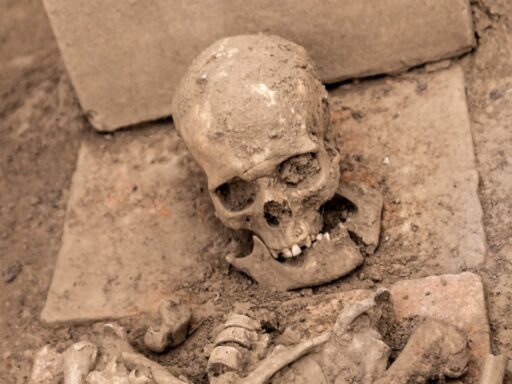
Around this principal burial, researchers identified additional individuals, some placed at the edges of the chamber and others layered above the main body. Several of these skeletons show evidence that they were deposited at the same time, which supports the interpretation that they were sacrificial retainers rather than people buried later. Reporting on the excavation highlights that the tomb contained what are described as sacrificial victims, a pattern that mirrors earlier Coclé discoveries where warriors, spouses and attendants seem to have accompanied a ruler into death.
The grave goods are dominated by precious metals. Archaeologists describe a hoard of hammered gold breastplates, embossed plaques, beads and pendants, along with objects made from an alloy of gold and copper sometimes called tumbaga. One account notes that the tomb is literally gold-laden, with enough ornaments to outfit more than one person. That surplus supports the idea that some of the accompanying individuals were buried in regalia that proclaimed their own rank, even as it emphasized their dependence on the central figure.
Beyond the metals, the chamber contained finely painted ceramics, stone tools and weaponry. Spear points and clubs near the bodies of young adult males suggest that at least some of the dead were warriors. The pottery includes bowls and bottles with complex geometric designs typical of Coclé art, which often features stylized birds, felines and reptiles. Taken together, these objects form a snapshot of an elite household at the moment of its transition from life to memorial.
Rewriting Panama’s ancient power structures
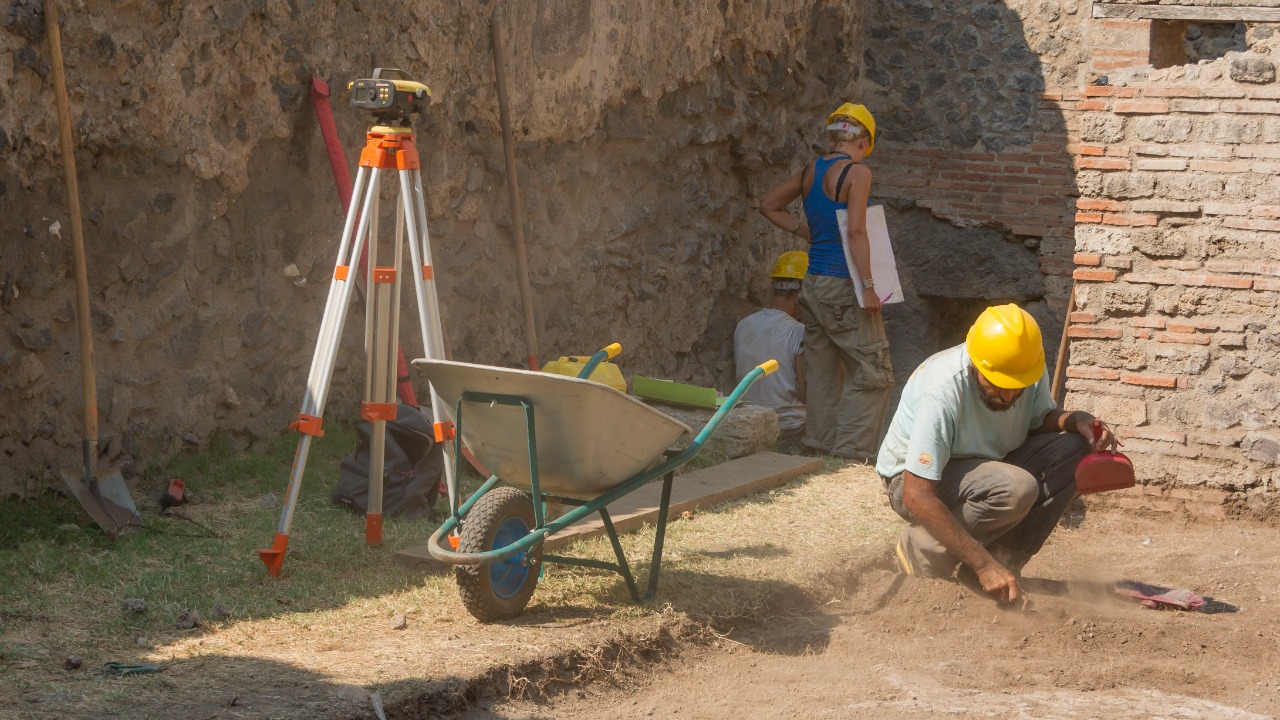
Completion of the excavation shifts the story from a promising discovery to a dataset that can be systematically analyzed. With the full layout of the chamber recorded, archaeologists can now map precisely how bodies and objects were arranged. That spatial information will help clarify whether the tomb represents a single burial event or a sequence of interments that accumulated over time. Early interpretations, grounded in the clustering of skeletons and the absence of intrusive cuts, favor a single, highly choreographed ceremony.
The scale of the grave goods suggests a political system organized around powerful chiefs who controlled access to metals and long-distance exchange. The Coclé region has long been recognized as a hub where goods moved between Central and South America. The quantity of gold ornaments, combined with exotic raw materials, indicates that the person buried here sat near the top of that network. One synthesis of the find stresses that the tomb belongs to an elite individual whose status depended on both martial and ritual authority.
Finishing the excavation also sharpens comparisons with earlier sites. At Sitio Conte, excavations in the twentieth century uncovered richly furnished graves that transformed understanding of pre-Columbian Panama but left many questions unanswered because recording standards were less rigorous than those used today. The new tomb offers a chance to revisit those interpretations with modern methods. If the layout of bodies and objects matches the older finds, it will strengthen the case that Coclé society followed a consistent pattern of funerary display tied to rank and lineage. If it differs, it may point to local traditions or shifts in ideology over time.
The presence of sacrificial victims in close association with weapons and regalia also informs debates about violence and ritual in ancient Central America. Some scholars have argued that human sacrifice in the region was relatively limited compared with practices in parts of Mexico. The Panama tomb, with multiple individuals apparently killed to accompany a leader, supports a more complex picture. It suggests that at least some Coclé chiefs commanded the power to take life on a significant scale, and that death rituals were public performances of that authority.
Why the Coclé tomb resonates in the present
The completion of the excavation matters now for several reasons that extend beyond academic archaeology. It provides a rare anchor point for the deep history of Panama, a country better known internationally for its canal than for its pre-Hispanic cultures. A 1,200-year-old burial packed with gold, weapons and sacrificed retainers offers a vivid counterweight to narratives that treat Central America as a mere corridor between larger civilizations to the north and south.
The find also arrives at a moment when debates over heritage protection and looting are intense. Gold artifacts from Coclé have long attracted collectors, and earlier in the twentieth century many pieces left the country under dubious circumstances. A spectacular elite tomb excavated under controlled conditions showcases what is lost when sites are looted. Every pendant and ceramic vessel in this chamber has a documented position and association, which turns objects into evidence rather than curiosities. That contrast strengthens arguments for stricter site protection and for investment in local museums that can curate such finds.
The discovery resonates as well with Indigenous communities in Panama that trace cultural and territorial claims back to pre-Hispanic societies. While the people of the Coclé tomb are not direct ancestors of any single modern group, their material culture and burial practices form part of the broader Indigenous history of the isthmus. Public interpretation of the tomb can either marginalize or foreground those connections. How national institutions choose to present the find, who participates in that storytelling and where the artifacts are ultimately housed will shape ongoing conversations about identity and representation.
There are clear tourism implications, too. Gold-filled graves and tales of sacrificed warriors capture public imagination in a way that few other archaeological stories can. If managed carefully, the site and its artifacts could anchor heritage tourism in central Panama, drawing visitors beyond the capital and canal zone. That potential brings both opportunity and risk. Increased attention can fund research and conservation, but it can also attract looters to unexcavated parts of the landscape if protections lag behind publicity.
From excavation to analysis and public access
With the last soil removed from the chamber, the work is shifting into laboratory and interpretive phases that will likely stretch over years. Human remains from the tomb will undergo detailed osteological analysis to establish sex, age at death, health status and possible causes of death for each individual. In cases of suspected sacrifice, researchers will look for perimortem trauma, such as cut marks on vertebrae or skull fractures, that can distinguish execution from natural death. Stable isotope studies may reveal whether the retainers grew up in the same region as the central figure or were captives brought from elsewhere.
The metal artifacts present another rich line of inquiry. Compositional analysis can show whether the gold and copper came from local sources or from distant mines, which would illuminate the reach of Coclé trade networks. Wear patterns on bells, plaques and weaponry can indicate whether they were used in life or crafted specifically for burial. Conservators will also have to stabilize fragile pieces, especially those made from gold-copper alloys that can corrode rapidly once exposed.