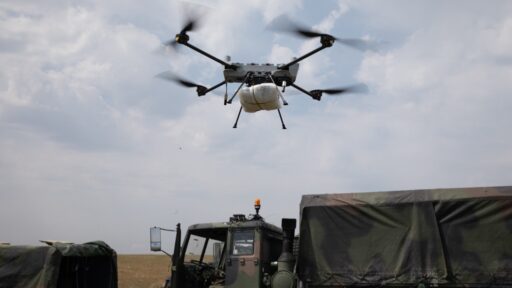
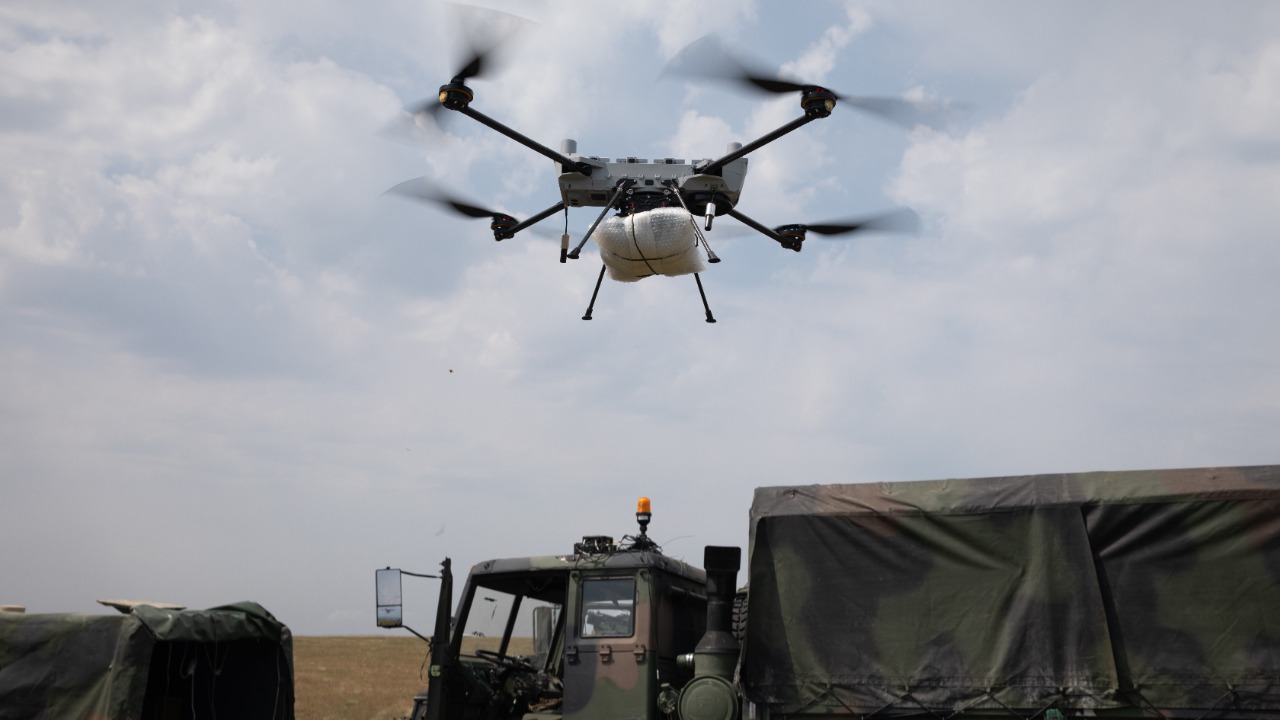

Delivery drones are no longer just futuristic demos or carefully staged pilot programs. They are now logging more than 55,000 flights every month, showing that drone delivery is moving into a more serious commercial phase. What once looked like a novelty is becoming part of the fast-delivery race between retailers, restaurants, healthcare networks, and logistics companies.
According to Reuters, the U.S. drone delivery industry is preparing for rapid expansion as companies such as Walmart, Amazon, Wing, Zipline, Manna, and others compete to build networks that can deliver small orders faster and more cheaply than traditional ground delivery. The report noted that drone companies are already flying tens of thousands of deliveries each month, with the industry now crossing the 55,000 monthly flight mark.
That number matters because drone delivery has spent years stuck between promise and reality. The technology worked, but scaling it was difficult. Regulations, safety concerns, costs, noise, weather, battery limits, and neighborhood acceptance all slowed the industry down. Now the flight numbers show that the market is finally starting to gain practical momentum.
Why 55,000 Flights a Month Is a Big Deal
A few drone flights can be a publicity stunt. Thousands of flights can be a pilot program. More than 55,000 flights every month begins to look like a real logistics system. It means operators are not only testing drones but repeatedly using them to move groceries, prescriptions, meals, medical supplies, retail goods, and everyday convenience items.
At that scale, companies can collect better data about safety, demand, routing, battery performance, weather limits, customer behavior, and operating costs. Every successful delivery helps the industry understand where drones work best and where they still struggle.
The number also gives investors and regulators something more concrete to evaluate. Drone delivery is no longer only about whether the aircraft can fly. It is about whether the business can scale, whether customers reorder, whether communities accept the noise, and whether companies can operate safely alongside other airspace users.
Why Retailers Are Paying Attention
Retailers are interested in drone delivery because speed is becoming a competitive advantage. A customer who wants medicine, baby supplies, snacks, pet food, coffee, cosmetics, or a missing dinner ingredient may not want to wait hours. If a drone can deliver in 10 to 30 minutes, it creates a new kind of convenience.
Walmart has become one of the most aggressive players in the U.S. drone delivery race. Wing, which is owned by Alphabet, announced that its partnership with Walmart is expanding to more than 270 drone delivery locations by 2027, reaching more than 40 million Americans. Wing’s announcement is available through its official Walmart expansion update.
That kind of scale changes the conversation. Drone delivery is not only about remote rural medicine drops or one-off experiments. It is becoming a retail service that suburban families may see above their neighborhoods.
Why Small Orders Fit Drones Best
Drones are not replacing trucks for heavy grocery hauls or large household goods. They are best suited for small, lightweight, time-sensitive orders. That could mean a bottle of medicine, a forgotten ingredient, a hot meal, a phone charger, baby formula, a snack, or a single retail item.
This is why drone delivery often makes sense for quick convenience orders. A truck or car may be inefficient for a single small item. A drone can fly directly to the customer and avoid traffic. If operating costs fall enough, drones could make small orders more practical for retailers.
Reuters reported that drone operating costs could fall to around $2 per delivery as the industry scales. If that happens, drone delivery could become a serious alternative to some short-distance car trips and courier runs.
The FAA Rule Change That Could Unlock Growth
Regulation has been one of the biggest barriers to drone delivery in the United States. For years, many commercial drone operations were limited by visual line-of-sight rules, meaning operators generally had to keep the drone within sight or obtain special approvals. That made large-scale delivery networks harder to build.
The Federal Aviation Administration has proposed rules for routine beyond-visual-line-of-sight operations under Part 108. The proposed rule is intended to create a clearer pathway for safe and scalable drone operations, including package delivery. The official proposal is available in the Federal Register.
This is one of the most important regulatory shifts for the industry. If drone companies can operate beyond visual line of sight under a predictable national framework, they can expand from scattered local pilots into larger delivery networks.
Why Beyond Visual Line of Sight Matters
Beyond visual line of sight, often shortened to BVLOS, means the drone can fly beyond the direct eyesight of a human operator. For delivery, this is essential. A store cannot serve hundreds of customers if a human pilot must physically watch each drone from takeoff to landing.
Scalable drone delivery depends on automation and remote supervision. One trained operator may eventually oversee multiple drones, while software handles routing, obstacle avoidance, flight monitoring, return-to-base decisions, and emergency procedures. This is how drone delivery can move from expensive pilot programs to everyday service.
The FAA’s proposed Part 108 framework is designed to address this shift. It aims to move the industry from case-by-case waivers toward a more standardized system. That could reduce uncertainty for companies while still requiring safety controls.
Zipline Shows How Large the Market Can Get
Zipline is one of the strongest examples of drone delivery at scale. The company started by delivering medical supplies in Rwanda and has since expanded into retail, healthcare, food, and consumer delivery. In 2026, Zipline said it had surpassed 2 million commercial deliveries and raised new funding to support U.S. expansion.
TechCrunch reported that Zipline completed 1 million deliveries in 2024 alone and then crossed the 2 million commercial delivery mark. The company has announced expansion into major U.S. markets including Houston and Phoenix, with partners in food, healthcare, and retail.
Zipline’s growth shows that drone delivery can work when the system is designed around repeatable operations, automation, reliable aircraft, and strong local use cases. Its early medical delivery network also proved that drones can be more than a convenience tool. In some settings, they can improve access to critical supplies.
Amazon Is Still in the Race
Amazon has spent years developing Prime Air, its drone delivery program. The company’s progress has been slower and more complicated than early predictions suggested, but Amazon remains important because it has the customer base, logistics infrastructure, and financial resources to make drone delivery a mainstream option if the system works.
Amazon’s Prime Air page describes its newer MK30 drone as part of the company’s effort to deliver packages safely and quickly. The drone is designed to be lighter, quieter, and able to operate in more weather conditions than earlier models.
Reuters reported that Amazon drones are now operating in 10 U.S. markets and offering delivery times under 30 minutes. If Amazon can scale reliably, it could turn drone delivery from a niche service into an expected option for small, urgent orders.
Manna Brings More Competition to the U.S.
Ireland-based Manna is also entering the U.S. drone delivery race. Reuters reported that Manna is launching operations in Tulsa, Oklahoma, with plans to offer deliveries through partners including DoorDash, McDonald’s, and Uber Eats. The company has already completed more than 300,000 deliveries, mostly in Ireland.
Manna’s model is built around small local bases that can fit into compact spaces. That could make expansion faster and cheaper than building large logistics hubs. The company sees Oklahoma, Texas, and surrounding states as a battleground for drone delivery growth.
More competition matters because no single company has fully solved the market yet. Different operators are testing different aircraft, launch systems, business models, noise profiles, delivery methods, and retail partnerships. The winners will likely be the companies that can combine safety, low cost, speed, reliability, and community acceptance.
Why Healthcare Delivery Could Be a Strong Use Case
Healthcare is one of the most convincing drone delivery use cases. Medical supplies, lab samples, blood products, vaccines, prescriptions, and urgent equipment often need to move quickly. In rural or traffic-heavy areas, drones can sometimes reduce delays.
Zipline’s early success came from medical delivery, and many hospitals and health systems are now exploring drone logistics. A drone does not need to replace ambulances or medical couriers in every case. It can complement them by handling small, urgent deliveries that do not need a driver.
This use case may also be easier for the public to accept. People may complain about drones delivering coffee or snacks, but they may be more supportive when drones deliver medical supplies, emergency medicine, or lab samples.
Why Noise and Privacy Still Matter
Even if delivery drones are useful, communities may still object to them. Noise is one of the biggest complaints. A drone may be quieter than a truck in some ways, but the sound is different and can be more noticeable when it passes over homes.
Privacy is another concern. People may worry that drones are filming yards, windows, or neighborhoods. Delivery drones generally use cameras and sensors for navigation, not for spying, but public trust depends on clear rules and transparent communication.
The Associated Press reported that public reaction to drone delivery has been mixed, with some customers praising the speed and convenience while others raise concerns about noise, privacy, and safety. That tension will shape how quickly drone delivery expands.
Safety Is the Core Challenge
Drone delivery companies must prove that their aircraft can operate safely around homes, people, pets, power lines, trees, roads, helicopters, small planes, emergency aircraft, and bad weather. A drone failure over an open field is different from a drone failure over a neighborhood.
Safety systems may include redundant motors, parachutes, detect-and-avoid sensors, geofencing, remote monitoring, automated return-to-base, battery checks, weather limits, and emergency landing procedures. Regulators will also look closely at how companies train operators, manage traffic, secure communications, and investigate incidents.
The FAA remains central to this process because drones must share airspace safely with traditional aviation. Drone delivery cannot scale unless regulators, operators, and communities trust the safety framework.
Weather Is Still a Limitation
Drones are more sensitive to weather than vans or bikes. Strong wind, heavy rain, lightning, extreme heat, ice, and poor visibility can limit operations. Some newer drones are designed to handle more conditions, but weather will still affect reliability.
This matters for customers. A delivery service that works only on calm sunny days may be useful, but it cannot fully replace ground delivery. Companies need to set realistic expectations about when drones can fly and when orders must shift to cars, bikes, or trucks.
Weather also affects battery performance. Cold temperatures can reduce battery efficiency, while heat can stress electronics. Reliable drone delivery requires strong forecasting, smart dispatch software, and clear safety thresholds.
The Economics Are Getting Better
Drone delivery has long faced a cost problem. The aircraft may be small, but operations can be expensive if each drone needs heavy human oversight, special approvals, complex maintenance, and limited route options. Scaling helps lower cost by spreading infrastructure, software, and staff across more flights.
If one operator can safely supervise multiple drones, costs fall. If drones can fly routine BVLOS missions under a predictable FAA rule, costs fall again. If retailers use drones for high-frequency local orders, aircraft and launch sites become more productive.
This is why the 55,000 monthly flight figure matters. More flights mean more operational learning and more chances to improve cost per delivery. Drone delivery may not be profitable everywhere, but it could become competitive in dense suburban areas with frequent small orders.
What Customers Actually Want
Customers do not care about drone technology for its own sake. They care about speed, reliability, cost, and convenience. If a drone delivery is fast, affordable, and easy to use, people may adopt it. If it is expensive, noisy, unreliable, or limited to a few items, interest may fade.
The best use cases are likely urgent small items. Someone cooking dinner may need one missing ingredient. A parent may need children’s medicine. A worker may need a charger. A student may want food without leaving home. A drone can serve those moments better than a full grocery run.
Repeat usage will decide the market. The first drone delivery may feel exciting. The tenth delivery has to feel useful.
Why Drones Will Not Replace Delivery Drivers Soon
Despite the growth, drones will not replace all delivery drivers. They have payload limits, weather limits, range limits, landing-zone requirements, and regulatory constraints. Many orders are too heavy, too large, too fragile, or too complex for drones.
Ground delivery will remain essential for weekly groceries, large packages, furniture, appliances, bulk orders, and dense urban routes where drones may be harder to operate. Drones are more likely to complement existing delivery networks than replace them completely.
The future may be hybrid. Trucks, vans, bikes, robots, and drones may each handle the deliveries they are best suited for. The logistics network becomes more flexible instead of relying on one method.
Final Takeaway
Delivery drones now log more than 55,000 flights every month, a sign that the industry is moving beyond novelty and into real commercial operations. Retailers, restaurants, healthcare systems, and logistics companies are testing whether drones can make small, urgent deliveries faster and cheaper than traditional ground transport.
The growth is being driven by companies such as Wing, Walmart, Zipline, Amazon, Manna, and others, along with proposed FAA rules that could make beyond-visual-line-of-sight drone operations easier to scale. If those rules are finalized and operators continue improving cost, safety, and reliability, drone delivery could expand quickly across U.S. suburbs.
Still, the sky is not fully open yet. Noise, privacy, weather, payload limits, safety, local acceptance, and regulation all remain real barriers. Drone delivery is not about replacing every truck or courier. It is about creating a faster option for the right kind of order.
The monthly flight numbers show the industry is no longer just talking. It is flying, delivering, learning, and preparing for a much bigger role in everyday logistics.