
The United States Air Force has quietly crossed a threshold in autonomous air combat. Its first operationally focused “loyal wingman” fighter drone has now flown and fought on its own, executing complex tasks that once required a human pilot in the cockpit. The test marks a shift from laboratory prototypes to combat-ready systems that can maneuver, sense, and shoot under machine control.
Far from a science experiment, this new loyal wingman is tied directly to frontline aircraft like the F-22 Raptor and to live-fire trials in contested airspace. Together they offer a glimpse of future air campaigns in which human pilots lead formations of intelligent drones that scout ahead, jam defenses, and even fire weapons without direct joystick control.
New autonomy and combat tests for the Air Force’s wingman drone
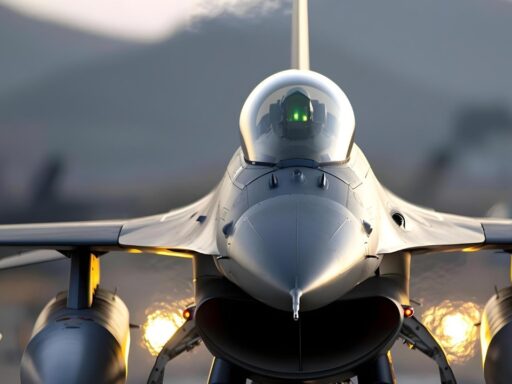
The Air Force’s breakthrough centers on pairing the F-22 Raptor with the Kratos MQ-20 Avenger as an autonomous teammate. In recent mock combat trials, an F-22 flew with an MQ-20 that used onboard algorithms to make its own decisions about maneuvering and engagement options, rather than waiting for step-by-step instructions from a ground operator. According to test descriptions, the drone’s autonomy stack handled real-time sensing, threat evaluation, and route planning while the pilot concentrated on the broader fight.
Those trials build on earlier experiments where an F-22 worked with multiple uncrewed aircraft as part of a broader “collaborative combat aircraft” family. Reporting on the pairing of the F-22 and Avenger highlights how the fighter’s sensors and data links feed the drone, which then executes tasks such as forward scouting and weapons employment under software control, with the human pilot retaining veto authority. The Air Force has described this concept as a way to extend the Raptor’s reach without exposing a second human crew to risk.
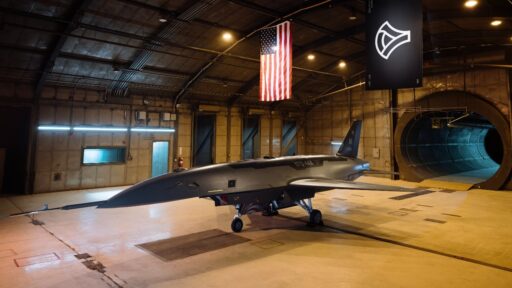
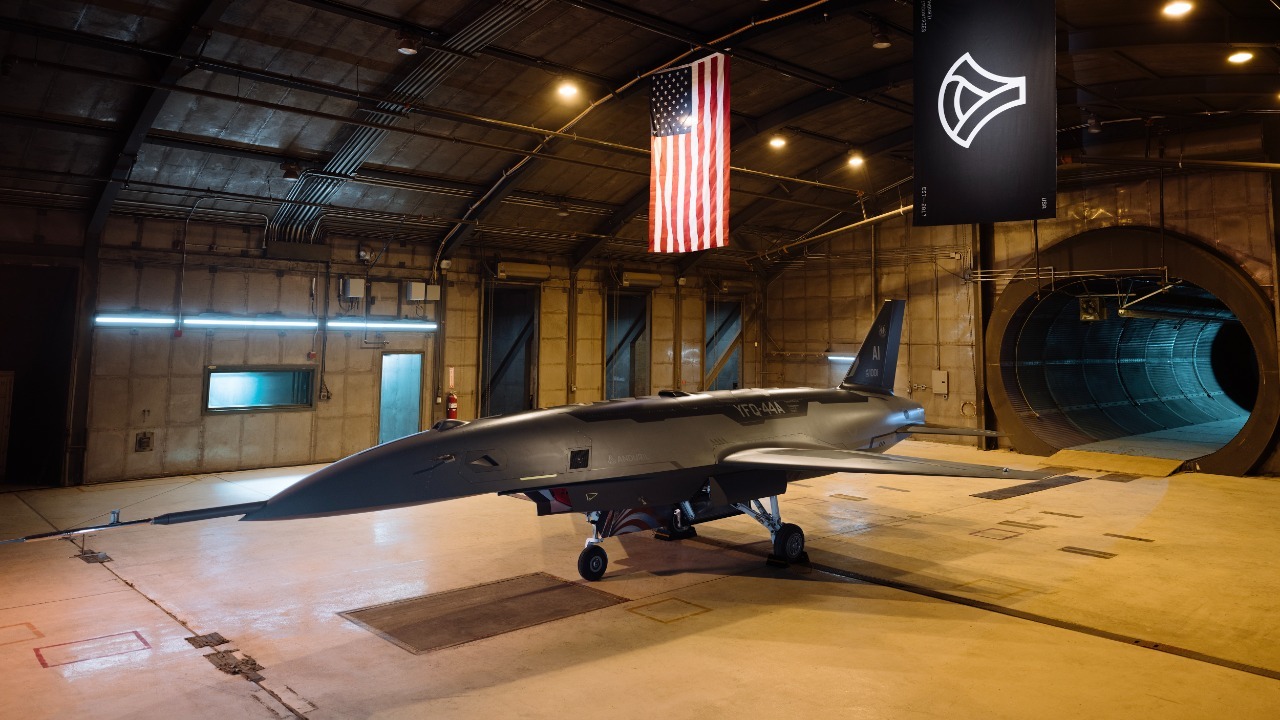
The autonomy on display is not limited to a single platform. The YFQ-44 Fury, a fighter-like drone developed as a low-cost, attritable aircraft, recently wrapped up a contested operations test campaign that stressed its ability to survive and operate in a dense threat environment. During those trials, Fury flew complex mission profiles that included ingress into defended airspace, sensor tasking, and simulated weapons employment while its autonomy system adapted to changing conditions. The test series was framed as a rehearsal for rapid fielding, a sign that the Air Force views Fury as a near-term candidate for operational loyal wingman roles.
Industry advances are reinforcing this shift. Anduril Industries, which has focused on software-driven defense systems, flew its own uncrewed jet-powered drone for the first time, positioning it as a high-performance, autonomous aircraft that can keep pace with fighters. The company has pitched this jet drone as a future collaborative combat aircraft, with an emphasis on rapid production and software updates that mirror commercial tech cycles. The first flight of Anduril’s uncrewed jet shows that the industrial base is gearing up to deliver multiple loyal wingman options rather than a single bespoke prototype.
Stealth and survivability are also moving forward. A loyal wingman design that has already demonstrated the ability to shoot down a target on its own has now been formally characterized as a stealth platform, with shaping and materials intended to reduce its radar signature. That combination of autonomy, weapons employment, and low observability points directly at missions like suppression of enemy air defenses, where expendable or semi-expendable drones can probe and attack heavily defended zones ahead of crewed jets.
Why autonomous loyal wingmen matter for airpower and strategy
The Air Force’s decision to let a loyal wingman operate with real autonomy matters because it changes how air campaigns can be planned and fought. In the F-22 and MQ-20 trials, the fighter pilot did not simply “fly a drone” as a remote operator. Instead, the pilot commanded an intelligent teammate that could interpret intent and then execute the details, a model that scales far better when a single aircraft might control several uncrewed partners at once. Reporting on these tests describes the drone selecting routes and engagement options under software control, which reduces radio chatter and makes the formation harder to jam.
Cost and risk are just as significant. Aircraft like the YFQ-44 Fury are designed as attritable systems, meaning they are cheap enough to lose in combat if necessary. By pushing high-risk missions such as penetrating integrated air defense systems onto loyal wingmen, the Air Force can preserve its limited fleets of high-end fighters like the F-22 and F-35. The contested operations campaign for Fury was explicitly framed as a way to validate that an affordable drone can survive and perform in realistic threat conditions, a prerequisite for using it in large numbers.
The technology race with potential adversaries is another driver. China and Russia have both invested in uncrewed combat air vehicles and swarming munitions, and U.S. commanders have warned that future conflicts will feature dense drone activity on both sides. Autonomous loyal wingmen are one answer to that challenge, allowing U.S. fighters to bring their own drone formations that can jam, decoy, and strike. The move toward stealthy, armed, and autonomous drones that can shoot down targets on their own reflects a desire to stay ahead in that competition rather than react to it.
These developments also reshape the pilot’s job. Instead of dogfighting alone, a pilot in an F-22 or future sixth-generation fighter will manage a small network of uncrewed aircraft, each with different sensors and weapons. Coverage of the F-22 loyal wingman program notes that test pilots are already practicing this “quarterback” role, using cockpit displays to assign tasks and monitor autonomous behavior. The human retains legal and ethical responsibility for lethal decisions, but the machine handles the mechanics of flying and aiming in fractions of a second that no person can match.
International experience reinforces the trend. Boeing’s Loyal Wingman project in Australia, now known as the MQ-28 Ghost Bat, has already completed flight tests of an autonomous jet that can team with crewed aircraft. That program, although separate, shows that allied air forces are converging on similar ideas: reusable, fighter-like drones that extend range and magazine depth without requiring more pilots. The U.S. Air Force’s recent tests fit into that broader movement toward mixed formations of crewed and uncrewed aircraft.
Next steps for fielding and controlling loyal wingman fleets
With the first autonomous flights and contested trials complete, the Air Force now faces the harder task of turning prototypes into operational squadrons. Officials have signaled that the YFQ-44 Fury’s successful test campaign could accelerate its path to fielding, potentially making it one of the first loyal wingmen to deploy alongside frontline fighters. Attention will now turn to integrating Fury and similar drones with existing command-and-control systems so they can plug into current tactics without requiring a complete rewrite of air doctrine.
The F-22 and MQ-20 pairing will likely remain a key testbed. Reports on the loyal wingman work around the Raptor describe plans to expand the number of uncrewed aircraft in each formation and to test more advanced behaviors, such as autonomous re-tasking when a drone loses contact or when new threats appear. The Air Force will need to prove that these systems can operate safely in crowded airspace, respect rules of engagement, and handle electronic warfare without becoming unpredictable.
Industry will continue to shape what comes next. Anduril’s uncrewed jet, which has already flown under its own power, is positioned as a software-centric platform that can receive rapid updates, much like a smartphone operating system. That approach could allow the Air Force to iterate tactics and autonomy code far faster than traditional fighter upgrade cycles, but it also raises questions about cybersecurity and verification. Each new software release would need rigorous testing to ensure that lethal autonomy behaves as intended.