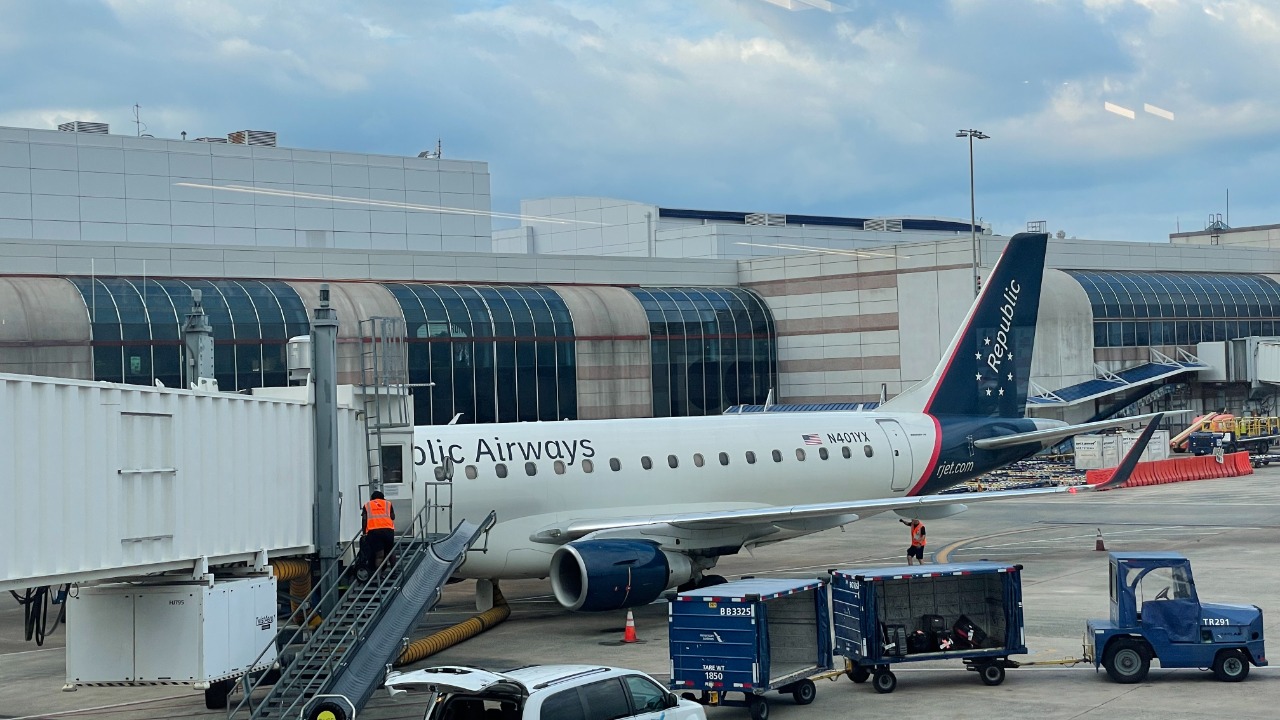

Passengers on a Republic Airways flight bound for Boston experienced a violent burst of turbulence over Wisconsin, but the crew kept control of the aircraft and brought everyone safely to the ground. The incident turned a routine regional hop into a frightening reminder of how quickly conditions can change at cruising altitude, while also underscoring how training, procedures, and aircraft design work together when the sky turns rough.
As investigators review what happened in the cabin and cockpit, the episode is already feeding a broader debate about turbulence risk, climate impacts on flight conditions, and what airlines owe travelers when a trip suddenly becomes hazardous.
How the Republic Airways flight turned from routine to severe
The Republic Airways service was operating as a regional connection into Boston when it hit a pocket of severe turbulence over Wisconsin airspace. According to reporting on the incident, the aircraft encountered abrupt vertical jolts that left passengers shaken and disrupted normal in-flight service. The carrier later confirmed that the plane continued on to Logan International Airport and landed without structural damage or loss of control.
Passengers described a short but intense period in which the aircraft felt as if it dropped unexpectedly, with unsecured items thrown around the cabin and some travelers bracing against seatbacks. Severe turbulence of this kind can occur in clear air, with little visual warning outside the windows, and is often linked to fast-changing wind patterns at cruising altitudes. In this case, the disturbance was strong enough to draw formal scrutiny, but not so prolonged that the crew had to divert.
Republic Airways said the pilots followed established procedures, including securing the cockpit, engaging seat belt warnings, and coordinating with air traffic control as they rode out the rough air. The crew then continued toward Boston, where the aircraft completed its scheduled arrival. Coverage of the incident noted that all passengers ultimately landed safely in, and there were no reports of a loss of pressurization or mechanical failure linked to the turbulence.
Cabin crew members also moved quickly to check on travelers once the aircraft exited the worst of the disturbance. Standard practice in such situations calls for a rapid assessment of injuries, a sweep for spilled hot liquids or dislodged service carts, and a reset of the cabin before descent. Early indications suggest that the most serious impacts were emotional rather than physical, although a full accounting of any minor injuries typically emerges only after passengers have been evaluated on the ground.
What changed in aviation safety conversations after the Wisconsin turbulence
On its own, one bumpy flight would be a routine operational story. The Republic Airways incident over Wisconsin, however, arrived amid growing concern about turbulence events that cause injuries and unexpected diversions across multiple carriers. That context has shaped how regulators, airlines, and passengers are responding.
For regulators, each severe episode becomes another data point in ongoing efforts to refine turbulence forecasting and reporting. Flight crews already rely on a mix of pilot reports, on-board radar, and meteorological models to anticipate rough air. When a regional jet encounters conditions that were not strongly flagged in advance, safety agencies scrutinize both the weather data and the communication chain to see whether tools or procedures need adjustment. The Wisconsin event adds to that evidence base, especially because the aircraft remained structurally sound and controllable, which helps analysts separate atmospheric risk from mechanical vulnerability.
Among airlines and unions, the conversation has shifted toward how often cabin crew and passengers are caught out of their seats when turbulence strikes. Industry guidance has long urged travelers to keep seat belts fastened whenever seated, even when the sign is off, and to secure infants in approved child restraints instead of holding them on laps. After a jarring episode like this one, carriers typically reinforce those messages through preflight briefings, inflight announcements, and internal training memos. The Republic flight reinforces the argument that the most effective injury-prevention tool is often a buckled belt and a cleared aisle.
Republic Airways itself operates as a regional partner, flying under major brands while handling shorter routes with smaller aircraft. When a regional operator has a high-profile incident, it can change how travelers think about these feeder flights, which sometimes feel more exposed because of their size. Safety statistics do not support the idea that regional jets are inherently more vulnerable to turbulence, but perception matters. The Wisconsin turbulence has prompted fresh explanations from aviation experts about how all commercial aircraft are certified to withstand significant aerodynamic stress, and how pilots are trained to manage sudden altitude and speed changes.
At the passenger level, the incident has also fed a quiet change in behavior. Travelers who read about severe turbulence are more likely to keep personal items stowed, to question whether walking to the restroom is worth it during cruise, and to pay closer attention to crew instructions. That shift may seem modest, but it can reduce the number of people standing or bending in aisles when the next unexpected jolt hits.
Why the safe arrival in Boston matters for public confidence now
The fact that the Republic Airways flight reached Boston without a crash or structural failure is not just a relief for those on board. It also reinforces a core message of modern aviation: even when conditions become frightening, commercial flying remains extraordinarily safe.
Public confidence in air travel rests on both statistical reality and visible performance in stressful moments. When passengers see that an aircraft can absorb a violent shake, that pilots can maintain control, and that crews can manage the cabin, they are more likely to trust the system the next time they board. The Wisconsin turbulence could have eroded that trust if the story had ended with a serious accident. Instead, it has become another example of training and engineering holding up under pressure.
Timing also matters. The incident comes as airlines face questions about staffing levels, pilot experience, and the pace of post-pandemic schedule growth. Critics worry that stretched crews and packed timetables might erode safety margins. In this context, a well-handled turbulence event offers some reassurance that core safety protocols remain intact, even as carriers juggle operational challenges. The safe arrival in Boston does not eliminate concerns about fatigue or scheduling, but it shows that frontline crews can still execute critical checklists when nature intervenes.
At the same time, the episode raises fresh questions about how airlines communicate risk. Many travelers still think of turbulence as a comfort issue rather than a safety hazard. After severe events, safety advocates often argue for more candid language in preflight briefings about the potential for sudden drops and the importance of keeping seat belts fastened. The Republic flight provides a concrete example that this communication gap can have real consequences if passengers are unprepared for the intensity of the movement.
For policymakers, the incident feeds into ongoing work on climate and aviation. Research has linked changing atmospheric patterns to an increase in clear air turbulence along heavily traveled routes. Even without assigning a specific cause to the Wisconsin event, the broader trend suggests that airlines may face more frequent encounters with rough air. That possibility heightens the importance of both forecasting improvements and cabin safety practices, since not every disturbance can be avoided through route changes alone.
What comes next for Republic Airways, regulators, and passengers
In the near term, Republic Airways will review the flight in detail, from weather briefings and route planning to cockpit decision making and cabin procedures. That internal look is standard after any severe turbulence event and can lead to targeted changes, such as updated training scenarios for pilots or revised guidance on when to suspend cabin service.