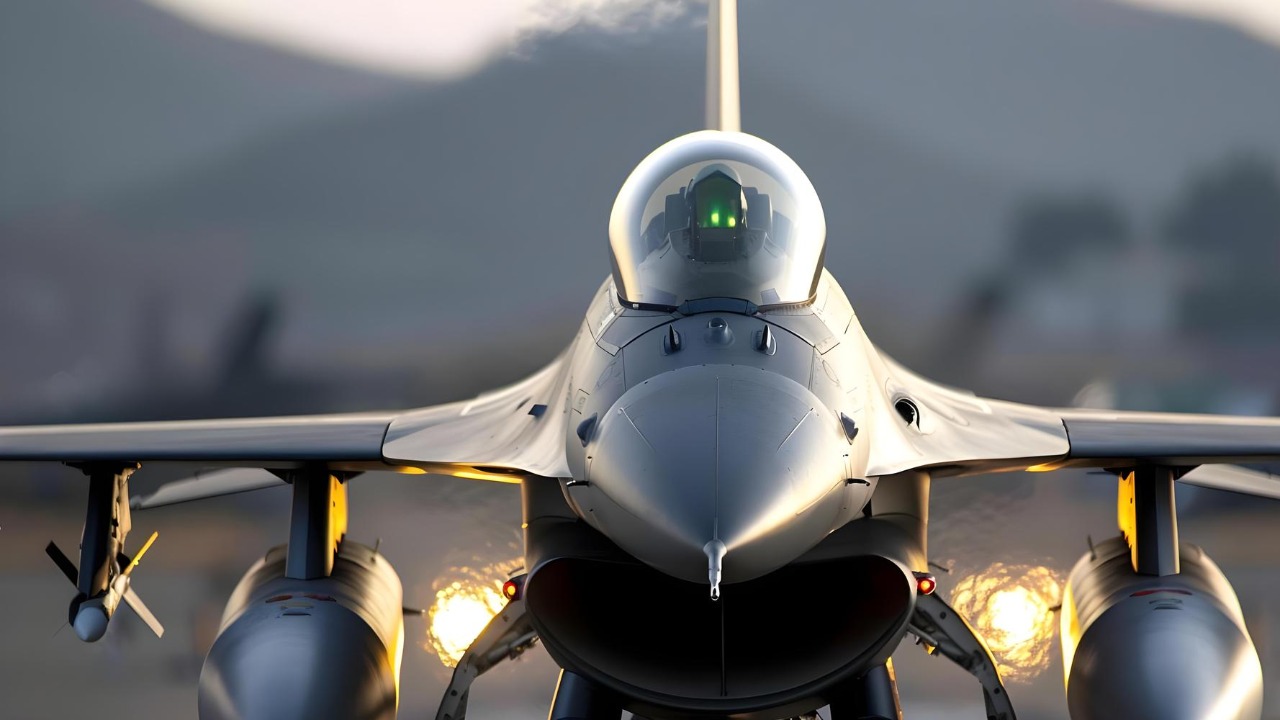

Boeing’s experimental “robot wingman” has crossed a threshold that military planners have been anticipating for years: a debut in a large-scale combat exercise over the Pacific alongside crewed aircraft. The test marked the first time this autonomous drone concept moved from controlled trials into a complex, contested scenario meant to resemble a future war in the region. That shift turns an ambitious research project into a live question about how quickly autonomous combat aircraft will join operational fleets.
New capabilities on display in the Pacific trial
The aircraft at the center of the exercise is Boeing’s Airpower Teaming System, often described as a loyal wingman that can fly in formation with fighters while operating under its own onboard intelligence. During the Pacific event, the drone flew coordinated missions with crewed jets, using its sensors and mission computer to maneuver, share data and respond to changing threats without a pilot in the cockpit. According to reporting on the exercise, the aircraft’s performance was judged against tasks that included escort, reconnaissance and electronic support in a simulated high-threat environment.
What distinguishes this latest outing from earlier test flights is the complexity of the scenario. Rather than scripted point-to-point runs, the drone had to adapt to a dynamic exercise in which targets, threat emitters and allied aircraft were all moving. The loyal wingman’s autonomy software was tasked with routing the aircraft through contested airspace, managing its own sensor usage and deconflicting with human pilots who were also reacting in real time. This kind of trial is far closer to the chaos of combat than range demonstrations that focus on takeoff, landing and basic navigation.
Boeing has designed the system around a modular nose section that can be swapped to carry different payloads. In the Pacific exercise, that meant mission planners could treat the drone as a flexible asset that might carry radar, electronic warfare gear or other classified systems depending on the sortie. The company has emphasized that the airframe is intended to be relatively low cost compared with crewed fighters, which would allow commanders to accept higher risk and push the autonomous jet into the most dangerous airspace.
The test also validated the control architecture that allows a single pilot in a crewed aircraft to manage one or more loyal wingmen. Instead of flying the drone with a stick and throttle, the pilot issues high-level commands such as patrol a sector, trail a target or screen a formation. The autonomy stack then translates those intents into detailed flight paths and sensor actions. The Pacific event gave operators a chance to see how that human-machine teaming concept worked when communications links were stressed and the air picture was crowded.
Why the loyal wingman’s first combat-style outing matters now
The timing of this exercise is not accidental. Air forces in the United States and across the Pacific are racing to field collaborative combat aircraft that can extend the reach of fighters like the F-35 and F/A-18 while reducing the risk to human pilots. Boeing’s drone debut in a complex scenario over the Pacific underscores how quickly that vision is moving from PowerPoint to practice. The company has pitched the Airpower Teaming System to partners that include the Royal Australian Air Force, which has invested in the program as a way to expand combat mass without buying more crewed jets.
For planners focused on a potential conflict over long distances, the loyal wingman concept addresses several pressing problems at once. A relatively affordable autonomous jet can carry additional weapons or sensors forward of the main strike package, extend the radar horizon and soak up enemy missiles that might otherwise target a pilot. In the Pacific exercise, the drone’s ability to operate as a semi-disposable screen for high-value aircraft was a central part of the scenario, according to detailed accounts of the event.
The debut also feeds into a broader shift toward distributed airpower. Instead of concentrating combat capability in a handful of exquisite fighters and bombers, air forces want to spread firepower and sensing across a larger number of connected platforms. Autonomous wingmen fit that model because they can be procured in greater numbers and tailored to specific missions with different payload modules. The Pacific trial gave commanders a clearer sense of how many such aircraft they might need to meaningfully change the balance in a contested air campaign.
There is a political and ethical layer as well. The loyal wingman is designed to operate with a human on the loop, not as a fully independent lethal system, but its growing autonomy will inevitably raise questions about how much decision-making authority resides in software. By moving into realistic combat exercises now, Boeing and its government partners are effectively running a live experiment in how to keep human commanders firmly in charge while still exploiting machine speed and resilience. The outcome of those experiments will influence how future rules of engagement are written for autonomous aircraft.
The Pacific region context adds urgency. Military planners are increasingly focused on scenarios that involve long-range anti-access systems, dispersed bases and the need to operate over thousands of kilometers of ocean. A crewed-only force structure struggles with those distances and survivability demands. The loyal wingman’s debut in a Pacific combat exercise signals that autonomous aircraft are being shaped with that specific geography and threat environment in mind, not as generic technology demonstrators.
Next steps for Boeing’s autonomous combat partner
With a successful combat-style exercise under its belt, Boeing’s loyal wingman now moves into a more demanding phase of development. Future trials are expected to stress the aircraft’s endurance, survivability and integration with a wider range of platforms, including airborne early warning aircraft and ground-based command nodes. The company and its government customers will be looking for proof that the drone can handle contested electromagnetic environments, degraded GPS and attempts at cyber intrusion while still completing its mission.
Scaling up production is another looming challenge. The Airpower Teaming System is intended to be affordable enough to buy in quantity, but shifting from prototypes to serial builds will test Boeing’s supply chain and manufacturing processes. Decisions about where to assemble the aircraft and how to incorporate local industry in partner nations will shape export prospects. If the Pacific exercise leads to firm orders, Boeing will need to demonstrate that it can deliver squadrons of loyal wingmen on timelines that match air force modernization plans.
Operational concepts will evolve in parallel. Air forces will refine tactics for pairing specific crewed aircraft with autonomous partners, deciding which missions are best suited to mixed formations and which can be handled by drones alone. Training pipelines will have to adapt so that fighter pilots learn how to manage a small constellation of autonomous wingmen, not just fly their own jets. The lessons from the Pacific event, including how pilots coped with the cognitive load of supervising an extra aircraft, will feed directly into those curriculum changes.
Incremental hardware upgrades are likely as the system matures. Improved sensors, more efficient engines and new payload modules will all be candidates for integration once the core airframe and autonomy stack are validated. Some of those enhancements will aim to keep the aircraft survivable against evolving air defenses, while others will focus on niche roles such as electronic attack or communications relay. The modular design that featured in the Pacific test is meant to make such upgrades relatively straightforward.
Finally, the political appetite for autonomous combat aircraft will shape how quickly the loyal wingman concept spreads. Legislators and defense ministries will weigh the benefits of increased combat power and reduced pilot risk against concerns about escalation, accountability and arms racing in autonomous weapons. The Pacific debut provides a concrete case study rather than an abstract debate, which may help policymakers make more informed decisions about funding and export approvals.