
A casual visit to a local museum by a Danish man carrying two heavy gold rings has turned into one of the most significant Viking Age discoveries in the country. What began as a routine appraisal request quickly escalated into a full-scale excavation that pulled dozens of glittering artifacts from the soil near the town of Rold in Himmerland. The growing hoard has now been ranked among the largest Viking gold finds in Denmark, reshaping how specialists read the power and anxiety of the late Viking world.
The story is not only about spectacular treasure but also about how modern detectorists, museum professionals and archaeologists can work together to turn a hunch into a carefully documented window on a turbulent chapter of Scandinavian history.
From two mystery rings to Denmark’s third‑largest Viking gold hoard
The chain of events began when a local man brought two massive gold arm rings to a museum in northern Jutland, asking staff to confirm whether they were genuine Viking artifacts. According to accounts of the find, the rings were so heavy and well preserved that experts immediately suspected they came from a larger, undisturbed deposit. Their suspicion proved correct once archaeologists and trained detectorists were brought to the field where the man had been searching.
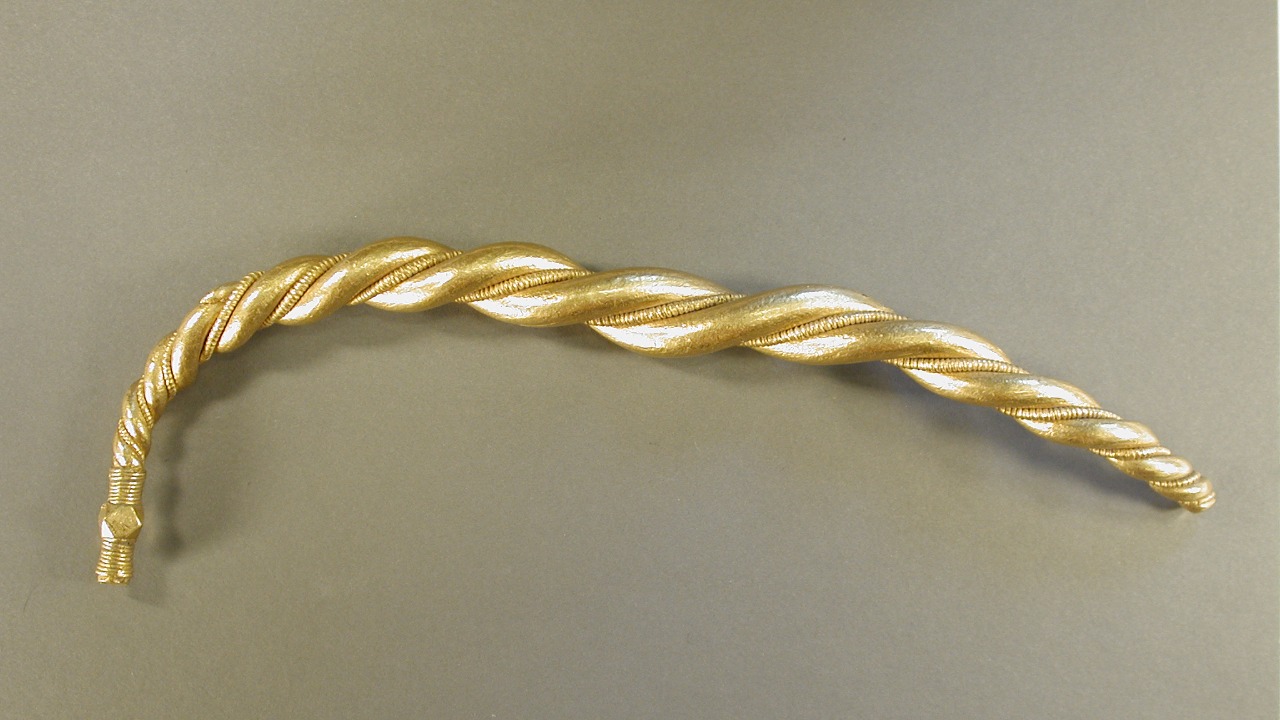
Excavation near Rold soon revealed a cluster of gold objects that had lain hidden for roughly a thousand years. The hoard now includes a series of thick arm rings, finger rings and other worked pieces that together weigh several hundred grams. The density of objects and the quality of the metal led researchers to classify the find as Denmark’s third‑largest Viking Age gold discovery, a status highlighted in detailed reports on the Rold hoard.
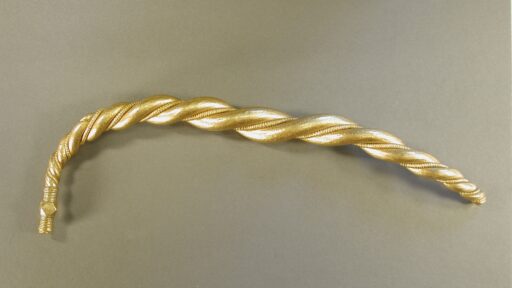
Archaeologists describe the arm rings as classic symbols of elite status in the Viking world: broad, often twisted or decorated, and designed to serve both as display pieces and portable reserves of wealth. Some of the Rold rings show clear hammer marks where sections could have been broken off as payment, fitting written descriptions of ring silver and ring gold used as currency in the period.
Fieldwork also uncovered traces of how the hoard was buried. The gold was not scattered but clustered in a deliberate deposit, suggesting a single episode of concealment rather than a gradual accumulation. Soil layers and associated finds indicate that the objects were placed in the ground during the later Viking Age, when Denmark was entangled in power struggles at home and abroad.
New clues about wealth, fear and power in late Viking Denmark
The Rold hoard matters because it fills a gap between famous early Viking finds and the political consolidation that followed the Christianization of Denmark. Specialists argue that such a concentration of gold in northern Jutland points to a local magnate with access to long‑distance trade, military rewards or both. The arm rings fit a pattern seen in other elite burials and hoards, where leaders used precious metal to bind followers through gifts and oaths.
Researchers have linked the Rold discovery to a broader wave of hoard deposits that appear in the late 10th and early 11th centuries. In that period, rulers like Harald Bluetooth and his rivals fought over control of trade routes, fortresses and the emerging Christian church. As power shifted quickly, those with portable wealth sometimes hid it in remote fields, intending to retrieve it when conditions stabilized. The fact that the Rold gold remained in the ground suggests that whoever buried it never returned.
Analyses of the metal composition and decorative styles indicate that at least some pieces in the hoard were made outside the immediate region. That finding lines up with evidence that Viking elites drew on silver and gold from the Islamic world, the British Isles and the Frankish kingdoms. The Rold material therefore supports the idea that northern Jutland was plugged into the same wide trading and raiding networks as better known centers like Hedeby.
The hoard also sharpens debates about how quickly Christianity displaced older beliefs. Some of the Rold items echo pagan iconography, while others resemble Christian‑era jewelry. That mix suggests a community in transition, where symbols of the old gods, new faith and raw economic power all circulated at once. Comparative studies of similar finds, such as another Viking Age gold hoard in Denmark described by archaeological reports, help frame the Rold treasure as part of a wider pattern rather than an isolated curiosity.
For historians of everyday life, the find offers a more grounded payoff. Each ring carries microscopic traces of wear, repair and modification. Some were carefully smoothed, while others show rough hacks where gold was cut away. Those details let researchers reconstruct how people handled and valued gold not only as treasure but as working money, collateral in alliances and emergency savings when war or famine loomed.
How the Rold hoard is reshaping practice, tourism and local identity
The Rold discovery has already had practical consequences for how Denmark manages its buried past. The episode began with a private finder who chose to approach a museum rather than sell or quietly keep the rings. That decision activated Denmark’s long‑standing treasure trove system, in which the state compensates finders and ensures that significant artifacts enter public collections. Museum staff and archaeologists have pointed to the case as a textbook example of responsible metal detecting.
In response, regional museums and heritage agencies are using the story in outreach campaigns that encourage detectorists to log their finds, share GPS data and seek expert advice before disturbing potential hoards. The Rold case shows that even a single object can signal a much larger deposit, and that rapid, coordinated excavation can preserve fragile context that would otherwise be lost to plowing or looting.
The hoard is also becoming a cultural and economic asset for the area around Rold. Exhibitions that feature the gold, along with reconstructions of how the rings might have been worn, attract visitors who might otherwise skip a small town in northern Jutland. Local tourism boards now promote Viking‑themed routes that link the findspot with other sites, such as ring fortresses and ship settings, to tell a broader story of the region’s role in the North Sea world.
For residents, the discovery provides a tangible link between modern farmland and a deep, often abstract past. School programs use replicas of the rings to teach children about weight, value and craftsmanship, while also explaining why cooperation between hobbyists and professionals matters. In that sense, the hoard has become a tool for civic education as much as a subject of academic research.
On the research side, the Rold material is feeding into large comparative databases of Viking Age metalwork. Digital scans of the rings, along with chemical analyses, are being shared with projects that track how styles and alloys spread across Scandinavia and beyond. Those datasets help test theories about whether gold flowed mainly along raiding routes, trade corridors or diplomatic gift networks.
Future digs, unanswered questions and the next chapter for the hoard
The Rold hoard has not yet given up all its secrets. Archaeologists are planning further targeted surveys around the original field to check for associated settlement remains, such as longhouses, workshops or burial mounds. If such structures are found, they could confirm whether the hoard belonged to a nearby farmstead, a larger estate or a seasonal gathering place where warriors met and shared out spoils.
One key question is whether the deposit represents the wealth of a single household or a pooled cache from a group of allies. The variety of ring sizes and designs leaves room for both possibilities. Detailed study of tool marks, wear patterns and alloy recipes may eventually show whether the pieces came from one workshop or several, which in turn would hint at how many owners were involved.