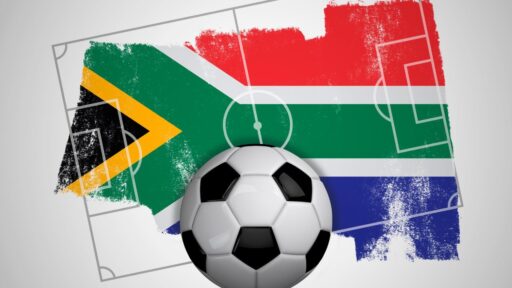

South Africa have reached the World Cup knockout phase for the first time, carried there by a fierce Thapelo Maseko strike and a disciplined 1-0 victory over South Korea in Monterrey. The result sealed second place in Group A and turned a generation of frustration into a single, cathartic night for Bafana Bafana and their supporters.
Beyond the scoreline, the match signalled a shift in how South Africa approach the biggest stage: tactically assured, physically relentless and mentally composed under pressure from a seasoned Asian powerhouse.
From tense stalemate to Maseko’s decisive breakthrough
The group finale opened with South Korea controlling long spells of possession, probing through the lines while South Africa sat in a compact mid-block. Early on, goalkeeper Kim Seung-gyu kept the sides level with sharp stops that underlined how fragile the contest felt, as documented in live coverage of Bafana Bafana v.
South Africa’s plan revolved around absorbing pressure and then springing forward through the pace of Maseko and his fellow attackers. The wide man repeatedly targeted the space behind South Korea’s full backs, stretching the defensive line and forcing the Asian side to turn and chase. That pattern set the stage for the moment that would decide the group.
Midway through the second half, South Africa finally converted territory into a clean chance. A quick transition from midfield released Maseko into space on the left, and he drove inside before lashing a low shot beyond Kim into the far corner. The finish, described in detail in analysis of South Korea v, was hit with the certainty of a player who understood the stakes.
From that point, the match became a test of nerve. South Korea pushed higher, committing more bodies forward and forcing a series of set pieces. South Africa’s back line, which had already looked composed in the first half, tightened further. Centre backs attacked every cross, full backs tucked in to protect the box and the midfield screen tracked runners that had earlier found pockets of space.
As the clock ticked toward full time, South Korea’s attacks grew more direct. Yet Bafana Bafana held their line, clearing repeatedly and slowing the tempo whenever possible. The final whistle confirmed a 1-0 win that match reports described as a historic result for a team that had never previously made it beyond the group stage at a World Cup, including in detailed accounts of South Africa’s win.
A historic step for Bafana Bafana and African football
Maseko’s goal did more than settle a tense group decider. It carried South Africa into the last sixteen of a World Cup for the first time, a milestone repeatedly highlighted in reaction from both local and international outlets that described how his strike fired South Africa.
For Bafana Bafana, the achievement rewrites a narrative that has followed the national team since its return to global competition. Previous campaigns were often defined by near-misses and group-stage exits, including when South Africa hosted but still failed to progress. The current side have now turned that history on its head by emerging from a group that included a technically sharp South Korea and a North American host nation.
The result also feeds into a broader story about African teams at World Cups. Each cycle, at least one African side tends to carry continental expectations into the knockouts. This time, South Africa have joined that group, adding their name to a list that has featured nations such as Cameroon, Senegal and Ghana in past tournaments. Coverage of the Monterrey match described how Bafana Bafana stunned a favoured opponent to advance from Group A, with one report on South Africa’s win emphasising the scale of the upset.
Domestically, the impact is likely to stretch beyond the immediate celebrations. A first appearance in the knockouts provides a concrete reference point for future generations, proof that South African players can compete with and defeat established football nations on neutral ground. That matters to a football culture that has long produced individual talent but has sometimes struggled for consistency at international level.
The style of the performance matters as much as the outcome. South Africa did not rely on chaos or a single defensive siege. They combined structure out of possession with targeted aggression when chances to break appeared. Analysts noted the balance between a disciplined defensive unit and the freedom given to Maseko to attack isolated defenders, a blend that helps explain why the side were able to protect a narrow lead under intense pressure, as reflected in several detailed accounts of their.
For South Korea, the defeat represents a sharp disappointment. The team arrived with knockout expectations and a core of players with experience at European clubs. Yet their inability to turn possession into clear chances, especially once they fell behind, meant they exited at the group stage while South Africa moved on. That reversal of pre-tournament assumptions gives extra weight to what Bafana Bafana achieved in Monterrey.
How the win reshapes South Africa’s World Cup ambitions
Reaching the last sixteen changes the practical and psychological landscape for South Africa. The team now face a knockout tie against a group winner, a step up in quality that will test the depth of their tactical plan. Reports have already framed the achievement as a breakthrough that could redefine expectations around the national side, with one analysis of Maseko’s starring role highlighting how his emergence gives the attack a new dimension.
In the short term, the coaching staff must manage energy levels after an intense group campaign played in North American conditions. The win over South Korea demanded relentless running from the front line and concentration from defenders who had to track constant movement. Recovery protocols, rotation decisions and minor injury management will shape how fresh the side look in the next round.
Tactically, the South Korea match offered a template, but it may need adaptation. Against a higher-ranked opponent, South Africa are likely to spend long stretches without the ball again. However, the confidence gained from shutting out a strong attack should encourage the back line to hold their structure rather than dropping too deep. The coaching staff may also look to refine how quickly midfielders support Maseko and the central striker on the break, to avoid leaving the winger isolated when he receives in transition.
The win also has implications for individual careers. A standout World Cup performance often accelerates moves to bigger clubs and leagues. Maseko’s goal, combined with his constant threat on the flank, will attract attention from scouts who value pace and directness. Several reports have already framed him as the face of this campaign, with one detailed account of Bafana describing how his energy lifted the entire side.
Beyond transfers, the federation now has a powerful argument when negotiating sponsorships, youth development funding and infrastructure projects. A place in the last sixteen provides measurable proof that investment can translate into results on the world stage. That can influence decisions on everything from academy structures to coaching education, particularly if the team manage to extend their run.
Supporters, meanwhile, are recalibrating their own expectations. Before the tournament, many would have considered a competitive group-stage showing a realistic goal. After Monterrey, attention turns to how far this group can go. The mood was captured in coverage that described how Bafana Bafana booked a historic and sent South Korea home, a framing that reflects the sense of a turning point rather than a one-off upset.
Whatever happens next, the core fact remains unchanged. South Africa have finally crossed a line that had eluded every previous generation, and they did it with a performance that combined resilience, clarity and a single, unforgettable strike from Thapelo Maseko. The Monterrey night will sit in the country’s football memory as the moment Bafana Bafana stepped out of the group-stage shadow and into the knockout spotlight.