
The discovery of a vast Roman bath complex in Nijmegen has reset expectations for what the Roman past in the Netherlands looked like. Archaeologists have uncovered a facility that rivals the grand bathhouses of central Europe, revealing a frontier town that was far more affluent and interconnected than its modern landscape suggests.
What began as routine work near a former military camp has turned into one of the most significant Roman-era finds in the country. The scale, preservation, and architectural ambition of the complex are forcing a fresh look at how Rome projected power and culture along the Rhine frontier.
How the Nijmegen excavation reshaped the picture of Roman bathing culture in the Netherlands
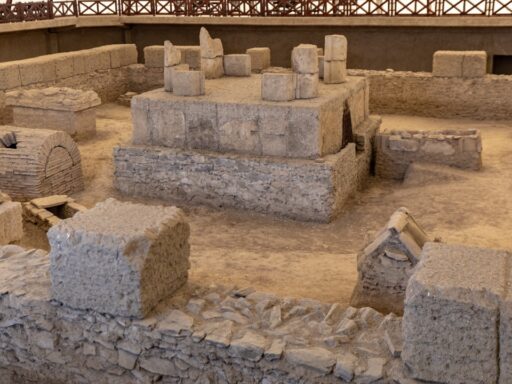
The newly uncovered bath complex lies in the Nijmegen district of Lent, close to the River Waal, where the Roman military once maintained a major base. Excavations revealed a cluster of stone buildings arranged around courtyards and service areas, interpreted as a large public bathhouse that served both soldiers and civilians. Archaeologists describe a footprint of nearly 5,000 square meters, making it the largest Roman bathing facility yet identified in the Netherlands and one of the most extensive in the northern provinces of the empire, according to reporting on the massive bathhouse.
The complex includes the classic sequence of Roman bathing spaces. Excavators have identified rooms that match the frigidarium, tepidarium, and caldarium, with evidence of heated floors and wall flues that carried hot air from furnaces. Hypocaust pillars survive in several areas, allowing specialists to reconstruct how heat circulated beneath the floors and up through ceramic pipes embedded in the walls. These technological traces show that the Nijmegen bath was not a modest frontier installation but a sophisticated piece of Roman engineering.
Decorative finds reinforce that impression of luxury. Fragments of painted plaster indicate that the walls were covered with colorful frescoes, while pieces of imported stone and tile suggest that architects and patrons invested heavily in appearance as well as function. Reports on the luxurious bathhouse note that the complex likely featured colonnades, ornamental basins, and possibly even small gardens that turned bathing into an all-day social experience.
Archaeologists also uncovered ancillary structures that supported the daily operation of such a large facility. Furnaces and service corridors allowed workers to stoke fires and manage water without intruding on the bathing spaces. Drainage channels carried used water away from the hot and cold rooms toward the river, which provided both a supply of fresh water and a natural outlet. Together, these features confirm that the Nijmegen bath was designed for heavy, continuous use rather than occasional ceremonial visits.
Crucially, the bath complex sits within a broader Roman landscape that includes a fort, a civilian settlement, and river infrastructure. Its location near a crossing point on the Waal suggests that the bath served a mixed audience of legionaries, traders, and local inhabitants who had adopted Roman habits. The scale of the construction indicates that the authorities expected large numbers of users and were prepared to fund an amenity that projected Roman lifestyle deep into what had once been tribal territory.
Why this frontier bath complex matters for understanding Roman power and local life
The Nijmegen discovery matters first because of its size. Previous Roman baths in the Netherlands tended to be smaller, often attached to forts or villas. A complex that spans close to 5,000 square meters implies a town that operated on a different scale. It suggests that Nijmegen was not just a military outpost but a regional hub where Roman culture, commerce, and administration converged. Coverage of the largest Roman bath in the country emphasizes that this is the first time such a monumental public amenity has been identified so clearly in the Dutch archaeological record.
The bath also offers a concrete measure of how far Roman social customs penetrated local life. Public bathing was central to Roman identity, blending hygiene, leisure, business, and politics in a single institution. By building a facility of this magnitude, Roman authorities effectively transplanted a core piece of Mediterranean urban culture to the banks of the Rhine. This has implications for how historians think about Romanization in the northern provinces, suggesting that local elites and ordinary residents alike participated in daily routines that mirrored those in cities like Cologne or Trier.
From a military perspective, the complex underlines the importance of Nijmegen as a strategic base. A bath of this scale required significant investment in labor, materials, and ongoing fuel supplies. That level of commitment points to a long-term Roman presence that relied on comfortable living standards to attract and retain soldiers and administrators. It also hints at a stable supply network capable of delivering firewood, building stone, and luxury goods to a frontier town, which in turn reflects a high degree of logistical sophistication.
The find carries weight for environmental and economic history as well. Hypocaust systems consumed large quantities of fuel, which means the surrounding landscape must have been managed to provide wood on a continuous basis. The bath therefore becomes indirect evidence for patterns of forestry, transport, and rural labor that are otherwise difficult to trace in the archaeological record. Combined with pottery, coins, and food remains from the site, the complex can help reconstruct how wealth flowed through the region and who benefited from Roman rule.
For contemporary Nijmegen, the discovery has cultural and civic resonance. The city has long promoted its Roman heritage, but the emergence of such a prominent structure provides a tangible focal point for that narrative. It strengthens claims that Nijmegen ranks among the most historically significant Roman sites north of the Alps and offers a new anchor for education, tourism, and local identity that connects residents directly to a two-thousand-year-old urban tradition.
Future research, preservation, and public access plans around the Nijmegen baths
Archaeologists now face a set of practical and scientific questions about what to do with a bath complex of this size. In the short term, teams are focused on documenting the remains in detail through mapping, photography, and 3D scanning. The goal is to capture as much information as possible before any decisions about reburial, partial exposure, or integration into new construction are finalized. Specialists are also analyzing building materials, mortar, and decorative fragments to refine the dating of different construction phases and to identify where stone and tiles were quarried.
Understanding how the bath evolved over time is a key priority. Early indications suggest multiple building phases, with expansions or renovations that responded to changing needs in the settlement. By comparing construction techniques and repair work, researchers hope to track shifts in funding, population, and military presence. This kind of phasing can reveal whether the bath peaked in the high imperial period and then declined, or whether it remained a central institution until the very end of Roman control in the region.
Another line of inquiry focuses on who used the bath and how access was organized. Archaeologists are examining entrances, internal circulation routes, and any evidence for gender separation or social zoning. If certain areas were more elaborately decorated or more closely connected to the fort, it might indicate privileged spaces reserved for officers or local elites. Conversely, large open halls and multiple changing rooms could point to a more inclusive facility that catered to a broad cross section of the population.
Preservation strategy will depend partly on these research outcomes and partly on urban planning decisions in Nijmegen. Authorities must balance the desire to showcase the baths with the costs and technical challenges of maintaining exposed Roman masonry in a damp river landscape. Some sections may be left in situ and reburied for protection, while others could be stabilized and incorporated into a visitor center or archaeological park. The experience of other European cities that have integrated Roman baths into modern neighborhoods will likely guide these choices.