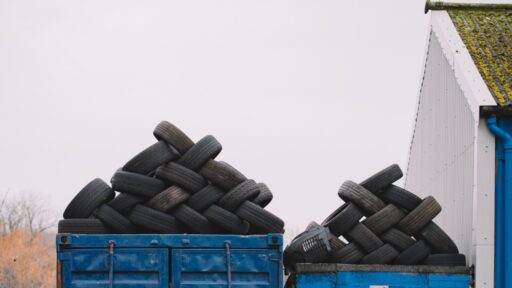
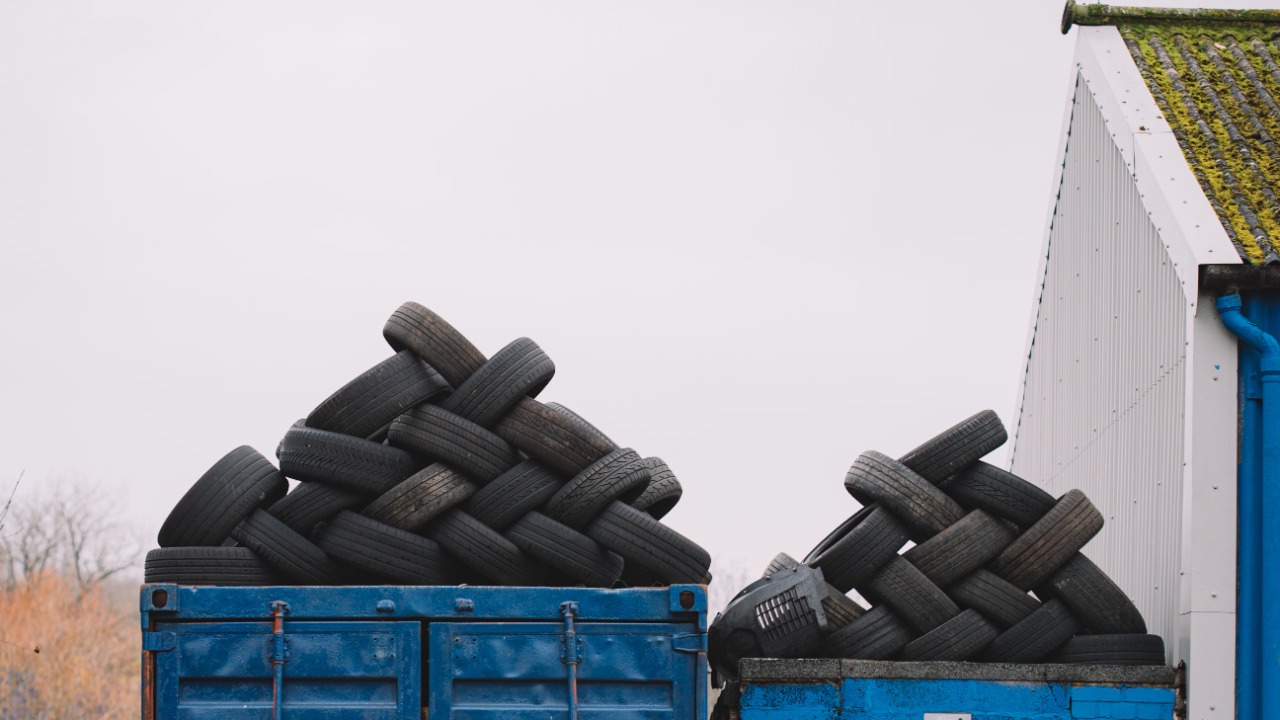

Every year, millions of tyres reach the end of their useful life.
They are removed from vehicles, replaced with new ones, and often become a difficult waste problem.
Unlike many everyday materials, tyres are not easy to dispose of. Their strong rubber compounds are designed to survive extreme conditions, which makes them durable on roads but challenging after they are discarded.
For decades, many old tyres were sent to landfills, stockpiled, or burned in ways that created environmental concerns.
Sweden and Norway are showing a different approach.
Instead of treating used tyres as waste, these countries are building systems that recover valuable materials and return them into the economy.
Their approach represents a broader shift in the automotive industry:
The future of tyres may not end when they leave a vehicle.
Why Used Tyres Are Such a Difficult Waste Challenge
Modern tyres are complex engineering products.
They are made from a combination of:
Natural rubber.
Synthetic rubber.
Steel reinforcement.
Textile materials.
Carbon black.
Chemical additives.
This combination gives tyres strength, flexibility, and durability.
However, those same properties make recycling difficult.
A tyre cannot simply be melted down and remade like some plastics or metals.
The materials are tightly combined, and separating them requires specialized processes.
According to the European Tyre and Rubber Manufacturers’ Association, hundreds of millions of tyres reach the end of their useful life in Europe every year, creating a major resource-management challenge.
The problem is not only the amount of waste.
It is the lost opportunity.
Inside every discarded tyre are materials that can potentially be recovered and reused.
Sweden and Norway’s Circular Approach
The Scandinavian model focuses on creating a circular system.
Instead of viewing used tyres as an unwanted byproduct, the system treats them as a resource.
Old tyres are collected, processed, and transformed into new materials or energy sources.
This approach reduces dependence on raw materials while preventing tyre waste from accumulating.
The basic idea is simple:
A tyre that reaches the end of its road life should begin a second life somewhere else.
This philosophy is closely connected with the broader circular economy movement, where products are designed, used, recovered, and reused instead of following a traditional “take, make, dispose” model.
The European Environment Agency has highlighted circular economy strategies as an important pathway for reducing resource consumption and improving waste management.
How Tyres Are Recycled
Tyre recycling involves several different processes depending on the intended use of the recovered materials.
One common method is mechanical recycling.
During this process, tyres are shredded into smaller pieces.
Steel wires are separated.
Rubber is processed into granules or powder.
These materials can then be used in new applications.
Recycled tyre rubber can become:
Road surfaces.
Playground materials.
Sports flooring.
Construction products.
Industrial materials.
Another process is pyrolysis, where tyres are heated in controlled conditions without oxygen.
This breaks the rubber down into useful products such as oil, gas, and carbon-based materials.
The technology is attracting interest because it attempts to recover more value from complex tyre structures.
However, scaling these systems economically remains a challenge.
Turning Old Tyres Into Better Roads
One of the most practical uses for recycled tyre materials is road construction.
Rubber from old tyres can be added to asphalt mixtures to improve certain performance characteristics.
Researchers have studied rubber-modified asphalt because it may improve flexibility, reduce cracking, and provide noise-reduction benefits.
The U.S. Environmental Protection Agency recognizes several beneficial uses for recycled tyres, including infrastructure applications.
Using old tyres in roads creates a useful connection between two industries:
Automotive manufacturing creates tyre waste.
Transportation infrastructure consumes large amounts of materials.
A circular system connects both.
The Energy Challenge: Recycling Is Not Always Simple
Not every discarded tyre can be recycled into a new product.
Some tyres are too damaged, contaminated, or difficult to process economically.
In these cases, energy recovery may become an option.
Tyres contain significant amounts of stored energy because they are produced from carbon-based materials.
Some facilities use processed tyres as fuel in industrial applications, particularly cement production.
However, this approach remains debated.
Supporters argue it provides an alternative to fossil fuels and reduces landfill waste.
Critics argue that material recycling generally preserves more value than combustion.
This debate highlights an important principle:
The best solution is usually preventing waste before it occurs.
Why Scandinavia Has Been Successful
Sweden and Norway have several advantages that support advanced recycling systems.
First, both countries have strong environmental regulations and organized waste-management infrastructure.
Second, consumers are generally familiar with recycling systems.
Third, industries and governments have invested in technologies that recover materials efficiently.
But regulation alone is not enough.
A successful recycling system requires cooperation between:
Tyre manufacturers.
Vehicle owners.
Collection companies.
Recycling facilities.
Government agencies.
Every part of the chain matters.
A recycling plant cannot operate effectively if used tyres never enter the system.
The Role of Tyre Manufacturers
The future of tyre recycling is not only about dealing with old tyres.
It also involves designing better tyres from the beginning.
Manufacturers are increasingly researching:
Recycled materials.
Renewable raw materials.
Longer-lasting compounds.
Easier-to-recycle tyre designs.
Companies such as Michelin and other global tyre manufacturers have announced sustainability programs focused on reducing environmental impact throughout the tyre lifecycle.
The goal is moving from a linear model:
Produce.
Use.
Discard.
Toward a circular model:
Produce.
Use.
Recover.
Reuse.
Electric Vehicles Make Tyre Recycling More Important
The growth of electric vehicles adds another dimension to tyre sustainability.
Electric vehicles are heavier than many traditional vehicles because of battery weight.
They also produce instant torque, which can increase tyre wear depending on driving conditions.
As EV adoption grows, tyre durability and recycling efficiency will become increasingly important.
The automotive transition is not only about changing engines.
It is about rethinking the entire vehicle lifecycle.
That includes batteries, electronics, manufacturing materials, and tyres.
The Economic Opportunity Hidden in Waste
Recycling is often discussed as an environmental responsibility.
But it is also an economic opportunity.
Recovered tyre materials can replace some virgin resources.
Companies can create new products.
Industries can reduce dependence on imported raw materials.
New recycling technologies can create jobs and investment opportunities.
The circular economy is built on a simple idea:
Waste from one industry can become an input for another.
Used tyres are a perfect example.
A product designed to last thousands of kilometers on roads still contains valuable materials after its driving life ends.
Challenges Still Remain
Despite progress, tyre recycling is not a perfect system.
Several challenges remain:
Recycling technologies can be expensive.
Recovered materials must compete with cheaper raw materials.
Collection systems vary between countries.
Some recycling methods have environmental concerns.
The industry must continue improving efficiency while maintaining economic viability.
A circular economy does not happen automatically.
It requires continuous innovation.
The Future of Tyre Recycling Could Become Global
Sweden and Norway’s approach demonstrates what is possible when waste is treated as a resource.
Their model shows that old tyres do not have to represent the end of a product’s value.
They can become new materials, new products, and new opportunities.
As vehicle ownership grows worldwide, tyre waste will continue increasing.
The automotive industry will need solutions that go beyond producing better vehicles.
It will need systems that manage those vehicles throughout their entire lifecycle.
The next generation of sustainable transportation will not only be measured by how efficiently cars drive.
It will also be measured by what happens after those cars leave the road.
The future of tyres may not be disposal.
It may be renewal.