
NASA’s Perseverance rover has spotted Martian rocks unusually rich in nickel, a metal that on Earth is closely tied to volcanic activity and the chemistry that can feed microbes. The find suggests that early Mars may have hosted hydrothermal systems and water–rock reactions that created energy sources similar to those used by life in Earth’s deep oceans. For scientists hunting ancient biosignatures, that combination of water, rock, and reactive metals turns Jezero crater from a promising site into a laboratory for testing how habitable Mars once was.
The discovery does not prove that life ever arose on the red planet, but it sharpens the questions scientists can ask with the samples Perseverance is caching for a future return to Earth. It also strengthens the case that Mars was not just wet but chemically lively during the period when life was taking hold on Earth.
New nickel rich rocks reshape the picture of Jezero’s past
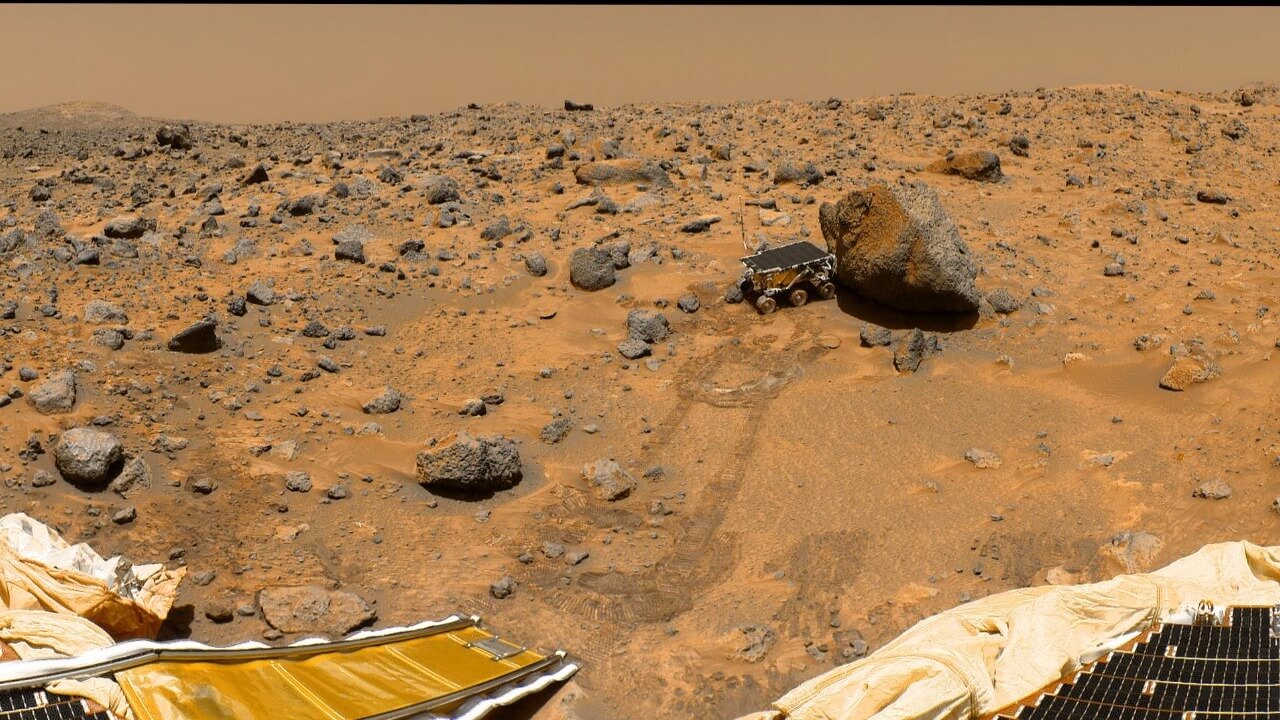
Perseverance’s instruments first flagged the unusual chemistry while the rover was traversing the floor of Jezero crater, a basin that once hosted a lake and a river delta. Spectrometers mounted on the rover’s mast and arm detected rocks with far higher nickel content than expected for typical Martian basalts, according to analyses described in nickel rich outcrops. On Earth, that sort of composition often points to magmas that rose quickly from deep in the mantle and interacted with water as they cooled.
The rover team has already cataloged several igneous units in Jezero, including coarse grained rocks formed from slowly cooled magma and finer lavas that erupted at the surface. The nickel heavy material appears to cut across some of those earlier layers, which suggests that it formed later, as fluids moved through fractures in the crust. That geometry hints at a history in which hot, metal bearing fluids circulated through the lake basin long after the initial eruptions, altering the original rocks and leaving behind new mineral veins.
Images and compositional data from Perseverance’s cameras and spectrometers show that the nickel enriched rocks are also rich in iron and magnesium, a combination that on Earth is associated with ultramafic rocks such as peridotite. When such rocks react with water they can produce hydrogen gas and alkaline fluids, a process known as serpentinization. The detection of similar chemistry on Mars, described in reports of a strange Martian rock, pushes scientists to consider whether comparable reactions once powered Martian ecosystems.
Perseverance has also drilled cores from these units and sealed them in sample tubes, which will allow laboratory instruments on Earth to probe the textures and isotopic ratios in far more detail. For now, the rover’s in situ readings already show that Jezero’s floor is more chemically diverse than early orbital data suggested, with distinct episodes of volcanism, sedimentation, and fluid alteration recorded in the same small area.
Ancient Martian chemistry and the ingredients for life
Nickel is not just a geological curiosity. On Earth, many enzymes that handle hydrogen and other key reactions in microbes rely on nickel at their active sites. Hydrothermal systems that circulate water through nickel and iron rich rocks can generate abundant chemical energy, particularly in the form of hydrogen and methane, which microbes can tap as fuel. That is why deep sea vents on Earth, such as those along the Mid Atlantic Ridge, teem with life even in the absence of sunlight.
The Martian rocks identified by Perseverance point to a similar style of water–rock interaction. If hot fluids once percolated through Jezero’s crust, they could have produced gradients in temperature and chemistry that persisted for long periods, exactly the kind of stable niches where prebiotic chemistry and early life might flourish. Reports describing Perseverance’s detection of a possible biosignature emphasize that the rover has also seen organic molecules in some of its targets, although their origin remains uncertain.
The combination of organics with nickel rich, water altered rocks is particularly intriguing. On Earth, carbon bearing compounds can be concentrated and modified in hydrothermal systems, where minerals act as catalysts that assemble more complex molecules from simple building blocks. If similar processes occurred in Jezero, they could have produced a rich inventory of prebiotic chemistry even if no organisms ever emerged.
Scientists are cautious about drawing direct parallels. Mars is smaller and cooled faster than Earth, and its magnetic field and thick atmosphere faded relatively early. Those changes would have affected how long liquid water persisted at the surface and how deeply hydrothermal systems could tap internal heat. Still, the new data argue that at least for a window of time, the planet had not only lakes and rivers but also the kind of subsurface circulation that on Earth supports thriving microbial communities.
The nickel enriched rocks also help refine the timeline of Jezero’s evolution. If the fluids that deposited these minerals flowed after the main lake phase, they might have extended habitable conditions even as surface water dwindled. That would mean potential habitats persisted underground, protected from harsh radiation and surface temperature swings, long after the visible lake disappeared.
Why the nickel discovery matters for Mars science now
Perseverance was sent to Jezero in part because the delta there promised to trap and preserve sediments from across a wide watershed. The new chemical clues add a second payoff. They suggest that the crater also hosted energy rich environments that could have powered metabolisms, not just stored their byproducts. That dual role strengthens Jezero’s status as a prime site for testing whether Mars ever hosted life.
For the Mars sample return campaign, the nickel rich cores become some of the highest value targets. Laboratory instruments on Earth can measure tiny differences in isotopes of elements like carbon, hydrogen, and sulfur within these rocks. Patterns in those isotopes can reveal whether reactions were purely chemical or whether microbes once mediated them. Analyses described in coverage of a potential sign of highlight how such subtle signals might be the most realistic biosignatures to expect from a planet that has been geologically quiet for billions of years.
The discovery also feeds directly into planning for future missions. If hydrothermal style systems were common in Mars’s early crust, then other ancient basins and volcanic provinces may hold similar records. That possibility could influence where orbiters focus their high resolution imaging and spectroscopy, and where future landers and rovers are sent to broaden the sample of Martian environments.
On Earth, studies of nickel and iron rich rocks have already reshaped theories about how life began. Laboratory experiments show that such minerals can help assemble amino acids and other organic molecules under conditions that mimic early planetary environments. Finding analogous rocks on Mars gives researchers a natural experiment, a second world where they can test whether the same chemistry appears without life, or whether biology leaves a distinctive imprint.
There are also implications for how scientists interpret older Martian data. Past missions detected hints of hydrated minerals and possible serpentine in other regions, but lacked the detailed compositional tools that Perseverance carries. The Jezero results suggest that some of those earlier signatures may have pointed to similar water–rock reactions, which could be reexamined with fresh eyes using current orbital datasets.
Next steps for Perseverance and the search for Martian habitability
Perseverance’s immediate task is to continue characterizing the nickel bearing rocks and their surroundings. That means combining close up images of rock textures with more measurements from its X ray and ultraviolet spectrometers, and comparing those data to the chemistry of neighboring units that lack the nickel enrichment. By mapping how the composition changes across small distances, the team can reconstruct the flow paths of ancient fluids and estimate temperatures and durations for the alteration events.