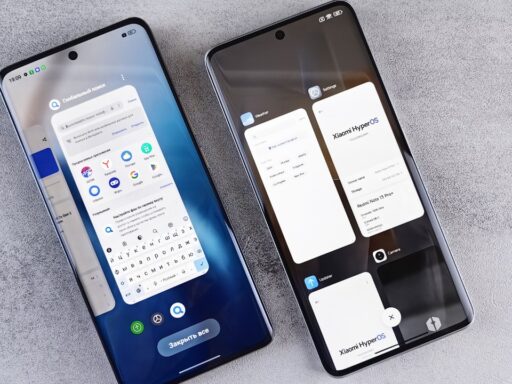


Cloud gaming has improved dramatically. Modern services can stream demanding games to ageing laptops, smartphones, tablets, televisions and handheld devices that could never run those titles locally.
NVIDIA now advertises GeForce NOW performance based on cloud-hosted RTX 5080-class hardware, with support for high resolutions and frame rates on compatible plans and devices. Xbox Cloud Gaming provides access across consoles, browsers, mobile devices and selected smart televisions, while PlayStation has expanded PS5 cloud streaming to the PlayStation Portal and other supported hardware.
The appeal is obvious. Players can begin without downloading a 150GB installation, avoid purchasing an expensive graphics card and continue a game across several screens. Updates are handled remotely, local storage matters less and a lightweight device can deliver visuals produced by powerful data-centre hardware.
Yet a significant group of gamers still cannot stand the experience. Their objections are not necessarily based on outdated memories of early cloud platforms. The technology continues to impose compromises that local consoles and gaming computers largely avoid.
The following five issues explain why cloud gaming remains useful for some players but unacceptable to others in 2026.
1. Input Delay Can Still Make Games Feel Wrong
Every game contains some input delay. A controller sends a command, the hardware processes it and the display presents the result. Cloud gaming adds several extra stages.
A button press must travel over the internet to a remote data centre. The server processes the action and renders the next frame. That frame is compressed into a video stream, sent back to the player and decoded by the receiving device.
When every stage works efficiently, the delay can feel surprisingly small. NVIDIA says its upgraded GeForce NOW infrastructure can produce very low click-to-pixel response times under favourable conditions. The company nevertheless requires users to remain within certain network limits. Its official GeForce NOW system requirements call for network latency below 80 milliseconds and recommend less than 40 milliseconds for the strongest experience.
A speed test showing hundreds of megabits per second does not guarantee low latency. Distance from the data centre, Wi-Fi interference, congestion, packet loss and routing quality can all affect responsiveness.
That variability is especially noticeable in competitive shooters, fighting games, rhythm games and racing simulators. A slow-paced role-playing game may remain perfectly enjoyable when an action arrives slightly late. A missed counterattack or delayed steering correction can decide an online match.
Local gaming cannot eliminate display and controller latency, but it removes the internet round trip. That consistency matters to players who have spent years developing precise timing and muscle memory.
Cloud gaming can consequently feel technically impressive while still feeling subtly wrong.
2. A Stream Is Not the Same as a Locally Rendered Image
Cloud services do not transmit every raw frame produced by the server. Doing so would require an impractical amount of bandwidth.
Instead, the image is compressed into video before being delivered. Compression allows high-resolution gaming over an ordinary broadband connection, but it can remove fine detail or introduce visible artefacts.
Dark environments, smoke, grass, rain, confetti and rapid camera movement are particularly demanding. These scenes contain large amounts of changing visual information, giving the encoder less time and data with which to preserve every detail.
A locally rendered game sends its image directly from the graphics hardware to the display. Cloud gaming converts that interactive image into something closer to a live video broadcast.
NVIDIA recommends at least 15Mbps for 720p at 60 frames per second, 25Mbps for 1080p and approximately 45Mbps for some 4K configurations. Higher-quality modes may therefore require both a capable subscription and a consistently strong connection.
The result can still look excellent on a laptop or smaller television. On a large 4K screen, however, a player may notice softened textures, colour banding or blockiness that would not appear when the same game runs locally.
Video quality may also change during a session. When the network becomes unstable, the service can reduce resolution or bitrate to preserve responsiveness. The game continues running, but the picture may temporarily resemble a low-quality online video.
For players who invest in OLED displays, ultrawide monitors, HDR equipment and powerful graphics cards, that compromise can defeat the purpose of premium gaming hardware.
3. The Entire Experience Depends on the Internet
A locally installed game can often continue working when the internet fails. Cloud gaming cannot.
The player needs a stable connection not merely to sign in or verify a licence, but to produce every visible frame. A brief interruption can freeze the image, reduce quality or end the session entirely.
Official requirements may appear modest. PlayStation says cloud streaming can establish a session with approximately 5Mbps, while its PlayStation Portal guidance recommends a faster connection of at least 15Mbps for a better experience. The company also warns that performance varies according to the network environment.
Those figures describe bandwidth rather than the complete quality of the connection. A household may technically have sufficient speed while several people are streaming films, joining video calls or downloading files. Wi-Fi dead zones and busy apartment-building networks can create further instability.
Cloud gaming is also less convenient during flights, remote travel or commutes with inconsistent mobile coverage. Even where mobile data is fast enough, sustained high-resolution streaming can consume substantial amounts of data and battery power.
Service-side problems create another dependency. Maintenance, overloaded servers or regional outages can prevent access even when the player’s own internet is working perfectly.
The convenience of avoiding downloads is therefore exchanged for continuous dependence on multiple systems that the player does not control.
4. Subscriptions, Limits and Fragmented Libraries Create Friction
Cloud gaming is often described as a simple alternative to buying expensive hardware. The commercial reality can be less straightforward.
Some services offer a catalogue through a subscription. Others require the player to purchase games separately from supported digital stores. A title owned on Steam, Epic Games Store or another platform is not automatically available through every cloud provider.
GeForce NOW connects to supported PC storefronts and lets members stream compatible games they already own. NVIDIA says the service offers thousands of ready-to-play titles and an additional collection through its Install-to-Play feature. That remains far smaller than the complete catalogue available across every connected PC store. NVIDIA also uses an opt-in process under which participating developers and publishers approve titles for the service.
A player can therefore own a game that cannot be streamed, or discover that only one storefront version is supported.
Subscription rules add another source of frustration. GeForce NOW Performance and Ultimate memberships now include 100 hours of premium playtime per billing month, with up to 15 unused hours rolling forward. Users who reach the allowance can purchase additional time or continue with reduced free-tier access until the reset.
One hundred hours is sufficient for many users, but the existence of a limit changes the psychological experience. A person paying for a premium service may dislike monitoring hours while playing a lengthy role-playing game or spending an entire weekend online.
PlayStation cloud streaming requires a PlayStation Plus Premium membership, while games and streaming functions depend on the supported catalogue, device and country.
For some gamers, purchasing local hardware once feels simpler than managing overlapping subscriptions, licences, supported-store versions and monthly usage conditions.
5. Players Lose Control Over the Hardware and Experience
A locally owned PC or console gives the player direct control over the machine running the game.
PC users can install modifications, replace files, use specialised peripherals, adjust unusual graphics settings and troubleshoot problems at system level. They can preserve older versions, experiment with community patches or play supported titles without depending on a remote provider’s configuration.
Cloud users receive the machine assigned by the service. They cannot replace its components or control every part of its software environment. Available resolutions, frame rates, graphics settings and session lengths depend on the chosen provider and membership level.
Mod support can be limited or inconsistent because files are running on a temporary remote system. Niche controllers, steering wheels, flight equipment and accessibility devices may also be more difficult to use than they are with local hardware.
Game preservation creates a longer-term concern. A locally installed title may remain playable after it leaves a subscription catalogue, provided the licence and required services continue working. A cloud-only experience can disappear when the provider removes support, changes its business model or closes.
Google Stadia remains the obvious historical warning. Its technology worked well for many users, but Google discontinued the consumer service in January 2023. Google refunded qualifying hardware and software purchases, yet the closure demonstrated that even a platform backed by one of the world’s largest technology companies could disappear. The official Stadia shutdown announcement explained that the service had not achieved the user adoption Google expected.
For enthusiasts, physical hardware represents more than a method of accessing software. It provides ownership, customisation, predictability and a sense that the gaming environment remains under their control.
Cloud Gaming Is Valuable, but It Is Not Neutral
Cloud gaming solves real problems. It gives people access to demanding games without requiring an expensive computer, removes large downloads and allows gaming across devices that were never designed for high-end graphics.
Those benefits explain why the technology continues expanding.
Its critics are not necessarily rejecting progress. They are objecting to the trade-offs hidden behind the convenience.
The input can feel less immediate. The image is compressed. Every session depends on a stable connection. Libraries and subscriptions are fragmented, while providers control the hardware, availability and usage conditions.
Some players will gladly accept those compromises to avoid purchasing a console or graphics card. Others will use cloud services as a secondary option while travelling or playing away from their main system.
Enthusiasts who value responsiveness, image quality, modification and long-term control are unlikely to abandon local gaming soon. Cloud gaming may become a major way to play, but in 2026 it still does not feel like an invisible replacement for hardware.
For many gamers, the cloud is most appealing when it complements a console or PC—not when it attempts to replace one.