
The word “Pro” suggests that an iPhone should deliver Apple’s best possible experience. It should offer the strongest performance, most capable cameras, longest useful life and fewest compromises.
For several generations, however, the premium label could create an expensive contradiction. The Pro models had more powerful chips and additional camera hardware, yet their heat, weight and battery behaviour sometimes made the cheaper iPhone feel more pleasant during ordinary use.
That frustration is the basis of a recent BGR account of repeated iPhone Pro buyer’s remorse. Its author described regretting the iPhone 14 Pro Max, 15 Pro Max and 16 Pro Max before finally finding that the iPhone 17 Pro Max corrected the problem that mattered most: thermal management.
The Pro Upgrade Was Becoming Harder to Justify
Earlier Pro iPhones offered several obvious advantages over standard models. Buyers received ProMotion displays, more capable processors, additional camera lenses and premium materials.
The difficulty was that many everyday activities did not require those benefits. Messaging, browsing, navigation, social media and casual photography already worked extremely well on the regular iPhone.
A buyer could therefore pay more for a Pro model and still encounter disadvantages that appeared every day. The phone was often heavier, the advanced processor generated more heat under demanding loads and the extra camera equipment added size without necessarily improving every photograph.
The calculation became even harder with the iPhone 17 generation because Apple brought ProMotion with refresh rates up to 120Hz to the standard iPhone 17. The regular model also includes an A19 chip, a 48MP main camera, a 48MP ultra-wide camera and up to 30 hours of Apple-rated video playback. Those additions remove some of the historical reasons an ordinary buyer might have selected the Pro.
Heat Was the Hidden Source of the Regret
Smartphone heat is not only about whether the device feels uncomfortable in the hand.
As internal temperature increases, the operating system may reduce processor performance to protect the hardware. The display can dim, charging may slow and power consumption can rise. A phone purchased for its superior performance can consequently become less pleasant precisely when that performance is being used.
The iPhone 15 Pro series attracted widely reported heating complaints after its release. Apple said a software bug and certain third-party applications contributed to the issue and released an update intended to address it. The company specifically rejected claims that the titanium enclosure or USB-C transition was responsible.
That distinction matters. Not every warm iPhone indicates a defective cooling design, and tasks such as gaming, camera recording, navigation and fast charging naturally generate heat. Even so, repeated experiences involving dimmed screens, rapid battery loss or reduced performance can make an expensive phone feel poorly balanced.
The BGR account argued that this remained the central frustration across three Pro Max generations. Regardless of the exact combination of software, applications and hardware involved, the author found the standard models more dependable for ordinary use because they placed fewer demands on their thermal limits.
The iPhone 17 Pro Finally Changed the Cooling System
The decisive improvement was not another artificial-intelligence feature or a slightly faster benchmark result. It was a vapour chamber.
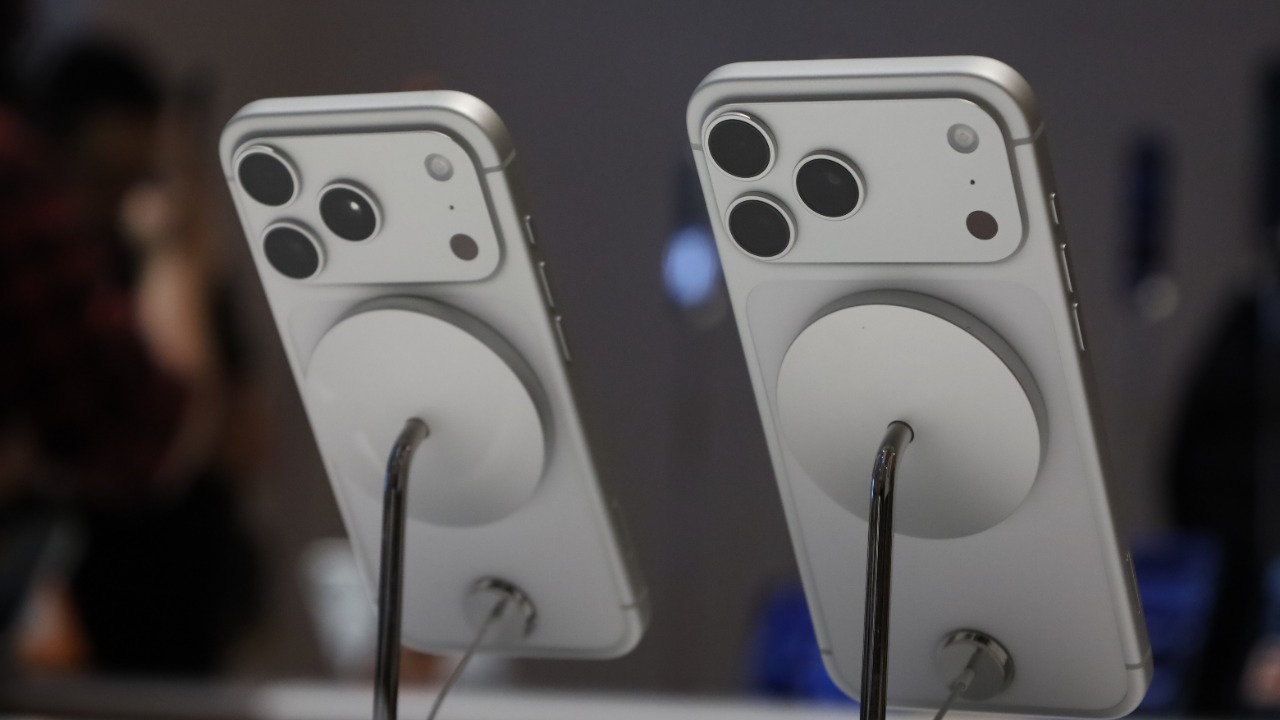
Apple redesigned the iPhone 17 Pro and Pro Max around a cooling system that spreads heat from the A19 Pro chip through the device more effectively. The company says the vapour chamber and aluminium unibody help the phones maintain up to 40% better sustained performance than the previous generation.
A vapour chamber contains a small amount of fluid inside a sealed, flattened structure. Heat causes the fluid to evaporate and move towards cooler areas, where it condenses before returning through an internal wick. The process distributes heat across a wider surface instead of allowing it to remain concentrated around the processor.
The benefit is not that the iPhone remains cold. Heat must still leave the chip, and the exterior may become warm as it carries that energy away. The improvement is that temperature can be managed more evenly, reducing the need for sudden performance throttling.
Independent reviews broadly supported the importance of the redesign. Ars Technica praised the iPhone 17 Pro’s combination of camera capability and improved battery endurance, while other reviewers highlighted its stronger sustained performance under demanding workloads.
Returning to Aluminium Was a Functional Decision
Apple also moved the Pro models away from the titanium frame used on the iPhone 15 Pro and 16 Pro generations.
Titanium had provided a premium appearance and helped reduce weight compared with the older stainless-steel design. Aluminium, however, conducts heat more effectively and can become a more useful part of the phone’s cooling system.
Apple’s iPhone 17 Pro technical specifications describe an aluminium unibody combined with Ceramic Shield on both the front and back. The 6.3-inch Pro weighs 206 grams, while the 6.9-inch Pro Max weighs 233 grams.
The aluminium finish may be more vulnerable to visible cosmetic wear around exposed edges than titanium. That trade-off is easier to accept when the material contributes to more stable performance, longer battery life and reduced display dimming.
A premium device does not necessarily need the most luxurious-sounding metal. It needs the material that allows the complete product to work properly.
Better Cooling Improves More Than Gaming
Vapour-chamber cooling may sound like a feature designed mainly for mobile gaming, but its effects can appear throughout the phone.
Recording high-resolution video places sustained demands on the processor, camera sensors and storage. Editing that footage adds another intensive workload. Navigation combines GPS, mobile data and a bright display, while charging the phone in a warm vehicle introduces additional heat.
Under those conditions, a better cooling system can help preserve screen brightness, responsiveness and recording stability. It can also reduce the frequency with which the phone must lower performance to protect itself.
The battery gains are substantial on paper. Apple rates the iPhone 17 Pro for up to 33 hours of video playback and the Pro Max for up to 39 hours. The company describes the Pro Max result as the longest battery life it has offered in an iPhone and says it provides up to four additional hours per charge compared with the iPhone 15 Pro Max.
Those figures come from Apple’s controlled testing and will not reproduce every owner’s daily use. They nevertheless show that the redesign prioritised endurance rather than merely increasing peak processing speed.
The Cameras Now Feel More Connected to the Pro Price
The iPhone 17 Pro also strengthens the argument for buying the premium model through its camera system.
All three rear cameras use 48MP sensors. The updated telephoto camera employs a next-generation tetraprism design and a sensor that Apple says is 56% larger than the previous version. The system offers a 4x telephoto perspective and an 8x optical-quality option equivalent to a 200mm focal length.
The regular iPhone 17 already covers the most common wide, ultra-wide and 2x crop-based photography needs. The Pro becomes more meaningful for users who regularly photograph distant subjects, record professional video or need access to advanced formats and controls.
Apple has also improved Photographic Styles, giving users greater influence over colour and tone. That matters because some owners disliked the aggressive computational processing associated with earlier iPhone cameras. A more technically advanced camera is not necessarily better when the user dislikes how the software interprets the scene.
The Regular iPhone Is Still the Smarter Choice for Many People
The iPhone 17 Pro Max may have corrected the thermal weakness that caused earlier regret, but that does not make it the correct model for every buyer.
The standard iPhone 17 now has the smooth 120Hz display that once strongly separated Pro phones from the rest of the range. Its A19 chip is easily capable of everyday applications, and its dual-camera system covers the types of photographs most people take. It is also lighter and less expensive than the Pro models.
A Pro purchase makes the most sense when its exclusive features will be used regularly. Long telephoto photography, sustained gaming, demanding video production and the largest available battery can justify the additional cost.
Buying the Pro simply because it is described as Apple’s best model can still lead to disappointment. Its weight and price remain real compromises, while much of its extra processing power may go unused.
The First Pro Model That Feels Properly Balanced
The iPhone 17 Pro Max does not reinvent what an iPhone can do. Its achievement is more practical: it finally brings the cooling system, battery and enclosure into balance with the power of the processor.
That engineering change addresses the chain of problems that can make a flagship frustrating. Better heat distribution supports sustained performance. More stable performance can reduce lag and emergency screen dimming. Improved efficiency contributes to stronger battery endurance.
The result is a Pro iPhone whose benefits are less likely to disappear when the device is placed under pressure.
The regular iPhone remains the better-value choice for a large proportion of buyers. For photographers, gamers and creators who genuinely need the premium hardware, however, the iPhone 17 Pro Max is the model that finally makes the expensive upgrade feel complete rather than compromised.