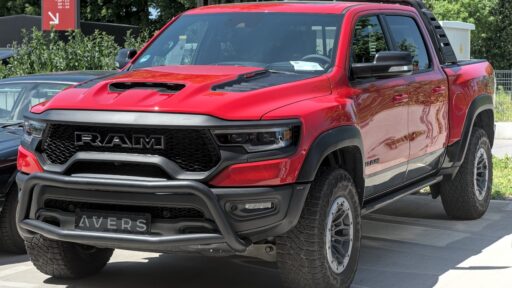
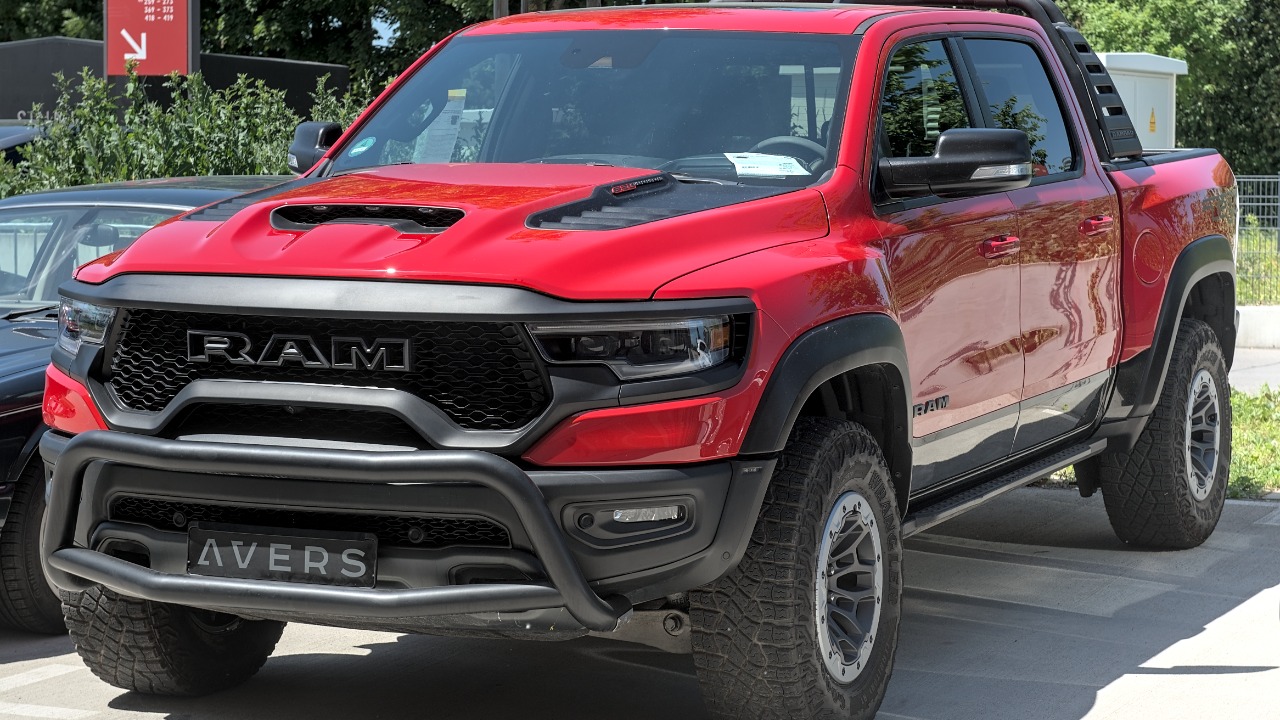

The plug-in Ram 1500 REV, also known as the Ram 1500 Ramcharger, combines a 92 kilowatt-hour battery with a V6 gasoline generator to deliver a claimed 690 miles of total driving range, including an estimated 145 miles of all-electric operation. Rather than a traditional plug-in hybrid layout, Ram uses a battery-electric drivetrain that is constantly fed by an onboard engine acting as a generator. The result is a full-size pickup that aims to ease range anxiety while still offering meaningful zero-emission driving for daily use.
How Ram rethought the 1500 REV into a long-range plug-in truck
Ram’s extended-range pickup is built around a large lithium-ion pack sized more like a pure EV than a typical plug-in hybrid. The 92 kilowatt-hour battery sits in the frame rails and powers electric motors on the front and rear axles, which provide all of the propulsion. According to early product details, the truck’s electric-only range target is 145 miles on a full charge, a figure that far exceeds the 30 to 50 mile range that has become common among plug-in SUVs and crossovers.
Above that battery system, Ram installs a 3.6 liter V6 gasoline engine that never directly drives the wheels. Instead, the engine acts as a generator that feeds electricity to the battery and the motors, turning the truck into a series hybrid once the pack’s charge is depleted. Reporting on the plug-in Ram 1500 notes that this combination is expected to yield up to 690 miles of total range, with the engine and a fuel tank sized to support long highway drives for owners who cannot or do not want to stop frequently to charge plug-in Ram 1500.
Ram is positioning the truck as a complement to its fully electric 1500 REV models, which are expected to offer large battery packs of their own. Product previews indicate that the Ramcharger variant keeps the same STLA Frame architecture but swaps the biggest battery option for the 92 kilowatt-hour pack plus generator setup, trimming weight while preserving capability. Early specification sheets shared with dealers describe a truck that can still tow and haul like a traditional half-ton pickup while offering the smooth, instant torque of an electric drivetrain.
Pricing guidance suggests that the Ram 1500 REV and Ramcharger will slot into the upper tiers of the Ram 1500 lineup, above many gasoline-only trims. Listings that aggregate factory information show the 1500 REV as a 2027 model with multiple configurations and battery choices, confirming Ram’s plan to treat it as a core part of the portfolio rather than a low-volume experiment Ram 1500 REV. The plug-in range-extender approach is therefore not a side project, but a central pillar of Ram’s transition to electrified trucks.
What changed in Ram’s strategy with this generator-backed EV pickup
Ram’s decision to pair a sizeable battery with a V6 generator marks a significant shift from the more tentative plug-in pickups that automakers once considered. Instead of starting with a conventional V8 truck and adding a small battery for short electric hops, the company is effectively starting with an EV and layering a generator on top. Coverage of the 2025 Ram 1500 Ramcharger describes a battery that is comparable in scale to some Tesla models, combined with a gasoline engine that exists purely to make electricity for the motors Tesla-sized battery.
This architecture differs from the brand’s previous electrification efforts, which focused on mild-hybrid systems that assisted the engine rather than replacing it as the primary source of propulsion. With the Ramcharger, the electric motors are always in charge of moving the truck, and the V6 steps in only when the battery’s state of charge falls or when the driver demands sustained power that the pack alone cannot comfortably supply. That approach allows Ram to tune the engine for steady, efficient operation instead of the constantly changing loads that a traditional powertrain must handle.
Another major change is the way Ram is framing capability for truck buyers who have been wary of pure EVs. Product previews emphasize that the Ramcharger is designed to tow and haul without the dramatic range penalties that have frustrated some early electric pickup owners. One detailed preview notes that Ram is targeting competitive towing figures while promising that the generator will maintain usable range even with a trailer attached, reducing the need for frequent DC fast-charging stops on long routes Ramcharger preview.
At the same time, Ram is adjusting the way it talks about charging. Rather than presenting home charging as the only practical way to live with an electrified truck, the company is acknowledging that many owners will rely on gasoline for certain trips. Reports on early briefings describe a message that encourages drivers to use the 145 miles of electric range for daily commuting and local errands, then lean on the generator for long-haul travel or remote job sites. That split use case is a departure from the more all-or-nothing rhetoric that has sometimes surrounded truck electrification.
Why this plug-in range-extender truck matters in the current EV market
The Ram 1500 Ramcharger arrives at a moment when enthusiasm for electric trucks is real but tempered by concerns about infrastructure, towing range, and cold-weather performance. Many truck owners live in regions where DC fast chargers are sparse, and some tow heavy loads across long distances where stopping every 150 to 200 miles to recharge is impractical. By promising 690 miles of combined range, with 145 miles available on battery power alone, Ram is aiming squarely at those anxieties while still delivering a meaningful reduction in gasoline use.
Analysts who have reviewed the configuration argue that this kind of series hybrid can serve as a bridge technology for buyers who are not ready for a full EV. Coverage of the Ramcharger concept notes that the generator-backed layout lets owners treat the truck like an EV most days, charging at home or at work, while preserving the convenience of quick refueling on long trips through a standard gas pump generator-backed layout. That duality could be especially attractive to contractors, ranchers, and fleet operators who need dependable range in areas where charging networks lag behind urban centers.
The truck also speaks to a broader shift in how automakers think about battery size. Some early electric pickups chased maximum pack capacity and raw range, which drove up cost and weight. Ram’s choice of a 92 kilowatt-hour pack for the Ramcharger suggests a more balanced approach. The battery is large enough to handle daily driving without gasoline, but small enough that the generator can reasonably support it on extended trips. For buyers, that could mean a lower price than a mega-pack EV truck, along with less weight over the front axle and potentially better ride and handling.
From a regulatory perspective, the Ramcharger could help Ram meet fleet-average emissions and fuel economy targets without relying solely on pure EV sales. Every mile driven in electric mode reduces gasoline consumption and tailpipe emissions, and the 145 mile electric range target implies that many owners could complete workdays or weekly commutes without burning fuel at all. At the same time, the presence of the V6 generator reduces the risk that owners will avoid using the truck’s capabilities for fear of stranding themselves far from a charger.
What comes next for Ram’s plug-in 1500 and the broader truck segment
The Ram 1500 Ramcharger is scheduled to join the refreshed Ram 1500 lineup as a distinct model, alongside gasoline and fully electric versions. Product planners have signaled that the truck will be offered in familiar trims and body styles, rather than as a niche variant with limited options. Early ordering information and configuration tools already list the 1500 REV family among upcoming models, indicating that dealers are preparing to sell it as a mainstream choice for half-ton buyers upcoming models.