
A star in a distant galaxy has been caught in the brief, eerie calm before its death. Using the James Webb Space Telescope, astronomers have finally spotted a heavily shrouded, doomed star hiding behind the glare of a past supernova, something the Hubble Space Telescope could never manage. The result gives researchers a rare, almost forensic look at the final years of a massive star and may help solve long-standing questions about how the most powerful stellar explosions unfold.
How Webb uncovered a hidden star that Hubble missed
The discovery centers on a star in the galaxy NGC 1309, roughly 40 million light years from Earth, that is fated to explode as a core collapse supernova. Before its death, the star was wrapped in a dense cocoon of dust that absorbed visible light, which meant Hubble, with its focus on optical wavelengths, saw only darkness where the star should have been. Webb, designed to observe the universe in infrared, can pierce that dust and reveal the glow of warm material that would otherwise stay invisible.
Researchers used Webb’s Near Infrared Camera to target the site of a previous supernova in NGC 1309 and found a bright, compact source of infrared emission nestled inside a thick dust shell. That source lines up with the location of the earlier explosion and matches what astronomers expect for a massive, evolved star that has been shedding material into its surroundings. The dust absorbs the star’s visible light and re-radiates it in the infrared, exactly the kind of signal Webb was built to capture.
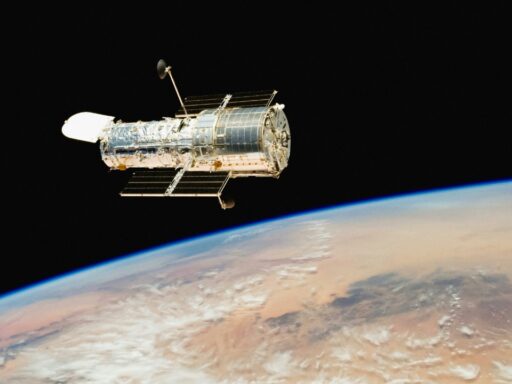
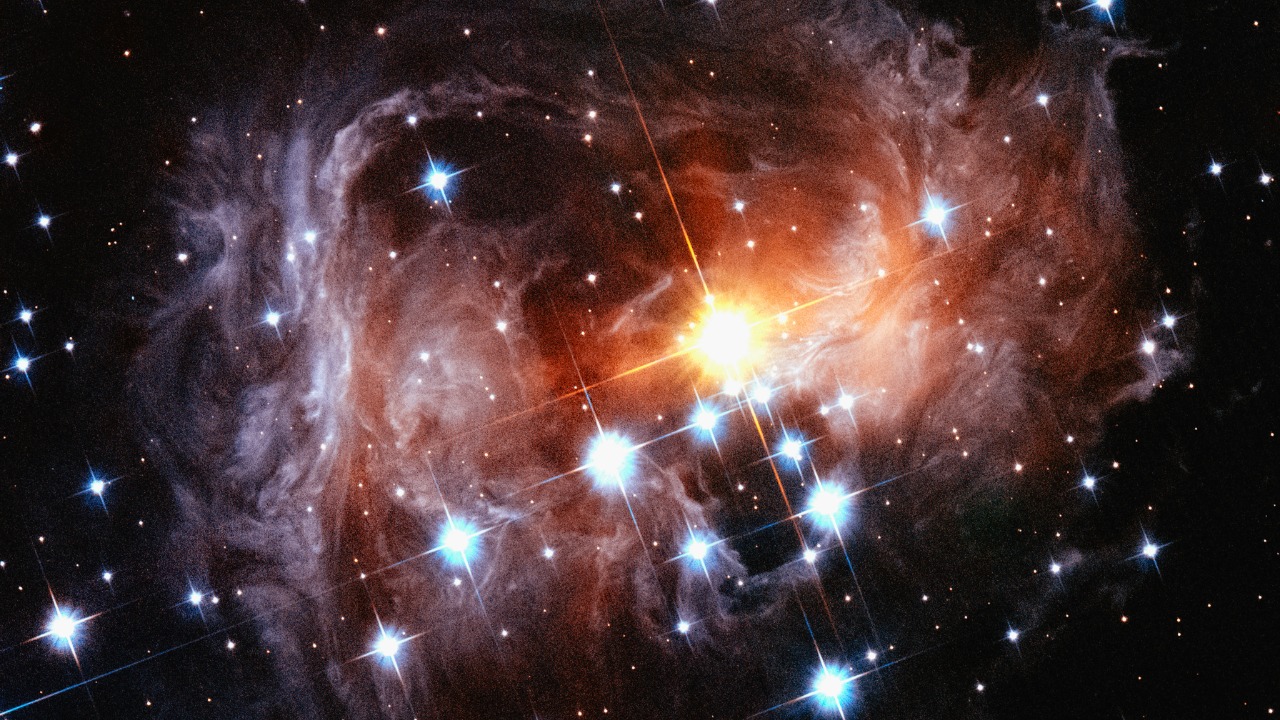
Comparisons with archival Hubble images show that where Webb now sees a glowing, dust-wrapped star, Hubble recorded little or no light. The contrast between the two telescopes illustrates how much information was hidden in plain sight. Hubble has delivered iconic views of exploding stars, including the intricate ring structures around Supernova 1987A, but its sensitivity drops sharply once heavy dust enters the picture. Webb fills that gap, turning what looked like an empty patch of sky into a detailed portrait of a dying stellar giant.
According to analysis highlighted in one report, the dust around the doomed star is so thick that it would block nearly all optical light, yet in Webb’s infrared bands it shines strongly enough to be measured and modeled. That modeling indicates a star that has already lost a large fraction of its outer layers and is likely in a late red supergiant or related evolutionary phase. In other words, this is not a casual snapshot of a normal star; it is a rare view of stellar life in its final act.
Why a dust wrapped, dying star matters for supernova science
The ability to see a pre-explosion star inside its own dust shell matters because it connects several pieces of the supernova puzzle that previously had to be studied separately. Astronomers usually either observe the immediate blast of a supernova or track the long-term debris, but they seldom have a clear image of the progenitor star in the years just before it dies. Webb’s detection gives them that missing frame in the movie.
Infrared data from Webb reveal not only the star itself but also the temperature and distribution of the surrounding dust. One analysis of the NGC 1309 object indicates that the dust is relatively cool, which suggests it was expelled over an extended period rather than in a single violent event. That supports models in which massive stars undergo intense, episodic mass loss in the final tens of thousands of years before core collapse, enriching their surroundings with gas and dust that the later supernova shock wave will plow into.
By comparing the brightness and color of the source with theoretical models, scientists can estimate the star’s mass and stage of evolution. Studies cited in the recent coverage argue that the object is likely among the more massive stars capable of ending as a Type II supernova. That estimate can then be checked against the energy and chemical composition of the eventual explosion, creating a feedback loop between observation and theory that has been difficult to establish until now.
The discovery also helps explain why some supernovae appear to be missing progenitors when astronomers search archival images. In several past cases, no obvious star could be identified at the explosion site, leading to speculation that some massive stars might collapse directly into black holes with little visible fireworks. The newly revealed, dust-smothered star in NGC 1309 shows that in at least some cases the progenitor was there all along, simply hidden behind a veil that only infrared eyes can penetrate. One report on the Webb data argues that such hidden progenitors may be more common than previously thought.
Other Webb observations strengthen that case. Separate work has used the telescope to identify a dying star that had lost a large amount of mass, leaving behind a complex structure of dust and gas that glows in infrared. That study, which tracked how the dust emission changes with wavelength, showed that the expelled material contains a mix of grain sizes and compositions, information that feeds directly into models of how supernovae seed galaxies with heavy elements. The description of this object as a dying star that had already shed much of its envelope echoes the situation in NGC 1309, hinting at shared physics across different systems.
A further perspective comes from work that used Webb to look at another doomed star before its explosion. In that case, astronomers examined a heavily obscured progenitor whose infrared signature suggested extreme mass loss shortly before death. The study, discussed in detail in one analysis of how Webb sees a, showed that the star’s environment was primed for a particularly bright and complex supernova, shaped by the dense material around it. Together, these findings indicate that the late-life behavior of massive stars can strongly influence the character of their final explosions.
What Webb’s discovery means for the next decade of stellar forensics
Webb’s ability to pierce dust and reveal doomed stars is already reshaping how astronomers plan supernova surveys. Instead of waiting passively for explosions and then scrambling to piece together the past from whatever data exist, teams can now actively search for heavily obscured, high-risk stars in nearby galaxies. Once identified, these targets can be monitored regularly, creating a watch list of likely supernova candidates.
The NGC 1309 star is an ideal example. With Webb’s first detection in hand, astronomers can return to the same site in future observing cycles to check for changes in brightness or dust emission. Any significant shift could hint at new mass-loss episodes or structural changes in the star’s outer layers. If and when the star finally explodes, the community will already have a baseline record of its late-life behavior, which will make the subsequent supernova far more informative.
These targeted campaigns will complement ongoing optical surveys that scan the sky for fresh supernovae. When a new explosion is found, astronomers will be able to cross-match its location with catalogs of dusty, infrared-bright stars from Webb. If a match exists, they will instantly know far more about the progenitor than in past cases, including its approximate mass, evolutionary stage, and mass-loss history. That kind of rapid, data-rich response could turn each nearby supernova into a detailed case study rather than a one-off spectacle.
The work also has implications beyond individual stars. Dust formed in the winds of massive stars and in supernova ejecta plays a major role in shaping galaxies, from how gas cools and collapses to form new stars to how light is absorbed and re-emitted across the spectrum. By directly measuring the dust around doomed stars, Webb provides a missing link between small-scale stellar physics and large-scale galactic evolution. The thick dust shroud that hid the NGC 1309 star from Hubble is not just an observational nuisance; it is raw material that will eventually mix into the galaxy’s interstellar medium.