
The U.S. offshore wind industry has had a difficult road. Projects have faced delays, lawsuits, rising costs, supply-chain problems, political fights, and construction setbacks. But this year, two major offshore wind farms off the Northeast coast are moving closer to full operation, giving the region a major clean-energy milestone after years of uncertainty.
The two projects are Vineyard Wind 1 off Massachusetts and Revolution Wind serving Rhode Island and Connecticut. Together, they represent more than 1.5 gigawatts of offshore wind capacity and could eventually provide electricity for hundreds of thousands of homes and businesses across New England.
According to Utility Dive, Revolution Wind began delivering power to New England in March 2026, while Vineyard Wind 1 completed physical construction around the same time. That makes this a turning point for offshore wind in the United States, especially in the Northeast, where states have been counting on ocean wind to help reduce fossil-fuel dependence and stabilize future power supply.
This is not just another energy headline. It is a sign that large-scale offshore wind is becoming more real in America after decades of planning and debate.
Why These Two Wind Farms Matter
Offshore wind has been talked about in the U.S. for years, but actual large-scale construction has moved slowly. Europe built a major offshore wind industry long before the United States, while U.S. projects had to navigate permitting, local opposition, marine-use conflicts, financing challenges, and changing political priorities.
That is why Vineyard Wind 1 and Revolution Wind matter so much. They are not small demonstration projects. They are utility-scale energy projects built to deliver meaningful amounts of electricity to the grid.
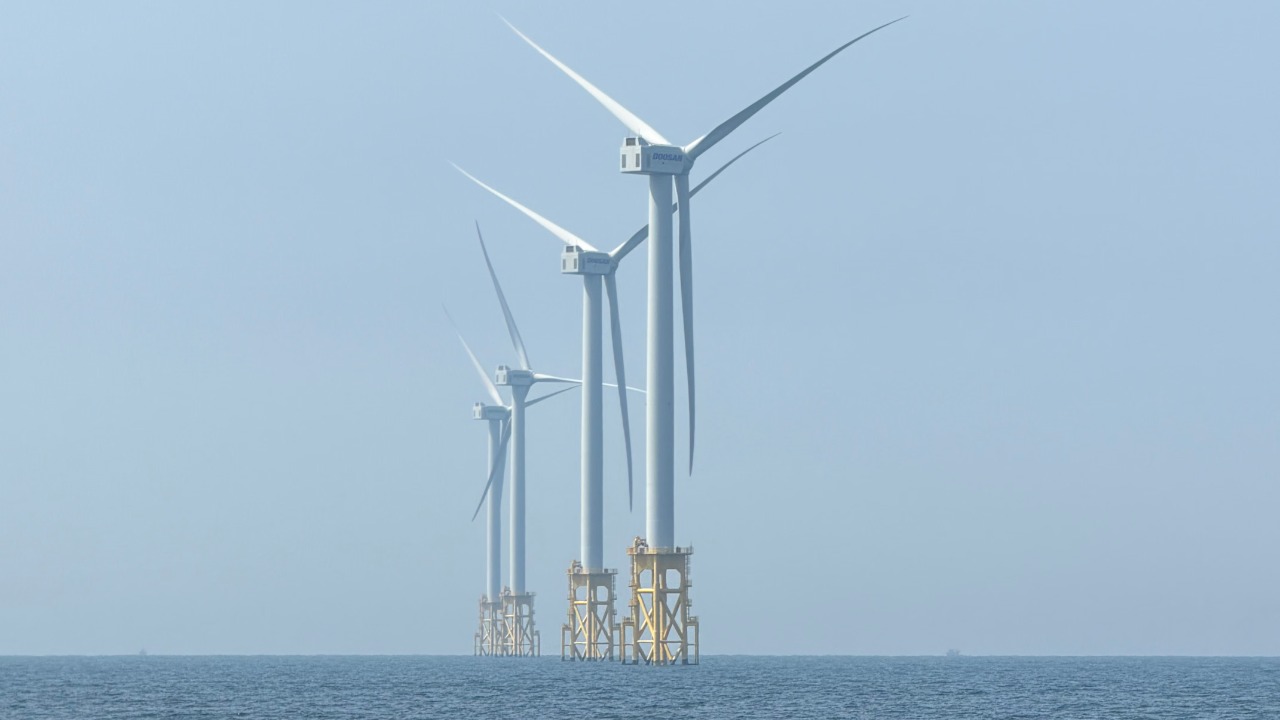
Vineyard Wind 1 is an 800-megawatt project located south of Martha’s Vineyard. The project is expected to deliver enough electricity to power roughly 400,000 homes and businesses in Massachusetts, according to the Massachusetts offshore wind update page.
Revolution Wind is a 704-megawatt project located off the coast of Rhode Island. The project is expected to supply enough electricity to power more than 350,000 homes and businesses in Rhode Island and Connecticut, according to the official Revolution Wind project page.
Together, the projects could help shift the Northeast’s energy mix in a visible way. They also show that the region’s offshore wind plans are not only drawings, permits, and promises anymore. Turbines are going up, cables are being connected, and power is moving toward the grid.
Vineyard Wind 1 Reaches a Major Construction Milestone
Vineyard Wind 1 has been one of the most closely watched offshore wind projects in the United States. It has often been described as the country’s first large-scale offshore wind farm, and its progress has been treated as a test case for the entire industry.
The project has not had an easy path. It faced permitting delays, political scrutiny, construction challenges, and a widely reported turbine blade failure in 2024 that forced cleanup work and additional review. Still, the project continued moving forward.
In March 2026, WBUR reported that construction on Vineyard Wind had wrapped up after workers installed the final blades on the last turbine. That marked a major step toward full operation for a project that had been years in the making.
Vineyard Wind’s importance goes beyond its own electricity output. If the project operates successfully, it can give developers, regulators, utilities, ports, and coastal communities more confidence that large offshore wind farms can be built in U.S. waters.
Revolution Wind Starts Sending Power
Revolution Wind has also reached a major milestone. The project began delivering power to New England in March 2026, according to its official project news release.
The project is designed to serve both Rhode Island and Connecticut under long-term power purchase agreements. That makes it the first multi-state offshore wind project in the United States, according to Revolution Wind’s project materials.
This is important because offshore wind farms often require coordination across multiple states, utilities, regulators, ports, and transmission systems. A project serving more than one state can create a model for future regional energy planning.
Revolution Wind also supports port and supply-chain activity in the region. Offshore wind is not only about turbines in the ocean. It also involves vessels, ports, steelwork, cable installation, maintenance bases, engineering, and specialized labor. For states trying to build clean-energy industries, those jobs matter.
Why the Northeast Is Betting on Offshore Wind
The Northeast has a strong reason to pursue offshore wind. The region has dense coastal populations, high electricity demand, limited space for large land-based energy projects, and strong wind resources offshore.
Many Northeastern states also have climate goals that require more clean electricity. Solar, hydropower, nuclear, storage, and transmission all play roles, but offshore wind is especially attractive because strong ocean winds can produce large amounts of power near coastal load centers.
The U.S. Department of Energy describes offshore wind as a major clean-energy resource with the potential to provide electricity near coastal communities where demand is high. That is exactly why states like Massachusetts, Rhode Island, Connecticut, and New York have pursued offshore wind contracts.
For New England, offshore wind could also help diversify electricity supply. The region has often depended heavily on natural gas, especially during winter. Adding large offshore wind projects could reduce some of that dependence over time, although grid planning and transmission upgrades will still be necessary.
The Industry Has Faced Serious Headwinds
The progress of Vineyard Wind 1 and Revolution Wind does not mean the offshore wind industry is suddenly problem-free. In fact, these projects are moving forward after a very difficult period for the sector.
Developers have faced rising interest rates, inflation, expensive materials, vessel shortages, supply-chain delays, and contract prices that became harder to sustain as costs increased. Several U.S. offshore wind projects were delayed, renegotiated, canceled, or caught in political disputes.
Ørsted previously announced delays for Revolution Wind, and The Guardian reported that the company pushed commercial operations into 2026 while dealing with impairments and broader financial pressure in its offshore wind business.
That context matters because these projects are not reaching operation in perfect conditions. They are doing so after surviving many of the problems that have shaken confidence in U.S. offshore wind.
Offshore Wind Still Has Critics
Offshore wind remains controversial in some coastal communities and political circles. Critics raise concerns about costs, impacts on fishing, marine ecosystems, whale protection, tourism, viewsheds, reliability, and federal permitting.
Supporters argue that offshore wind can cut emissions, create jobs, strengthen regional energy supply, and reduce long-term exposure to fossil fuel price swings. They also point out that large energy projects of every type have trade-offs, including fossil-fuel infrastructure, transmission lines, pipelines, and power plants.
The Bureau of Ocean Energy Management is the federal agency responsible for managing offshore renewable energy development in U.S. federal waters. BOEM’s role includes environmental review, leasing, planning, and coordination with states, tribes, industry, and ocean users.
For projects like Vineyard Wind 1 and Revolution Wind, public trust depends on transparent monitoring, responsible operations, and clear communication about environmental effects. Offshore wind’s future will be shaped not only by how much power these projects produce, but also by how well they address public concerns.
What These Projects Mean for the Power Grid
Adding large offshore wind farms to the grid is not as simple as building turbines and flipping a switch. The electricity has to move from offshore turbines through undersea cables, onshore substations, transmission lines, and regional grid systems.
Grid operators must manage the flow of power, forecast wind generation, balance supply and demand, and make sure the system remains reliable. Offshore wind can produce large amounts of electricity, but like other weather-dependent resources, its output changes with wind conditions.
That means offshore wind works best as part of a broader clean-energy system that includes transmission upgrades, storage, demand management, backup generation, and other renewable sources.
The ISO New England resource mix shows how the region’s power supply continues to evolve. As offshore wind begins contributing more electricity, the grid will need to adapt to new generation patterns.
Vineyard Wind 1 and Revolution Wind are early tests of that transition at scale.
Why This Is a Big Moment for U.S. Offshore Wind
For years, the U.S. offshore wind industry has been described as “about to take off.” But the gap between ambition and operation has been large. Announcements are easy. Building offshore infrastructure in the Atlantic Ocean is hard.
These two projects help close that gap. Vineyard Wind 1 completing construction and Revolution Wind delivering power show that large offshore wind farms can move from development to real electricity generation.
The timing also matters because other projects are waiting behind them. Sunrise Wind, Empire Wind, and Coastal Virginia Offshore Wind are among the major projects that could shape the next stage of the industry. Ørsted says Sunrise Wind is expected to operate in 2027, while Revolution Wind is part of the company’s current U.S. offshore portfolio.
If Vineyard Wind 1 and Revolution Wind perform well, they could make it easier for future projects to secure financing, political support, supply-chain investment, and public acceptance. If they struggle, critics will use those problems as evidence against further expansion.
The Jobs and Port Economy Angle
Offshore wind also matters because of the industrial activity it creates on land. Turbine components, foundations, cables, substations, vessels, maintenance crews, engineers, port workers, and construction teams all form part of the offshore wind supply chain.
New Bedford, Massachusetts, has played a major role in supporting Vineyard Wind. Rhode Island and Connecticut have also pursued offshore wind-related port and workforce opportunities tied to Revolution Wind and future projects.
The National Renewable Energy Laboratory notes that offshore wind development can support domestic energy production and create economic opportunities through manufacturing, construction, operations, and maintenance.
For coastal states, this is part of the appeal. Offshore wind is not only about buying clean electricity. It is also about building a new maritime energy industry.
The Cost Question Still Matters
One of the biggest challenges for offshore wind is cost. Offshore projects are expensive because they require specialized equipment, marine construction, undersea cables, large turbines, vessels, port upgrades, and long development timelines.
Supporters argue that costs can fall as the U.S. industry matures, supply chains grow, and developers gain experience. Critics argue that offshore wind remains too expensive compared with other energy options.
The truth is that cost will remain a central debate. Consumers, utilities, regulators, and state governments will all watch whether these projects deliver power reliably and at prices that make sense over time.
Revolution Wind says its electricity will be delivered under fixed-price, 20-year agreements with utilities in Rhode Island and Connecticut, which the project describes as providing price certainty. That long-term structure is important because energy markets can be volatile.
The Bottom Line
Two major offshore wind farms off the Northeast coast are reaching key operational milestones this year. Vineyard Wind 1 off Massachusetts has completed physical construction, while Revolution Wind off Rhode Island has started delivering power to New England.
Together, the projects represent a major step for U.S. offshore wind. They could eventually power hundreds of thousands of homes and businesses, support regional clean-energy goals, and prove that large offshore wind projects can be built in American waters.
The industry still faces serious challenges, including costs, politics, environmental concerns, supply-chain pressure, and grid integration. But these projects show that offshore wind in the U.S. is no longer only a future promise.
The turbines are built. The cables are connecting. The power is starting to flow. For the Northeast, this year could mark the moment offshore wind finally becomes a visible part of the region’s energy future.