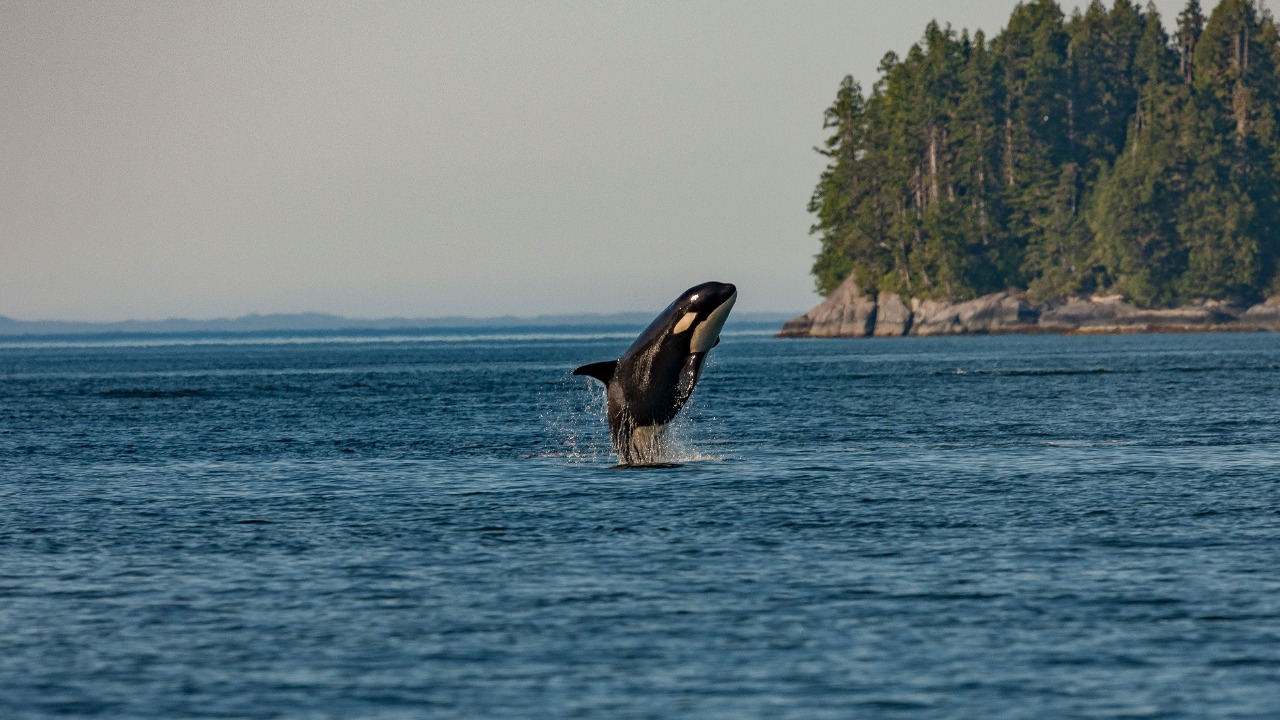

Along a stretch of ocean from South Africa to Mexico’s Gulf of California, killer whales have begun targeting one of the sea’s most feared predators in a disturbingly precise way. Working in pairs or small groups, they flip young great white sharks onto their backs, paralyze them, and then rip out their nutrient-rich livers with almost surgical focus. Marine biologists now see this as a striking example of cultural innovation in a top predator, with potential ripple effects across entire coastal ecosystems.
New science on how orcas mastered the shark-flipping kill
Researchers studying great white sharks off South Africa and in the Gulf of California have documented a consistent pattern: specific killer whales repeatedly attack young white sharks, invert them, and hold them still until the sharks enter a trance-like state known as tonic immobility. A recent paper in Frontiers in Marine describes how these orcas exploit that vulnerability to immobilize sharks long enough to open the body cavity and remove the liver while leaving much of the carcass intact.
This behavior is not random thrashing. Video and drone footage show orcas approaching from below or behind, then using their rostrum or pectoral fins to roll the shark onto its back. Once inverted, the shark’s muscles go slack, allowing the whales to hold the animal motionless at the surface. Another individual then bites into the abdomen and extracts the liver, a massive organ packed with energy-rich oils that can make up a significant share of a young great white’s body mass. In several documented kills, the whales ignored the rest of the carcass and moved on after consuming only this organ.
Field teams in the Gulf of California have reported that the same identifiable individuals return to shark hunting sites and repeat the technique with striking consistency. In one sequence described by Gulf of California, killer whales targeted multiple juvenile whites in a single day, using nearly identical maneuvers on each. That repeatability suggests a learned and shared tactic rather than a one-off improvisation.
Scientists point to orca social structure to explain how the method has spread. Killer whales live in tight-knit pods where calves stay with their mothers for years, providing a long window for learning specialized hunting tricks. Earlier work on other populations has shown pod-specific diets and techniques, such as hunting herring with bubble nets or beaching themselves to grab seals. The shark-flipping strategy now appears to be another culturally transmitted skill that defines certain groups.
From curiosity to culture: why this predation pattern is emerging now
For decades, great white sharks occupied a near-mythic status as apex predators, with few natural threats beyond humans. Sporadic reports of orcas killing large sharks existed, but the events were rare and poorly documented. That changed when scientists began to capture high resolution footage of coordinated attacks and found a pattern of precision liver feeding. Detailed accounts of orcas disemboweling whites and taking only the liver have been compiled by teams tracking great white movements off South Africa and Mexico.
Several factors may be converging to make this behavior more common. Orcas are generalist predators with large brains and flexible diets, and when traditional prey such as certain fish or marine mammals decline or shift range, killer whales can experiment with new targets. Young great whites, which aggregate in predictable nursery areas, present a concentrated, high-calorie opportunity once the whales crack the code of how to neutralize them.
The technique itself also appears to be extremely efficient. Researchers who analyzed the behavior for behavioral ecology studies emphasize that tonic immobility gives the whales an almost risk-free window to feed. Instead of a chaotic struggle with a powerful, toothy opponent, the orcas turn the shark into a passive food package. That efficiency likely reinforces the behavior within pods, because successful hunters gain a reliable payoff and calves see a clear, repeatable script.
Visibility of the kills may be accelerating learning as well. In several documented events, multiple orcas gathered around a single shark while only one or two individuals performed the initial flip. Others watched from close range, then participated in feeding. Such group encounters create ideal conditions for social learning, where younger or less experienced whales can observe and later copy the specialists. Over time, a tactic that began with a few innovators can become a standard part of the pod’s hunting repertoire.
Improved human observation is another factor. Drone platforms, tagging programs, and coordinated shark surveys mean scientists now detect patterns that would have gone unnoticed when only occasional carcasses washed ashore. Analysts reviewing carcasses with missing livers and matching them to recorded orca encounters have built a more complete picture of how widespread the behavior has become in specific regions.
Ecological stakes when killer whales hunt young great whites
The immediate drama of an orca tearing into a great white’s abdomen tends to dominate public attention, but the deeper story is about how this new predation pressure could reshape coastal food webs. Great whites play a key role in controlling populations of seals and other mid-level predators. If young sharks are removed at higher rates, fewer individuals may survive to adulthood, which can alter how these ecosystems function.
Researchers in the Gulf of California and off South Africa have already linked orca attacks to rapid changes in shark behavior. After a series of kills, tagged white sharks left traditional hotspots and stayed away for extended periods. In some areas, ecotourism operators reported sudden drops in white shark sightings that coincided with the arrival of specific orca pairs. A detailed account of these shifts appears in analyses of video-documented hunts, which show that even a small number of targeted kills can trigger a broad exodus.
When great whites retreat, their absence can cascade down the food chain. Seal numbers may increase, intensifying pressure on fish stocks. That in turn can affect commercial fisheries and local communities that depend on them. In some coastal regions, managers already juggle competing demands from shark conservation, seal protection, and fishing interests. A new, unpredictable source of shark mortality complicates those calculations.
There is also a genetic dimension. The attacks documented so far focus heavily on juveniles and subadults, which use nursery zones as relatively safe training grounds before dispersing. If those nurseries become high risk, the surviving sharks may represent a narrower slice of the population, potentially skewed toward individuals that migrate earlier or avoid certain habitats. Over long timescales, such selective pressure can shape traits like movement patterns and risk tolerance.
Scientists caution against assuming that orcas will wipe out great whites. The behavior so far appears localized to particular pods and regions rather than universal across the global killer whale population. Still, even localized pressure can matter when layered on top of other threats such as fishing bycatch, habitat degradation, and climate-driven shifts in prey. The combination could pinch some regional white shark populations from multiple directions at once.
What researchers are watching for as the behavior spreads
Marine biologists now face a set of urgent questions. One is how fast this shark-flipping technique is spreading within and between orca populations. Pods are known to share calls and behaviors when they overlap in feeding grounds, so researchers are watching closely for similar liver-targeting attacks in new regions. Long-term projects tracking individual whales and tagged sharks are central to that effort.
Another focus is the resilience of shark nurseries. Teams in the Gulf of California are monitoring whether juvenile whites shift their core habitats, dive deeper, or alter migration timing in response to orca presence. If young sharks can adapt behaviorally, they may blunt some of the mortality risk. If not, managers may need to factor orca predation into conservation plans that previously focused on fishing pressure and habitat quality.