
Apple released an unusually early iPhone security update after concluding that artificial intelligence is reducing the time attackers need to turn newly disclosed software vulnerabilities into usable hacking tools.
The company released iOS 26.5.2 and iPadOS 26.5.2 on June 29, 2026. The security fixes had originally appeared in beta versions of iOS and iPadOS 26.6, but Apple made them available to the public before the broader operating-system update was ready.
Apple told Reuters that it was adapting its update strategy because AI can speed the development of malicious tools. The company wants to reduce the gap between publicly revealing that a vulnerability has been fixed and delivering the protection to ordinary users.
The update did not respond to a confirmed mass attack against iPhones. Apple said it had no evidence that attackers had exploited any of the newly patched vulnerabilities. The concern was that waiting for the normal iOS 26.6 release would give criminals more time to study the fixes and develop attacks against devices that remained unpatched.
Why Apple Released the Fixes Early
Apple has traditionally bundled most security fixes into scheduled operating-system releases.
Under that system, patches prepared for an upcoming version might remain in developer and public beta testing until the complete update was ready. This process allows Apple to test new features, performance changes and bug fixes together before distributing them widely.
The rise of AI-assisted vulnerability research has made that delay more dangerous.
Once a patch appears in beta software or its technical details become public, researchers can compare the old and new code to determine what Apple changed. That process, known as patch analysis or patch diffing, can reveal the location and nature of a vulnerability.
AI tools can automate parts of that analysis, examine large amounts of code and help researchers identify potentially exploitable weaknesses more quickly. Apple said this compresses the period during which users remain exposed after a security fix becomes visible.
Instead of waiting for iOS 26.6, Apple moved the security work into iOS 26.5.2 and released it immediately.
The Update Fixed More Than 30 Security Problems
The June release addressed more than three dozen vulnerabilities across Apple platforms, including numerous problems affecting WebKit, the browser engine behind Safari and web content displayed inside many iPhone applications.
Some flaws could allow a malicious website to disclose sensitive information, access restricted web content, corrupt memory, crash Safari or interfere with clipboard data. Others affected the iPhone kernel and graphics systems.
One kernel vulnerability could allow an application to write to kernel memory. The kernel is the central part of the operating system that manages hardware, applications and security boundaries, so weaknesses at this level can be valuable components in sophisticated exploit chains.
Another WebKit flaw could allow a malicious website to process content outside the browser sandbox. A sandbox is intended to contain compromised web content and prevent it from reaching other parts of the device.
Several additional issues could expose cross-origin data, process memory or information that should remain restricted to another website.
AI Helped Researchers Find Some of the Flaws
The relationship between AI and the update worked in both directions.
Apple accelerated the release partly because AI could help attackers study and weaponize security weaknesses. At the same time, legitimate researchers used AI security systems to discover several vulnerabilities before criminals could exploit them.
Apple credited researchers working with Anthropic’s Claude for finding a WebKit memory-corruption flaw identified as CVE-2026-43715.
OpenAI Codex Security received credit for helping identify several other WebKit problems, including CVE-2026-43716, CVE-2026-43707 and CVE-2026-43745. Those vulnerabilities involved Safari crashes, memory corruption and an out-of-bounds write.
Another vulnerability was reported by researchers using GLM from Z.AI, while an NVIDIA AI Red Team researcher was credited for a WebKit sandbox-related issue.
These acknowledgments show that AI is becoming a tool for defenders as well as attackers. It can help security teams inspect complex code and locate bugs that might otherwise remain hidden.
“AI-Powered Hackers” Were Not Confirmed
The phrase “Apple rushed the update to outrun AI-powered hackers” captures Apple’s broader concern, but it can be misunderstood.
Apple did not say that an AI-controlled hacking campaign was actively attacking iPhones through the newly fixed vulnerabilities.
The company said it was responding proactively to the ability of AI to accelerate malicious tool development. It also explicitly said there was no evidence that the vulnerabilities patched in iOS 26.5.2 had been exploited.
A more precise description is that Apple released the patches early to prevent attackers from gaining a larger opportunity to reverse-engineer and weaponize the flaws.
The danger was potential exploitation after disclosure, not a confirmed ongoing attack using these exact bugs.
Which iPhones Need the Update?
iOS 26.5.2 is available for the iPhone 11 and later. Apple’s security notice also lists compatible iPads, including several generations of iPad Pro, iPad Air, the standard iPad and iPad mini.
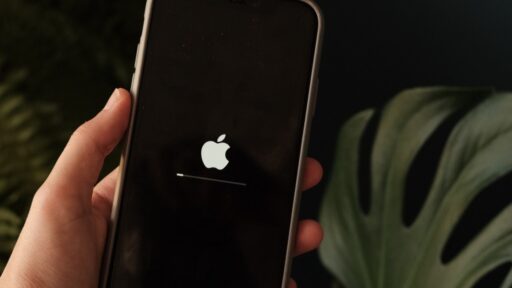
Owners can check their software version by opening Settings, selecting General and then choosing Software Update.
When iOS 26.5.2 or a newer version is available, the device should be connected to power and Wi-Fi before installation.
A phone already running a newer release that includes the same fixes does not need to return to iOS 26.5.2. Apple software updates are cumulative, meaning later versions normally include earlier security protections.
Automatic Updates can be enabled under Settings, General, Software Update and Automatic Updates.
Older iPhones Also Need Current Software
Some older devices cannot install iOS 26, but that does not mean they should remain on an outdated operating system.
Apple has released separate security updates for supported older iOS versions. In March 2026, it issued iOS 15.8.7 and iPadOS 15.8.7 for devices including the iPhone 6s, iPhone 7 and first-generation iPhone SE.
Apple also expanded the availability of iOS 18.7.7 in April 2026 so more compatible devices with Automatic Updates enabled could receive important security protection.
The company says devices running current, fully updated versions of iOS 15 through iOS 26 are protected against the specific web-based attacks described in its April guidance. Phones still using iOS 13 or iOS 14 must move to a supported version to receive those protections.
Malicious Websites Remain a Major iPhone Threat
Many of the vulnerabilities addressed in the June update affected WebKit.
That matters because an attack may begin when a user clicks a malicious link or visits a compromised website. The page can attempt to exploit a browser flaw without asking the user to install a traditional application.
Apple previously warned that web-based attacks targeting outdated iOS versions could put messages, contacts, files and other information at risk. It said devices running current software were protected from the reported attacks.
A malicious link may arrive through a text message, email, social-media account, online advertisement or messaging application.
Users should avoid clicking unexpected links, but personal caution cannot replace security updates. A compromised legitimate website or sophisticated phishing message may not look suspicious.
Installing the software patch removes the underlying vulnerability rather than relying entirely on the user to recognize every dangerous page.
Why Automatic Updates May Not Install Immediately
An iPhone with Automatic Updates enabled may not install a new version the moment Apple releases it.
Automatic deployment can occur gradually, and the phone may need to be charging, locked and connected to Wi-Fi overnight.
Users concerned about a security update can install it manually rather than waiting.
Opening the Software Update screen also confirms whether the phone is already current. The version number should be compared with Apple’s official security-release information rather than a link sent through an unsolicited message.
Scammers sometimes exploit news about urgent patches by sending fake update alerts. Genuine iOS system updates should be installed through the Settings application, not through a website, popup or attached file.
High-Risk Users Should Consider Lockdown Mode
Most iPhone owners are more likely to encounter ordinary phishing, account theft and financial scams than advanced mercenary spyware.
Journalists, activists, diplomats, political figures and other people who may be deliberately targeted by well-funded attackers face a different risk level.
Apple’s Lockdown Mode reduces the device’s attack surface by limiting certain messaging attachments, web technologies and incoming connection features. Apple says the feature protected devices from specific web attacks even when they were running outdated software, although affected users should still install the latest available iOS update.
Lockdown Mode can be enabled under Settings, Privacy & Security and Lockdown Mode.
The protection may limit some normal features, so it is primarily intended for people facing highly targeted threats rather than every iPhone owner.
AI Is Changing Both Sides of Cybersecurity
The update illustrates an emerging security arms race.
Defenders can use AI to inspect software, detect suspicious behavior, generate test cases and identify vulnerabilities more efficiently. Several flaws in Apple’s update appear to have been found with direct assistance from AI systems.
Attackers can potentially use similar tools to analyze patches, develop proof-of-concept code, create convincing phishing messages and automate portions of an intrusion.
AI does not automatically transform every beginner into an expert hacker. Exploiting a modern iPhone still requires substantial technical skill, particularly when an attack must bypass several layers of security.
It can nevertheless reduce the time needed to perform repetitive analysis and help experienced attackers move faster.
Apple’s response is to shorten the period between discovering a problem and protecting customers.
What iPhone Owners Should Do
Owners of an iPhone 11 or later should install iOS 26.5.2 or any newer available release.
People using an older iPhone should install the newest supported iOS version shown in Settings.
Automatic Updates should remain enabled, but important security releases can be installed manually rather than waiting for overnight deployment.
Users should install updates only through the iPhone Settings application and avoid links claiming to provide a separate Apple security patch.
Unexpected web links, configuration-profile requests and prompts asking for an Apple Account password should be treated cautiously.
Anyone who receives an Apple threat notification should verify it by signing in directly to their Apple Account rather than responding through an email or message. Apple says its threat notifications are intended for people targeted by sophisticated mercenary spyware operations.
The Main Takeaway
Apple released iOS 26.5.2 earlier than it normally would have because AI is making vulnerability discovery and exploit development faster.
The update delivered fixes that had initially appeared in iOS 26.6 beta software, reducing the time users would otherwise have remained without those protections.
Several vulnerabilities were discovered with assistance from AI tools, including Claude, OpenAI Codex Security and other systems.
However, Apple did not confirm that AI-powered hackers were already exploiting the newly patched flaws. It said there was no evidence that any of them had been used in attacks.
The update was therefore an early defensive move rather than a reaction to a known mass compromise.
For iPhone owners, the action remains the same: open Settings, check Software Update and install the latest available version. In an environment where AI can help both security researchers and attackers move faster, delaying a patch gives the other side more time.