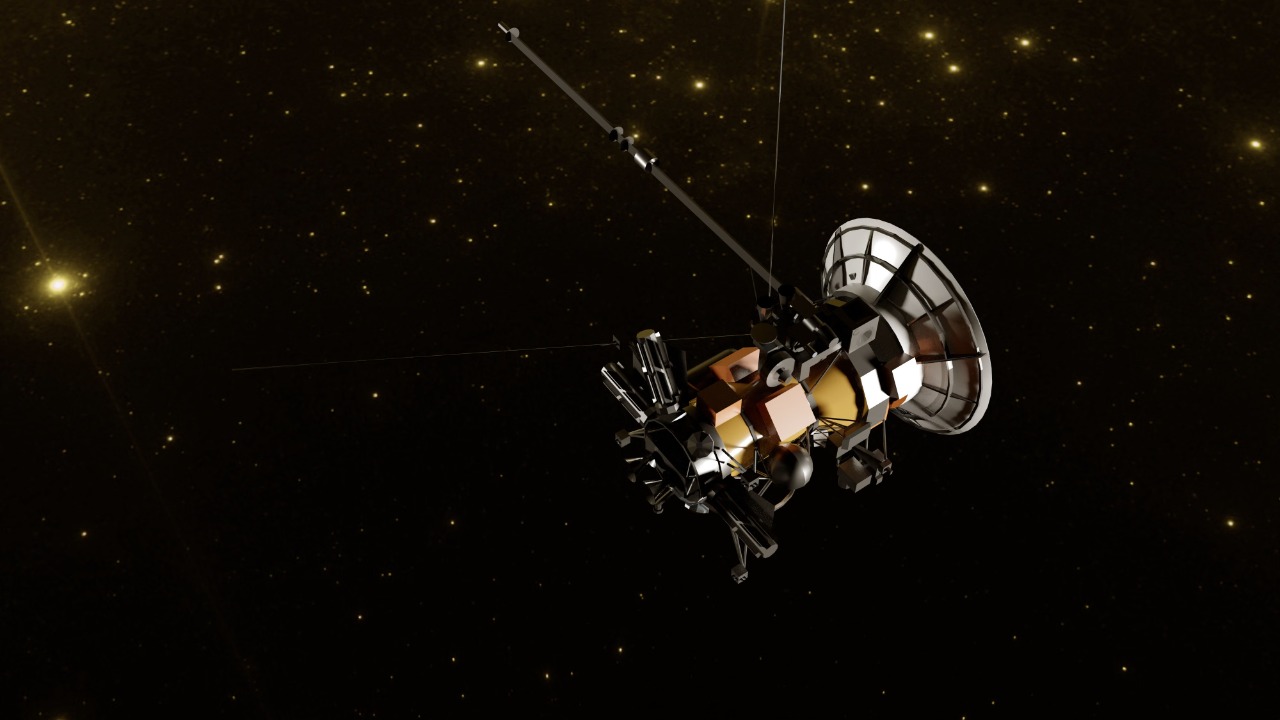

NASA is moving ahead with its first dedicated space telescope built specifically to hunt the asteroids that could one day strike Earth. The mission is designed to find hazardous objects early enough that governments would have options, from evacuation to deflection, instead of relying on luck.
The project marks a shift from treating asteroid impacts as rare, almost abstract disasters to handling them as a concrete, solvable engineering problem. It is also arriving at a moment when scientists are warning that thousands of potentially dangerous space rocks are still missing from current surveys.
How NASA’s new asteroid hunter changes the planetary defense playbook
For decades, most asteroid searches have relied on ground-based telescopes that scan the night sky in visible light. NASA’s new mission centers on an infrared space telescope that can spot dark, heat-emitting rocks that reflect very little sunlight, the kind most likely to slip past optical surveys. This approach directly addresses the gaps that left objects like the Chelyabinsk meteor undetected until they exploded in the atmosphere.
Planetary defense experts have long argued that the biggest vulnerability is not giant, dinosaur-killing asteroids, which are relatively easy to find, but mid-sized objects large enough to destroy a city. Researchers at the University of California have described how a dedicated space-based survey could systematically locate the asteroids that could hit Earth early enough for humanity to act, turning a low-probability catastrophe into a manageable risk once targets are cataloged and tracked in advance. Their work emphasizes that detection lead time is the key variable that determines whether deflection missions or civil defense measures are even possible.
NASA’s new telescope is designed around that idea of lead time. Operating in space, it avoids atmospheric distortion and weather, and it can look closer to the Sun than ground observatories, where many near-Earth objects hide in the glare. Mission planners have tailored its observing strategy to focus on orbits that cross Earth’s path, rather than conducting a general-purpose sky survey. The structure of the project reflects a clear priority: find the objects that matter most for impact risk and find them early.
The agency’s recent Double Asteroid Redirection Test, which nudged the small asteroid Dimorphos, demonstrated that a kinetic impactor can alter a space rock’s path. That experiment only becomes truly useful, however, if there is a catalog of threatening objects with orbits known decades in advance. The new telescope is intended to supply that catalog, effectively linking detection and deflection into a coherent defense system instead of two disconnected efforts.
Why the hunt for hazardous asteroids has become urgent
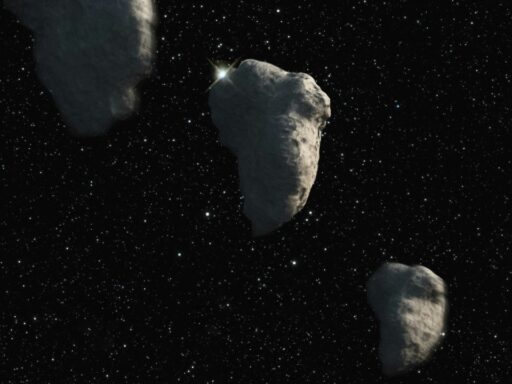
Asteroid impacts remain rare on human timescales, but the stakes are high enough that even low odds demand attention. NASA’s own assessments have warned that thousands of so-called city-killer asteroids are still hidden, objects large enough to cause regional devastation if they struck land or trigger tsunamis if they hit the ocean. Reporting on these warnings has stressed that the unknown population represents a blind spot in current surveillance, one that could leave Earth vulnerable to a serious impact with little or no notice.
Part of the urgency comes from recent close calls that highlight how incomplete the current picture is. Several small to mid-sized objects have been discovered only shortly before they passed near Earth, sometimes within the orbit of the Moon. In one recent case, astronomers tracking the asteroid 2024 YR4 determined that it had a potential to impact the Moon, a scenario that drew attention not because it was likely to be catastrophic, but because it showed how quickly a new object can move from discovery to a nonzero impact probability. Coverage of the 2024 YR4 trajectory demonstrated how even modest asteroids can raise concern when they are found late and their paths are poorly constrained.
Scientists also point out that impact risk is not evenly distributed. Cities built near coasts, major river systems, or critical infrastructure face outsized consequences from a strike. A rock that explodes in the atmosphere above a populated area can shatter windows, injure people, and disrupt power and communications without ever reaching the ground. The Chelyabinsk event injured more than one thousand people mainly through flying glass, even though the asteroid was relatively small. This kind of localized disaster is exactly what the term city-killer is meant to capture, and it is why NASA’s new telescope is tuned to find objects in that intermediate size range.
Another driver of urgency is the long development time for space missions. From design to launch to full operations, a complex infrared telescope can take years to field. Planetary defense specialists argue that waiting until an object is already on a worrying trajectory is not realistic, because there would be no time to build, test, and launch a deflection mission. The only workable strategy is to build the detection infrastructure now, accept that it may spend years cataloging harmless rocks, and treat that catalog as insurance against a low-probability but extremely high-impact event.
Public awareness has also shifted. High-profile impact drills, government tabletop exercises, and increased media coverage of near-Earth objects have made asteroid risk feel less like science fiction. Articles that ask whether Earth could be struck without warning, citing NASA’s concern about thousands of undiscovered city-killer asteroids, have framed the issue as a governance and preparedness challenge rather than a purely scientific curiosity. The new telescope is entering a policy environment that is more receptive to planetary defense as a legitimate public-safety investment.
What the new telescope must deliver over the next decade
The success of NASA’s first dedicated asteroid-hunting telescope will be measured less by dramatic discoveries and more by statistics. Mission planners have set goals for the fraction of near-Earth objects above a certain size that must be found and tracked. Researchers at the University of California have argued that to make meaningful progress, a space-based survey needs to reach a point where almost all asteroids capable of causing regional devastation are discovered decades before any potential impact, and where their orbits are refined enough that false alarms are rare. That standard is demanding, but it is what would allow policymakers to move from reactive crisis response to long-term risk management.
Over the next several years, the telescope will likely operate in tandem with ground-based facilities. Data from the space observatory can flag candidate objects, while follow-up from Earth can refine their orbits. This coordinated approach is already used in current surveys, but the new mission will tilt the balance by supplying many more infrared detections of dark objects that are invisible or faint in optical light. The combined system should gradually shrink the unknown population of near-Earth asteroids, especially those that lurk in orbits interior to Earth’s.
International cooperation will be another test. Impact risk is global, and the discovery of a threatening asteroid would immediately involve agencies and governments far beyond NASA. The new telescope’s data will feed into existing networks that share orbital information and impact probabilities. As the catalog grows, so will the need for agreed protocols about when to issue public alerts, how to weigh evacuation versus deflection, and who has authority to decide on missions that could alter an asteroid’s path. The mission’s long-term impact may depend as much on diplomacy and policy as on engineering.
There is also the question of follow-on hardware. If the telescope succeeds, it will make a strong case for additional space-based surveys, perhaps in different orbits or equipped with complementary instruments. Some scientists have proposed constellations of smaller infrared telescopes that could monitor the sky continuously from multiple vantage points. Others suggest pairing detection missions with ready-to-launch kinetic impactors or gravity tractors stored in space, so that a credible threat could be met with action rather than hurried design work.