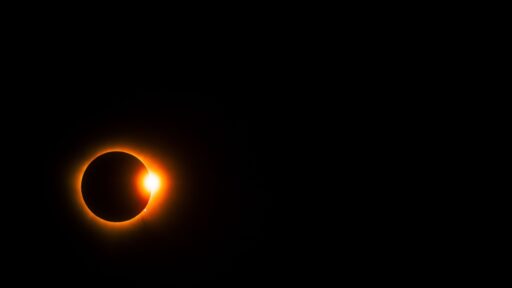
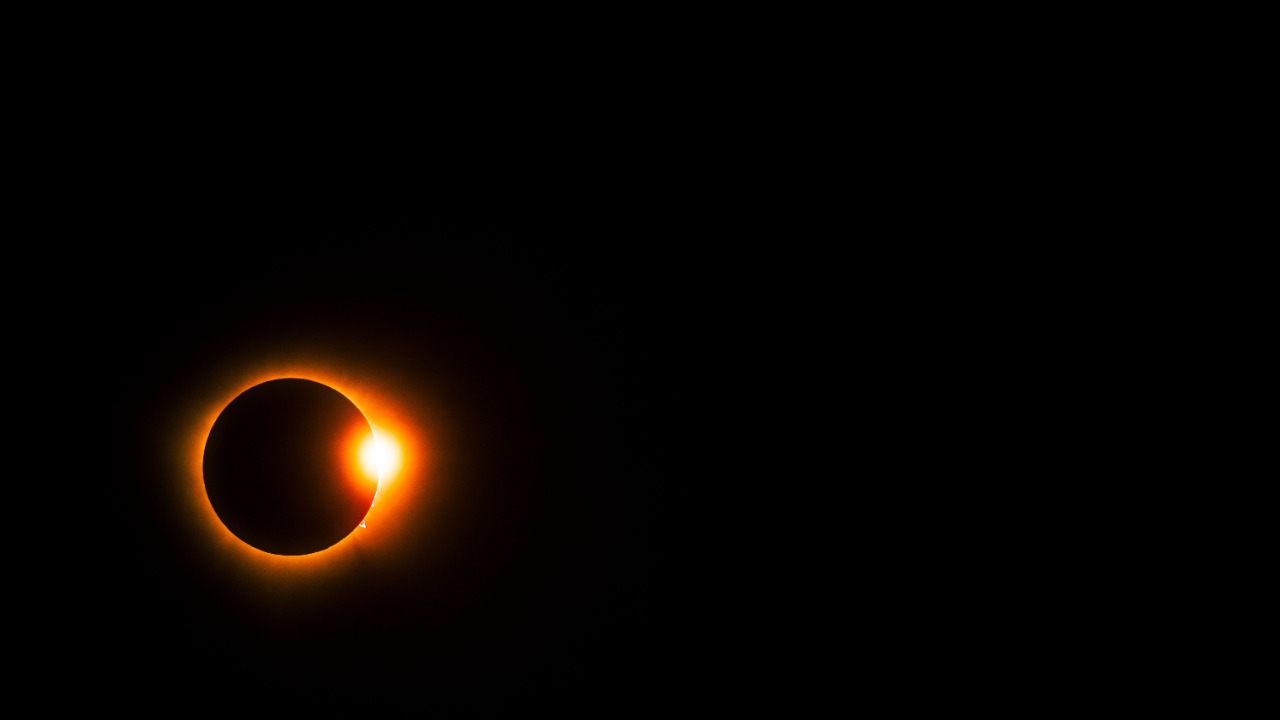

For roughly two minutes on August 12, daylight disappeared across a narrow stretch of Europe.
Temperatures fell. Stars appeared. Birds quietened. The horizon glowed while the Sun itself became a black disc surrounded by its ghostly white corona.
Millions had travelled to see it.
The total solar eclipse of August 12, 2026 swept from the Arctic through Greenland and Iceland before crossing northern Spain and reaching a small corner of Portugal. Outside that narrow corridor, an enormous area of the Northern Hemisphere experienced a partial eclipse.
For Europe, the event was particularly significant. It was the continent’s first total solar eclipse since 1999, turning an astronomical alignment into a mass public spectacle.
But what millions witnessed was more than the Moon temporarily covering the Sun.
For a few extraordinary moments, people were able to see a part of the Sun that is normally hidden from human eyes.
Why Does a Total Solar Eclipse Happen?
The basic explanation sounds surprisingly simple.
A solar eclipse occurs when the Moon passes between Earth and the Sun. During a total eclipse, the apparent size of the Moon in Earth’s sky is large enough to completely cover the Sun’s bright visible surface.
That creates one of astronomy’s most remarkable coincidences.
The Sun is enormously larger than the Moon, but it is also enormously farther away.
From Earth, the two therefore appear approximately the same size.
When their alignment becomes sufficiently precise, the Moon can cover the Sun almost perfectly.
But if the Moon travels around Earth every month, why doesn’t this happen every month?
Its orbit is tilted relative to Earth’s orbit around the Sun. Most months, the Moon passes slightly above or below the necessary alignment. Only occasionally do the Sun, Moon and Earth line up correctly enough to create an eclipse.
On August 12, everything lined up.
Spectacularly.
The Moon’s Shadow Raced Across the Planet
Totality was never visible everywhere.
Instead, the Moon cast a relatively narrow shadow across Earth’s surface.
According to the Financial Times, the path of totality was roughly 290 kilometres wide, while the shadow travelled at around 3,000 kilometres per hour. It moved from the Arctic through eastern Greenland and western Iceland before reaching northern Spain and eventually the Mediterranean.
That narrow geography explains why eclipse enthusiasts plan journeys years in advance.
Being 100 kilometres away from the right location can completely change the experience.
Someone inside the path can watch the Sun disappear entirely.
Someone outside it may see 90%, 95% or even 99% of the Sun covered without ever experiencing totality.
That final percentage makes an enormous difference.
Even a tiny visible portion of the Sun remains astonishingly bright.
Only when the photosphere disappears completely does the sky transform dramatically enough for the solar corona to emerge.
Spain Became the Centre of the Eclipse World
Spain provided some of the most dramatic viewing locations.
NASA photographed totality from San Millán de los Caballeros, while the eclipse crossed a broad section of northern Spain before reaching the Mediterranean near sunset.
The timing created unusually beautiful conditions.
Instead of occurring with the Sun high overhead, totality arrived relatively late in the day.
The eclipsed Sun therefore appeared low toward the horizon from many Spanish viewing locations.
That allowed observers to see the black solar disc against the warm colors of an approaching sunset.
Interest was enormous.
Ahead of the eclipse, Spanish authorities prepared hundreds of official observation locations and deployed extensive security resources as tourists flooded into areas along the path. Reuters reported that officials had prepared for potentially millions of spectators while simultaneously dealing with extreme heat and significant wildfire risk.
The eclipse had effectively created a temporary form of astronomical tourism.
Iceland Offered a Very Different Experience
Western Iceland also sat within the path of totality.
Thousands of visitors travelled there specifically for the eclipse, with cruise ships positioning themselves around the island to increase passengers’ chances of witnessing it.
Weather, however, remained the great uncertainty.
Cloud cover affected some Icelandic viewing areas, demonstrating the frustrating reality of eclipse chasing: someone can spend years planning a trip, travel thousands of kilometres and still have a cloud appear at precisely the wrong moment.
Spain generally enjoyed more favorable viewing conditions.
Yet Iceland’s location offered something Spain could not easily replicate.
Its volcanic landscapes, dramatic coastline and unusually northern position made the event visually distinctive even when weather conditions were imperfect.
Across both countries, enormous crowds gathered for something lasting only minutes.
That alone says something about the strange emotional power eclipses retain.
London Didn’t Get Totality, but It Came Close
The United Kingdom was outside the totality path.
That did not mean Britain missed the spectacle.
London experienced roughly 92% solar coverage, producing dramatically reduced daylight and unusual shadows even though the Sun never completely disappeared.
Other parts of Britain experienced similarly substantial partial coverage.
Much of France, Germany and the rest of Europe also saw a partial eclipse, while visibility extended across northwestern Africa and large parts of Canada. NASA says portions of the United States, from Alaska toward North Carolina, were also within the partial-eclipse zone.
That made the event enormous geographically.
Only a relatively small number of people experienced true totality.
Hundreds of millions potentially lived within regions where at least some portion of the Sun was covered.
Totality Revealed the Sun’s Hidden Atmosphere
The most spectacular moment came when the final visible part of the Sun disappeared.
Suddenly, something normally invisible emerged.
The corona.
This is the Sun’s outer atmosphere, extending millions of kilometres into space. It is always there, but the Sun’s visible surface is so overwhelmingly bright that the human eye normally cannot see it.
During totality, the Moon acts like an extraordinarily precise natural Sun blocker.
The bright surface disappears while the much fainter corona remains visible around the black lunar silhouette.
ESA describes the corona as the Sun’s faintly glowing outer atmosphere, revealed when the Moon completely covers the solar disc.
This is why photographs of totality look so different from photographs taken through ordinary eclipse glasses.
During the partial phases, viewers see a crescent-shaped Sun.
During totality, they see something almost otherworldly: a perfectly dark circle surrounded by enormous white structures extending into space.
Scientists Were Watching for More Than Beauty
For solar scientists, total eclipses provide valuable research opportunities.
Understanding the corona matters because it is connected with solar activity and space weather.
The corona also presents one of solar physics’ most famous puzzles.
The Sun’s visible surface has a temperature of roughly 5,500 degrees Celsius, yet parts of its outer atmosphere can reach temperatures of more than a million degrees.
How energy moves through the solar atmosphere to create those extreme temperatures remains an important area of research.
NASA used the 2026 eclipse to perform observations from a WB-57 high-altitude aircraft, flying at approximately 50,000 feet where instruments could avoid much of the atmospheric interference produced by clouds, water vapor and dust.
The agency also supported balloon experiments examining how Earth’s atmosphere responds when sunlight suddenly disappears.
So while crowds photographed the spectacle from beaches, mountains and city squares, scientists were using the same two minutes as a laboratory.
Why Does Everything Become So Strange During Totality?
The darkness is only part of the experience.
A total solar eclipse can produce a surprisingly rapid environmental change.
Solar heating suddenly drops.
Temperatures can decline.
Animals may respond as though evening has arrived.
The quality of light changes dramatically.
Shortly before totality, ordinary shadows can become unusually sharp because the visible Sun has narrowed into a thin crescent.
Light passing through gaps between leaves can project hundreds of tiny crescent Suns onto the ground.
Then comes totality.
The landscape darkens while the horizon can remain illuminated in every direction because regions outside the Moon’s shadow are still receiving sunlight.
Observers sometimes describe the result as resembling a 360-degree sunset.
It feels strange because the human brain has almost no everyday reference point for daylight disappearing in this particular way.
Looking at the Eclipse Required Serious Eye Protection
The beauty came with an important warning.
During the partial stages, looking directly at the Sun without appropriate protection can cause serious eye injury.
Ordinary sunglasses are not enough.
Safe viewing requires properly certified solar viewers or equipment fitted with suitable solar filters.
The exception occurs during the brief period of totality, when the Sun’s bright surface is completely hidden.
NASA explains that viewers within the path of a total eclipse can remove eclipse glasses only during totality and must put them back on as soon as any bright portion of the Sun reappears.
That distinction matters.
Someone experiencing a 99% partial eclipse never reaches the safe naked-eye phase.
Only genuine totality provides it.
The Eclipse Also Arrived With the Perseid Meteor Shower
As if a total solar eclipse were not enough astronomical entertainment for one day, the timing coincided with another famous event.
The Perseid meteor shower peaked around August 12–13.
NASA’s August skywatching calendar highlighted both the total eclipse on August 12 and the Perseid peak immediately afterward.
That created a remarkable sequence for observers with clear skies.
The Moon temporarily removed the Sun during the evening.
Hours later, the same dark night provided an opportunity to watch meteors streak across the sky.
The coincidence did not cause either phenomenon.
But for astronomy enthusiasts who had already travelled to dark viewing locations, it made August 12 particularly memorable.
Why Do Eclipses Still Affect People So Strongly?
Modern observers know exactly what is happening.
Scientists can calculate eclipse paths decades or centuries in advance.
Satellites continuously observe the Sun.
Astronomers can predict the second when totality will begin and end from a particular location.
Yet knowing the physics does surprisingly little to reduce the emotional impact.
A person can understand perfectly well that the Moon is passing between Earth and the Sun and still feel overwhelmed when daylight suddenly disappears.
Perhaps that reaction comes from scale.
Most natural spectacles occur somewhere around people.
A storm happens in Earth’s atmosphere.
A waterfall moves across Earth’s surface.
A volcano erupts from Earth’s crust.
An eclipse makes the movement of celestial bodies directly visible.
For two minutes, orbital mechanics stops being something written in a textbook.
Someone can actually watch the consequences of the Moon moving through space.
Europe Won’t Have to Wait Long for Another One
Remarkably, Europe’s next major solar spectacle is already close.
On August 2, 2027, another total solar eclipse will cross southern Spain before continuing through parts of North Africa and the Middle East.
Then, on January 26, 2028, Spain and Portugal will experience an annular eclipse, when the Moon passes across the Sun but appears slightly too small to cover it completely, leaving a brilliant “ring of fire.”
That gives Europe an unusual sequence of major eclipses within only a few years.
Still, the 2026 event will remain special.
It marked Europe’s first total solar eclipse since 1999 and brought totality across some of the continent’s most accessible and populated viewing regions.
Two Minutes That Took Celestial Precision to Create
A total solar eclipse is simultaneously predictable and astonishing.
Nothing unexpected happened on August 12.
The Moon followed its orbit.
Earth continued rotating.
The planet continued travelling around the Sun.
Every movement occurred exactly as astronomers knew it would.
Yet those ordinary celestial motions aligned so precisely that a comparatively small Moon, roughly 384,000 kilometres from Earth, temporarily concealed a star about 150 million kilometres away.
Its shadow raced across Greenland, Iceland and Europe.
Cities dimmed.
Stars appeared before sunset.
The Sun’s hidden atmosphere became visible.
Then the Moon moved on, daylight returned and everything looked ordinary again.
Perhaps that is why total eclipses remain among nature’s greatest spectacles.
They do not require an explosion, collision or catastrophe.
For a few minutes, three objects simply arrive at exactly the right places at exactly the right time and day turns into night.