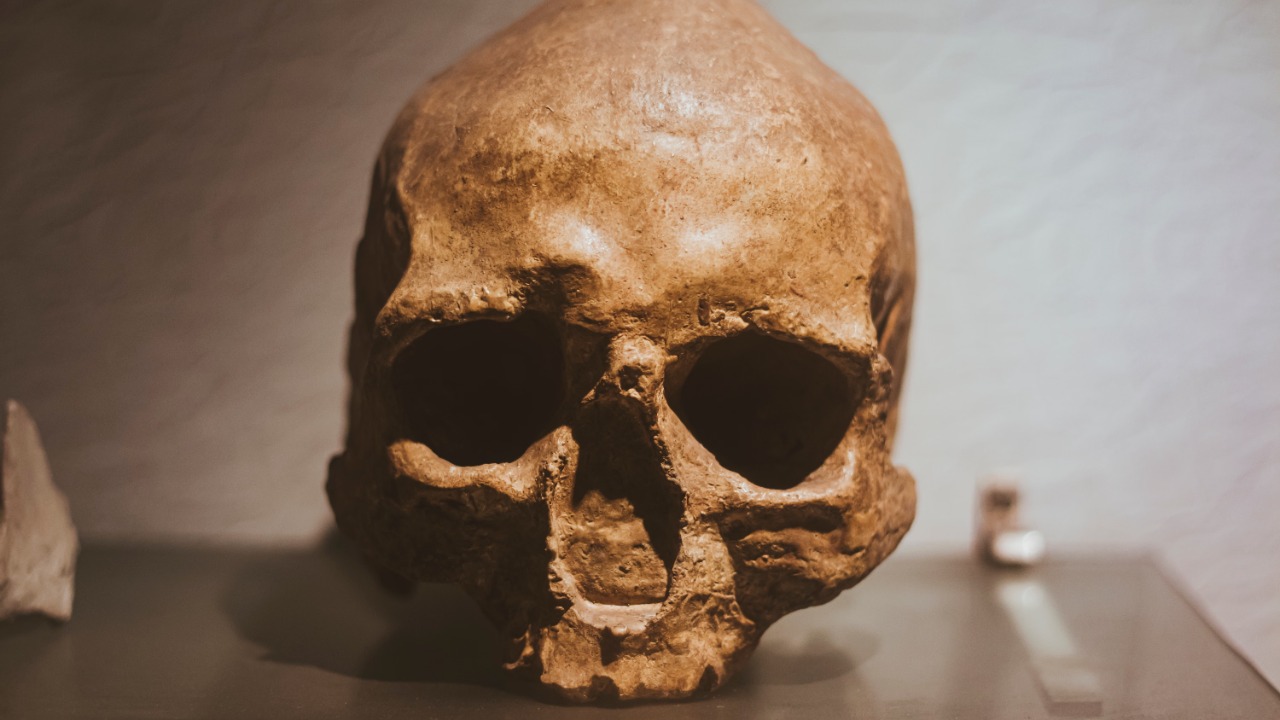

New work on fossil teeth has quietly rewritten a major chapter in human evolution. By extracting ancient proteins from Homo erectus molars, researchers have uncovered a tooth-building gene that this early species shared with Denisovans, a much later archaic human group, and with modern people. The finding ties together populations separated by hundreds of thousands of years and shows that a key piece of our genetic toolkit is far older and more widespread than DNA alone had revealed.
New protein evidence reshapes what is known about Denisovans and Homo erectus
The breakthrough comes from enamel proteins preserved in Homo erectus teeth from the site of Dmanisi in Georgia. Scientists analyzed molecular fragments of amelogenin and other enamel proteins, then reconstructed parts of the underlying gene sequence that controlled how those teeth formed. The work on these ancient tooth proteins showed that Homo erectus carried a distinctive version of a tooth-related gene also seen in Denisovans and in some present-day populations.
Because DNA rarely survives in fossils older than about 400,000 years, Homo erectus has largely remained beyond the reach of traditional genetic analysis. Protein fragments are tougher and can persist for more than a million years, offering a new route into the biology of deep-time ancestors. By reading the amino acid sequence of the enamel proteins and mapping those sequences back to likely genetic variants, the team could infer which alleles of the tooth-building gene Homo erectus possessed.
The result is a pattern that links Homo erectus, Denisovans, and modern humans at a specific genetic site that influences enamel formation. Denisovan DNA, recovered from bones and teeth in Siberia and Tibet, had already revealed unusual variants in genes tied to teeth and jaws. When researchers compared those Denisovan sequences with the reconstructed Homo erectus protein data, they found that both lineages shared a rare configuration that affects how thick and mineralized enamel becomes.
Independent analysis of Denisovan genomes had previously suggested that these archaic humans contributed genetic material to people in Asia and Oceania. The new protein work connects that story to a much older ancestor. By showing that Homo erectus carried the same tooth-related variant, the Dmanisi fossils provide a molecular bridge between early members of the genus Homo and later archaic groups that interbred with our own species. That bridge is especially striking because it is built from proteins rather than DNA, yet it lines up with known Denisovan sequences.
Deep-time gene sharing and what it reveals about human evolution today
The shared tooth-building gene matters because it pushes the roots of some modern traits far deeper into the past. Genetic studies of living people had already identified archaic introgression from Denisovans, including variants that affect immune responses and adaptation to high altitude. New work on protein in Homo now links that introgression story to a structural feature that every person carries in their mouth.
By tying a specific enamel variant to Homo erectus, Denisovans, and modern humans, the research suggests that some aspects of our dental biology are not recent innovations of Homo sapiens but inherited legacies of much older lineages. The pattern also hints that natural selection may have favored this gene configuration across very different environments. Thick, durable enamel would have helped Homo erectus cope with tough, abrasive diets, just as it could benefit later groups that exploited varied foods from highland tubers to hard seeds.
The work also sharpens debates over how much Homo erectus contributed directly to the modern gene pool. Traditional models cast Homo erectus as an early offshoot that eventually gave rise to later species but did not itself leave a clear genetic signature in living people. The enamel protein evidence complicates that picture. If a specific variant appears in Homo erectus, Denisovans, and some present-day populations, there are two broad possibilities: either the variant is ancestral, retained across multiple branches of the human family tree, or it moved between lineages through interbreeding.
Ancient DNA from Denisovans already confirms that they exchanged genes with Homo sapiens in Asia. The enamel data now suggest that the Denisovan genomes themselves carried deeper echoes of Homo erectus biology. That would mean modern people in parts of Asia and Oceania may carry a tooth-related gene that passed from Homo erectus into Denisovans, then into Homo sapiens during later contact. The result is a multi-step genetic relay that spans more than a million years.
For paleoanthropology, this finding provides a test case for how proteins can illuminate traits that are invisible in the fossil record alone. Teeth preserve abundantly at archaeological sites, and enamel proteins are among the most durable biological molecules. If one gene variant can be traced across Homo erectus, Denisovans, and modern humans, similar approaches could reveal ancestral versions of other genes that shape bones, hearing, or metabolism. That prospect expands the toolkit for reconstructing human evolution beyond morphology and sparse DNA.
Future research paths opened by Homo erectus tooth genetics
The enamel study is only the first step toward a fuller genetic portrait of Homo erectus. Researchers have now succeeded in identifying Homo erectus genetic from multiple tooth proteins, not just a single gene. As analytical methods improve, teams expect to recover longer protein fragments and reconstruct larger portions of the genome, especially in regions that encode structural proteins and other stable molecules.
One near-term priority is to sample Homo erectus teeth from additional sites in Africa and Asia. The Dmanisi fossils represent an early population at the edge of Eurasia. If the same tooth-building variant appears in African or Indonesian Homo erectus, that would support the idea that this gene configuration was widespread and long-lived. If other populations show different variants, that would point to regional adaptation and a more complex evolutionary map of enamel traits.
Another line of work will compare enamel protein variants across Neanderthals, Denisovans, Homo erectus, and early Homo sapiens. Neanderthal genomes are already known from DNA, but protein analysis could reveal how tooth traits changed even within that lineage over time and across regions. Researchers can then match genetic variants to microscopic wear patterns, diet reconstructions, and environmental data to see how specific enamel configurations tracked with lifestyle and habitat.
The Denisovan connection also raises questions about where and when gene flow occurred among archaic humans. If Denisovans carried Homo erectus-like variants in tooth genes, that could reflect contact in parts of Asia where these groups overlapped. Fossil evidence for such encounters is sparse, but protein signatures might reveal shared ancestry even when bones are fragmentary or morphologically ambiguous. In cave deposits where teeth are isolated from skeletons, protein-based identification could distinguish Homo erectus, Denisovan, and Neanderthal individuals, then map how their ranges intersected.
Beyond anthropology, the shared tooth-building gene has potential implications for dentistry and medicine. Variants in enamel genes influence susceptibility to cavities, tooth wear, and certain developmental defects. By tracing the evolutionary history of these variants, clinicians may better understand why some populations show characteristic patterns of dental disease. If a Homo erectus-derived allele affects enamel thickness or mineral composition, that ancient legacy might still shape how teeth respond to modern diets rich in processed sugar and acidic drinks.
The work also encourages a broader reevaluation of how ancient proteins can complement DNA in human origins research. As methods for extracting and sequencing proteins become more sensitive, scientists will likely target other tissues that fossilize well, such as bone and dentin. Each successful case will test whether traits once thought to be unique to Homo sapiens actually reach back into earlier branches of the genus. In that sense, the tooth-building gene shared by Denisovans, Homo erectus, and modern humans is not just a curiosity about enamel. It is a proof of concept that deep genetic links can be traced across vast spans of time, reshaping how the story of human evolution is written.