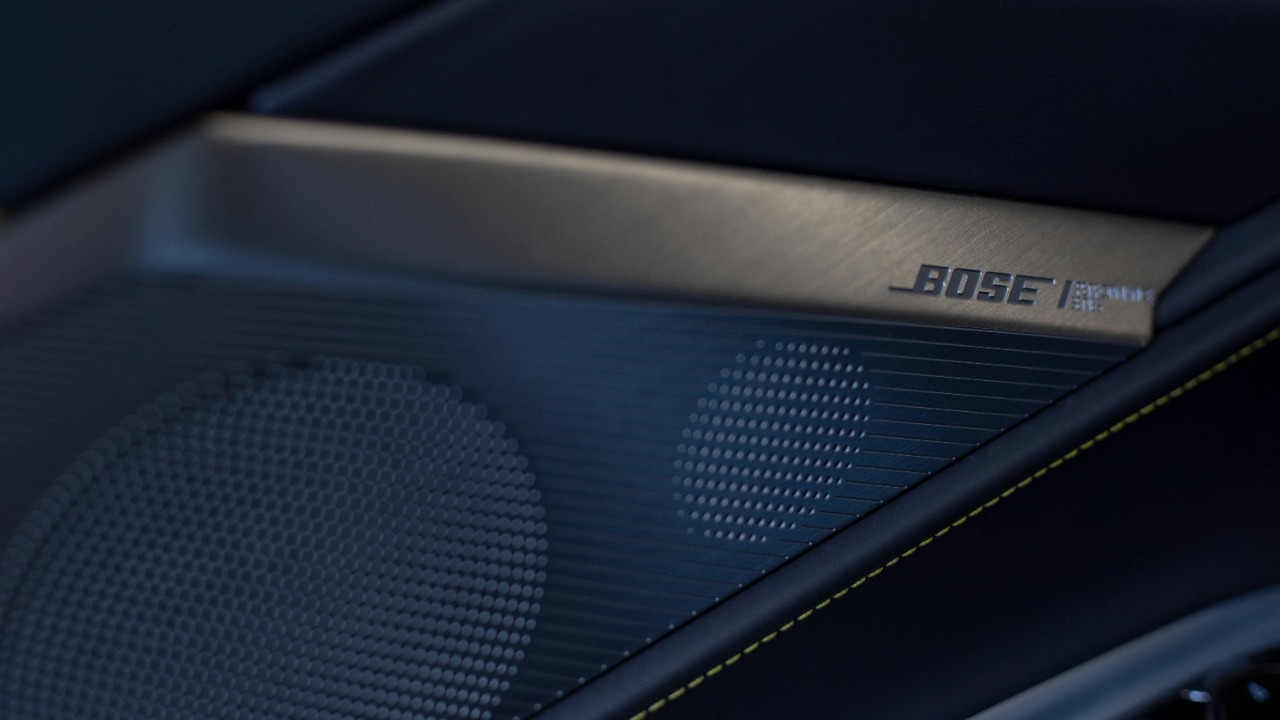

For many drivers, a car is more than a way to get from one destination to another. It is also a private listening room.
As vehicle cabins become quieter and infotainment systems become more sophisticated, manufacturers are placing greater emphasis on premium audio. Among the best-known names in automotive sound, Bose has become closely associated with factory-installed premium audio systems.
But Bose does not simply appear across one type of vehicle. Its systems can be found across several manufacturers, from mainstream SUVs and sedans to luxury-oriented models. The exact hardware, speaker count, tuning and available features vary significantly from one vehicle to another.
Here are five car brands that have offered Bose audio systems, along with what makes their implementations interesting.
1. Chevrolet
Chevrolet has offered Bose audio systems in a range of vehicles, particularly higher trims and larger SUVs.
The brand’s relationship with Bose has produced systems designed specifically around individual vehicle cabins rather than simply installing identical speakers across an entire lineup. Bose explains that automotive systems are engineered around the acoustics, materials and dimensions of each particular vehicle. (bose.com)
Models such as the Chevrolet Tahoe and Suburban have offered Bose premium audio systems, giving buyers access to a substantially more sophisticated setup than a standard factory stereo.
Large SUVs present an interesting challenge for audio engineers because the cabin is significantly larger than that of a compact sedan. Seating positions can also vary considerably, meaning the system must distribute sound across a much larger space.
That makes the use of multiple speakers and carefully tuned processing particularly important.
2. Nissan
Nissan is another major automaker associated with Bose.
The partnership has appeared in vehicles including the Nissan Rogue, Murano, Maxima and Armada, depending on model year and trim level. Nissan’s implementation often positions Bose as an upgrade over the standard factory audio system.
The Nissan Armada, for example, has offered Bose premium audio designed around the large SUV cabin.
The appeal is not simply louder music.
Premium automotive audio systems attempt to improve clarity, soundstage and consistency between seating positions. Bose uses digital signal processing and vehicle-specific tuning to compensate for the unusual acoustic environment created by glass, plastic, leather, metal and tightly constrained speaker locations.
That makes a car audio system fundamentally different from a pair of conventional home speakers.
More information about Nissan’s current and historical vehicle technology can be found through Nissan’s official website.
3. Mazda
Mazda has developed one of the more recognizable Bose partnerships in the automotive industry.
Bose systems have been offered in several Mazda vehicles, including the Mazda3, CX-5, CX-50, CX-90 and MX-5 Miata, depending on market and model year.
The relationship is particularly interesting because Mazda has traditionally placed significant emphasis on the driving experience. The audio system therefore becomes part of a broader cabin philosophy rather than simply an optional feature.
In some Mazda vehicles, Bose engineers work with the automaker to optimize speaker placement and acoustic performance around the cabin’s design.
That matters because changing the location of a speaker by only a relatively small amount can affect how passengers perceive stereo imaging and bass response.
The result is an audio system that is engineered as part of the vehicle rather than added as an afterthought.
Mazda provides details about available audio technology and vehicle equipment through its official Mazda website.
4. Cadillac
Bose has also had a long-running relationship with Cadillac, although the exact audio branding and system specifications vary across models and generations.
Cadillac vehicles have used Bose systems in models such as the Escalade, XT5, XT6 and other vehicles depending on model year and configuration.
The Escalade is particularly notable because Cadillac has pushed premium in-car entertainment to a much higher level in recent generations. Some newer Escalade configurations use advanced multi-speaker systems designed to create a highly immersive listening environment.
Large luxury SUVs are especially challenging acoustically because they combine expansive cabins with multiple rows of seating.
A premium system must therefore do more than produce powerful bass. It needs to create a convincing soundstage while maintaining clarity for passengers sitting in different locations.
Cadillac’s official website provides current information about its vehicle technology and available equipment.
5. Infiniti
Infiniti has also used Bose systems across several of its vehicles.
Models including the QX50, QX60 and QX80 have been offered with Bose premium audio systems in various configurations and model years.
The QX80 is particularly suited to a premium multi-speaker system because its large cabin creates substantial acoustic space.
Infiniti and Bose have historically worked together to develop systems around the specific cabin architecture of individual models. This can involve speaker placement, amplification, digital processing and tuning designed to create a more consistent listening experience.
The goal is not simply to increase the number of speakers.
More speakers do not automatically mean better sound.
A poorly tuned 20-speaker system can sound less convincing than a carefully engineered system with fewer speakers. Speaker positioning, amplifier power, crossover points, cabin acoustics and digital signal processing all influence what occupants actually hear.
Information about Infiniti vehicles and their technology can be found through Infiniti’s official website.
Why Do Car Manufacturers Choose Bose?
The appeal of a branded audio system goes beyond the logo on the speaker grille.
A vehicle cabin is one of the most difficult environments in which to reproduce music accurately.
Unlike a dedicated listening room, the cabin contains reflective glass, seats that absorb sound, hard plastic surfaces and irregular geometry. The driver and passengers are also positioned at different distances from each speaker.
Road noise introduces another problem.
Engine noise, tire noise and wind noise constantly compete with the music. The audio system therefore needs to compensate for an acoustic environment that changes as the vehicle accelerates, slows down and travels over different road surfaces.
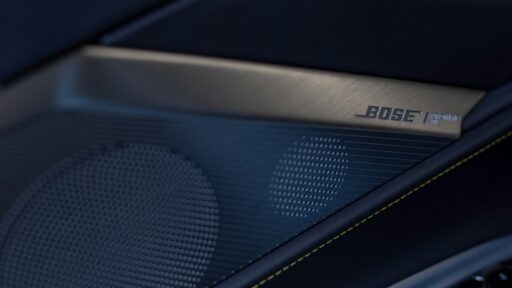
Bose’s automotive approach focuses heavily on digital signal processing and vehicle-specific acoustic tuning. (bose.com)
That is why the same brand of audio equipment can sound noticeably different from one vehicle to another.
Bose Does Not Mean Every System Sounds the Same
One important detail is often overlooked when shopping for a car with Bose audio.
A Bose system is not a single universal product.
The hardware differs between vehicles.
One model might use a relatively compact multi-speaker configuration, while another could use a much larger system with additional amplifiers, subwoofers and advanced processing.
Even the number of speakers can vary substantially.
The physical cabin also changes the result. A Bose system in a compact sedan will not create the same acoustic experience as one installed in a three-row SUV.
This is why listening to the actual vehicle is more useful than judging an audio system solely by its brand name.
Is Bose Worth Paying More For?
That depends on how important music is to the driver.
For someone who mostly listens to podcasts or uses the radio at moderate volume, the difference between a standard and premium system may not justify a significant trim upgrade.
For someone who spends hours commuting, however, improved audio quality can make a noticeable difference every day.
Premium systems can provide better bass control, greater clarity and a wider perceived soundstage. They can also maintain better sound quality at higher volumes without becoming harsh or distorted.
The upgrade can therefore be particularly attractive when it is included as part of a trim package rather than purchased as an expensive standalone option.
The Best Bose System Depends on the Vehicle, Not Just the Brand
Chevrolet, Nissan, Mazda, Cadillac and Infiniti have all offered Bose audio systems across different vehicles and model years.
But choosing between them requires looking beyond the Bose name.
Speaker count, amplifier configuration, subwoofer placement, cabin size, digital processing and factory tuning can all make a meaningful difference.
A buyer comparing two vehicles should therefore ask a more useful question than simply, “Does it have Bose?”
The better question is:
How was the Bose system engineered for this particular cabin?
That is where the difference between a branded audio system and a genuinely impressive one becomes apparent.
A Bose badge may tell buyers that a manufacturer invested in premium audio. It does not, by itself, tell them how the system will sound.
The cabin does.