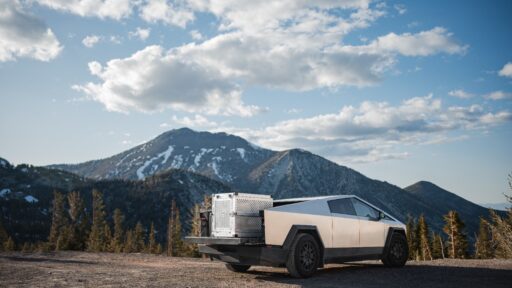
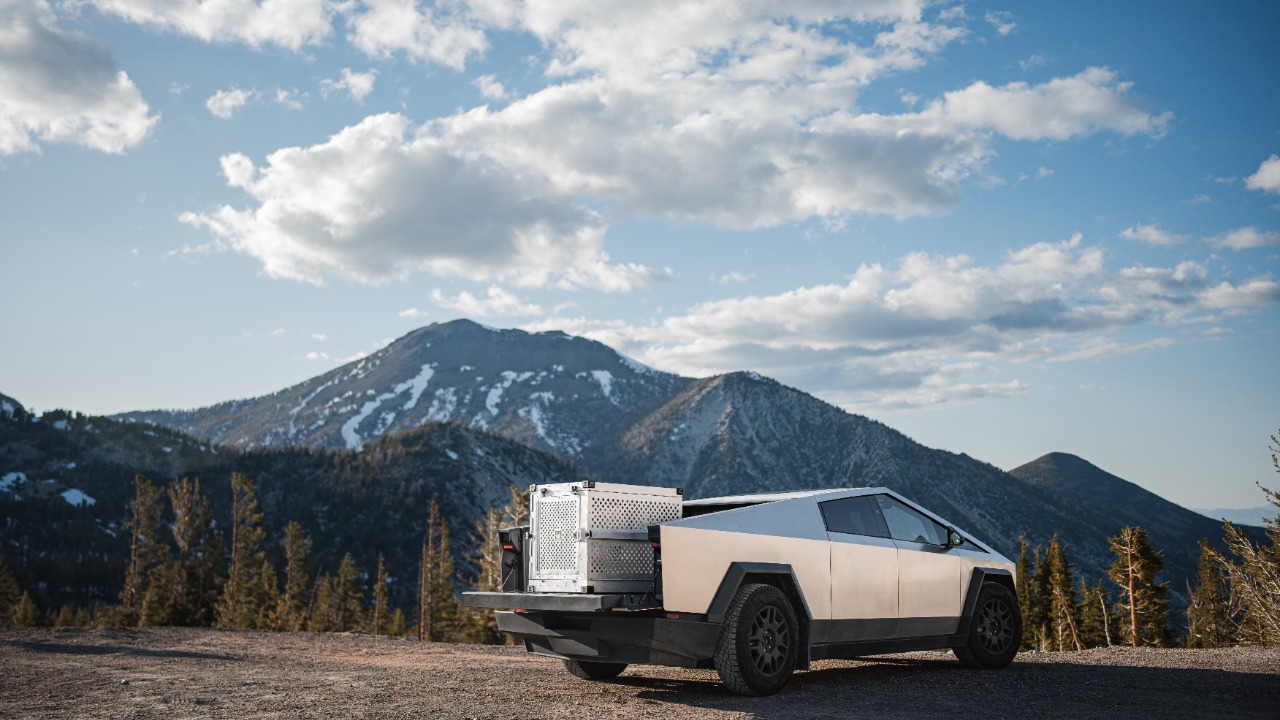

Tesla is recalling a small group of Cybertrucks because cracks can develop around the brake rotor stud holes, potentially allowing a wheel stud to separate from the hub and causing the driver to lose control.
The recall covers 173 Cybertrucks from the 2024 through 2026 model years. All affected vehicles are equipped with 18-inch steel wheels and belong to the rear-wheel-drive Long Range version of the electric pickup.
Tesla says it will replace the front and rear brake rotors, wheel hubs and lug nuts at no cost to owners. Unlike many Tesla recalls resolved through an over-the-air software update, this defect requires physical repairs at a service center.
Why the Cybertruck Brake Components Can Crack
The problem involves the holes in the brake rotors through which the wheel studs pass.
According to Tesla’s filing with the National Highway Traffic Safety Administration, severe road impacts and cornering forces can place excessive strain on these areas. Small cracks may then begin forming around the stud holes.
Continued driving can allow those cracks to spread. If the damage progresses far enough, a wheel stud could separate from the hub. The official NHTSA recall report states that this separation could lead to a loss of vehicle control and increase the risk of a crash.
The issue is particularly serious because the affected components help secure the wheel assembly to the vehicle. A weakened or separated stud can reduce the force holding the wheel in place.
In the most severe situation, continued failures could allow a wheel to loosen or detach while the Cybertruck is moving.
Improper Grease Application Contributed to the Defect
The recall investigation found that grease used during the wheel installation process may have been applied improperly.
Excess grease could reduce friction between the lug nuts and the mounting surfaces. That reduced friction may permit additional movement or vibration when the vehicle travels over rough roads or experiences strong cornering forces.
The resulting stress can contribute to cracks forming around the brake rotor stud holes. Wired reported that the problem was linked to grease contamination affecting the lug-nut connection and increasing strain on the affected components.
This is a mechanical manufacturing issue rather than an electronic or software problem. Installing a software update cannot repair an already weakened rotor, hub or wheel attachment.
Which Cybertrucks Are Included?
The recall applies only to certain 2024–2026 Tesla Cybertrucks fitted with 18-inch steel wheels.
Reports indicate that the affected vehicles are the rear-wheel-drive Cybertruck Long Range models that Tesla introduced as a lower-priced version of the truck. The company later discontinued that particular configuration after selling a relatively small number of units.
All 173 examples of that version are included in the recall. The newer dual-motor all-wheel-drive model is not part of this specific campaign.
Owners should not determine eligibility based only on the model year or exterior appearance. The most reliable method is to enter the vehicle identification number into the NHTSA recall lookup system or check the service section of the Tesla mobile application.
The federal campaign number is 26V255000. Tesla’s internal reference for the recall is SB-26-33-003.
How Tesla Discovered the Problem
Tesla’s investigation began after a driver reported braking pulsations during a service visit in October 2025.
Technicians inspected the Cybertruck and found cracks on the faces of its brake rotors. The vehicle was equipped with the same 18-inch steel wheels used on the models now covered by the recall.
The manufacturer’s defect report submitted to NHTSA says Tesla continued examining the issue and reviewing production information before deciding that a safety recall was necessary.
Tesla identified three warranty claims that could be connected to the defect. At the time the recall report was filed, the company said it was not aware of any crashes, injuries or deaths associated with the problem.
What Warning Signs Might Drivers Notice?
A Cybertruck with cracking around the brake rotor stud holes may produce braking pulsations, vibration or unusual movement from the wheels.
Drivers may feel a repeating vibration through the brake pedal or steering wheel, particularly when slowing down. Unusual clicking, knocking or grinding noises near a wheel should also be treated seriously.
A loose wheel may cause the vehicle to pull toward one side, feel unstable or produce a noticeable wobble at certain speeds.
However, the absence of symptoms does not confirm that the components are safe. Cracks may initially be small and difficult to notice without removing and inspecting the wheel assembly.
Owners whose vehicles are included should arrange the recall repair rather than waiting for visible damage or changes in handling.
What Tesla Will Replace
Tesla service centers will replace the front and rear brake rotors, wheel hubs and lug nuts on affected Cybertrucks.
The work will be completed free of charge. Replacing the surrounding components rather than only inspecting or tightening the lug nuts is intended to remove parts that may already have been exposed to damaging stress.
Owner notification letters were mailed on June 20, 2026, according to the NHTSA vehicle recall database. Owners can also contact Tesla customer service at 1-877-798-3752 for more information.
Because this repair involves the brakes and wheel mounting system, the truck must be taken to a Tesla service location. It cannot be completed remotely through the vehicle’s internet connection.
Can Owners Continue Driving Before the Repair?
Tesla’s recall filing does not direct every affected owner to immediately stop driving, but drivers should arrange service promptly.
Anyone experiencing braking pulsations, wheel vibration, unusual sounds or unstable handling should avoid continuing to drive the vehicle until it has been inspected. A tow may be safer than driving a truck that appears to have a loose or damaged wheel component.
Owners should also avoid using the vehicle for aggressive cornering, rough off-road travel or heavy impacts before the repair, since the defect can worsen under strong road and cornering forces.
The safest approach is to contact Tesla through the mobile application, provide the recall number and request the earliest available service appointment.
Why This Recall Cannot Be Fixed With Software
Tesla is known for resolving some vehicle recalls through over-the-air updates. Software has previously been used to correct warning lights, camera displays and other electronically controlled systems.
This recall is different because the defect affects physical metal components. Cracks in a rotor cannot be closed through programming, and potentially contaminated or damaged hubs and lug nuts must be physically removed.
The repair therefore requires replacement parts and hands-on mechanical work.
Owners should be cautious of any message suggesting that downloading a vehicle update is sufficient to complete campaign 26V255000. The official remedy involves replacing the affected hardware at a Tesla service center.
The Recall Affects Few Trucks but Carries a Serious Risk
The number of recalled vehicles is small compared with previous Cybertruck campaigns, some of which covered tens of thousands of trucks.
However, recall size does not determine the severity of a defect. A problem that can weaken a wheel attachment and cause a loss of control deserves immediate attention even when only 173 vehicles are involved.
The Associated Press reported that the defect could compromise vehicle stability if a wheel stud separates, particularly after impacts from rough roads or stress during sharp turns.
Drivers traveling at highway speed may have little time to react if a wheel loosens or separates. A loss of control could also place nearby motorists, cyclists and pedestrians at risk.
Owners Should Confirm Their VIN
Cybertruck owners with 18-inch steel wheels should check their VIN even if they have not yet received a mailed notice.
Addresses can change, letters may be delayed and used vehicles may remain registered to a previous owner. Checking the VIN through the NHTSA recall database provides the most direct way to determine whether an open safety campaign applies.
Owners can also review recall information inside their Tesla account or contact Tesla customer support.
A recall repair should remain free even when the truck was purchased used. Federal safety recalls generally follow the vehicle rather than the original owner.
A Physical Inspection Is More Important Than Reassurance
Drivers should not assume their truck is safe simply because it still feels normal.
The first reported case involved braking pulsations, but cracking can develop before a vehicle produces an obvious warning. Visual inspection may also require removing the wheel and examining parts that are not normally visible.
Owners should avoid attempting to inspect or repair the wheel assembly unless they have the proper tools and professional automotive experience. Incorrectly tightened lug nuts could create an additional safety hazard.
The recall remedy replaces several critical components as a complete repair. Completing that work is more reliable than tightening the existing parts or continuing to monitor the vehicle for symptoms.
Tesla Cybertruck owners covered by campaign 26V255000 should schedule the free repair as soon as possible. Until it is completed, any unusual braking sensation, wheel vibration or handling change should be treated as a potential safety warning.