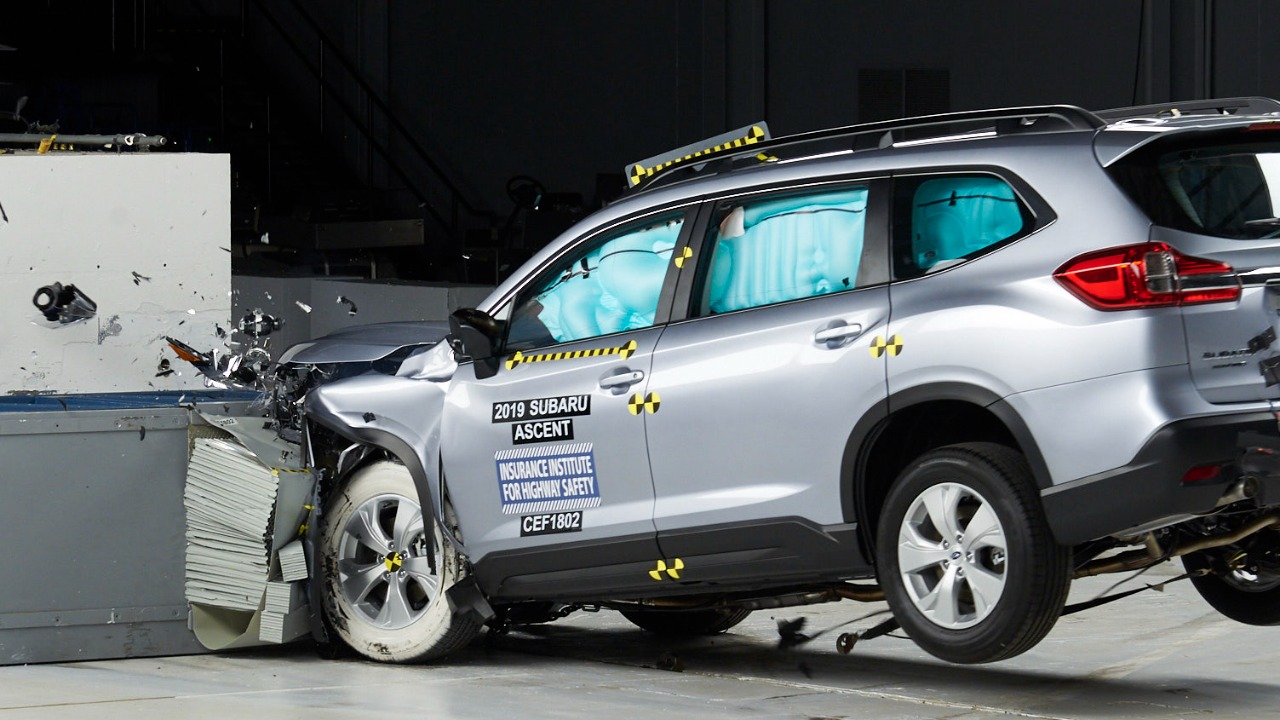

Nine popular small SUVs received the lowest possible rating in a tougher crash test designed to measure how well vehicles protect passengers riding in the back seat.
The Insurance Institute for Highway Safety evaluated 15 small SUVs in its updated moderate-overlap front crash test. Although many of the vehicles protected the driver reasonably well, the results showed that rear passengers could face a much greater risk of serious injury in the same collision.
Which SUVs Received Poor Ratings?
The Buick Encore, Chevrolet Equinox, Honda CR-V, Honda HR-V, Hyundai Tucson, Jeep Compass, Jeep Renegade, Mazda CX-5 and Mitsubishi Eclipse Cross all received poor overall ratings.
The Toyota RAV4 performed better than the rest of the group and earned an acceptable rating. The Audi Q3, Nissan Rogue and Subaru Forester were rated marginal.
These results came from testing conducted and published by the IIHS in December 2022. They apply to the specific model years and vehicle designs evaluated at that time, so shoppers should check the latest rating for a particular model year before making a purchasing decision.
Current vehicle ratings can be reviewed through the official IIHS vehicle ratings database.
Why the Crash Test Focuses on Back-Seat Riders
Modern safety improvements have significantly strengthened protection for drivers and front passengers. Advanced seat belts, airbags, crash structures and other restraint systems have reduced the likelihood of serious injury in many frontal collisions.
However, those improvements have not always been introduced at the same pace in the rear seating area. The updated IIHS test was created to reveal this difference.
The test places a smaller dummy in the second row behind the driver. This dummy represents a small woman or a 12-year-old child. Researchers measure movement of the dummy and examine the potential for injuries to the head, neck, chest, abdomen and legs.
What Happened During the Test?
In several poorly rated SUVs, the rear passenger dummy moved too far forward during the collision. The seat belt sometimes placed excessive force on the chest or allowed the dummy’s head to move dangerously close to the front seatback.
The poor results did not necessarily mean that the vehicle’s passenger compartment collapsed. In many cases, the main problem was the rear restraint system rather than the structural strength of the SUV.
Seat belts in front seats commonly use advanced tensioners and load limiters. A tensioner tightens the belt during a collision, while a load limiter allows controlled movement to reduce excessive pressure on the chest. Similar technology was less common or less effective in the rear seats of the vehicles tested.
Why Rear-Seat Protection Matters
Families often place children, teenagers and older relatives in the second row because the back seat is generally considered safer than the front. That assumption may not tell the complete story when a vehicle has stronger restraints in the front than in the rear.
A back-seat passenger can experience greater movement during a frontal crash when the seat belt does not manage the body’s energy effectively. This movement may increase the risk of head, neck and chest injuries even when the driver experiences better protection.
The test results do not suggest that every rear-seat occupant in these SUVs will be seriously injured during a collision. They show that manufacturers had room to improve the restraint systems protecting second-row passengers.
A Poor Rating Does Not Apply to Every Model Year
Crash-test ratings are tied to specific vehicle designs and production periods. Manufacturers regularly update airbags, seat belts, structural components and restraint software.
A vehicle that received a poor rating in the original test may perform differently after a redesign or safety update. Similarly, a current version of an SUV may not have the same rating as an older model carrying the same name.
Consumers should therefore search by the exact model year rather than assuming that a rating applies to every generation. The IIHS ratings portal provides current test results, while the National Highway Traffic Safety Administration offers additional federal safety ratings and vehicle information.
What SUV Buyers Should Look For
Crash performance should be evaluated across more than one test. A vehicle may perform well in side-impact protection but deliver weaker results in a frontal test focused on rear passengers.
Buyers who regularly carry children or adult passengers should pay particular attention to the updated moderate-overlap front rating. They should also review side-impact performance, child-seat anchor usability, seat-belt reminders and crash-prevention technology.
The presence of rear-seat belt pretensioners and load limiters can also be important. These systems help control the passenger’s movement and manage the forces applied to the body during a collision.
Automakers Have Started Responding
The tougher test has encouraged manufacturers to improve rear-seat restraint systems. Updates may include better belt geometry, rear pretensioners, load limiters, improved side airbags and changes to the front seatback or cabin structure.
Some newer vehicles have already earned stronger results after manufacturers introduced updated rear-seat safety technology. The IIHS also continues to make rear-passenger protection an important part of its award requirements, encouraging automakers to provide more balanced protection throughout the vehicle.
The Main Lesson From the Results
The test exposed an important gap between front-seat and rear-seat occupant protection. A vehicle can protect its driver well while still allowing dangerous forces or movement for someone sitting directly behind them.
SUV shoppers should not rely only on size, brand reputation or an older overall safety award. Checking the latest results for the exact model year provides a clearer understanding of how well a vehicle protects everyone inside not just the person behind the wheel.