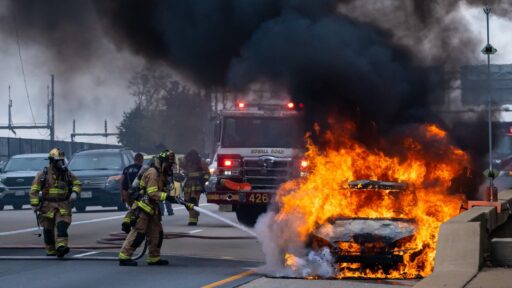
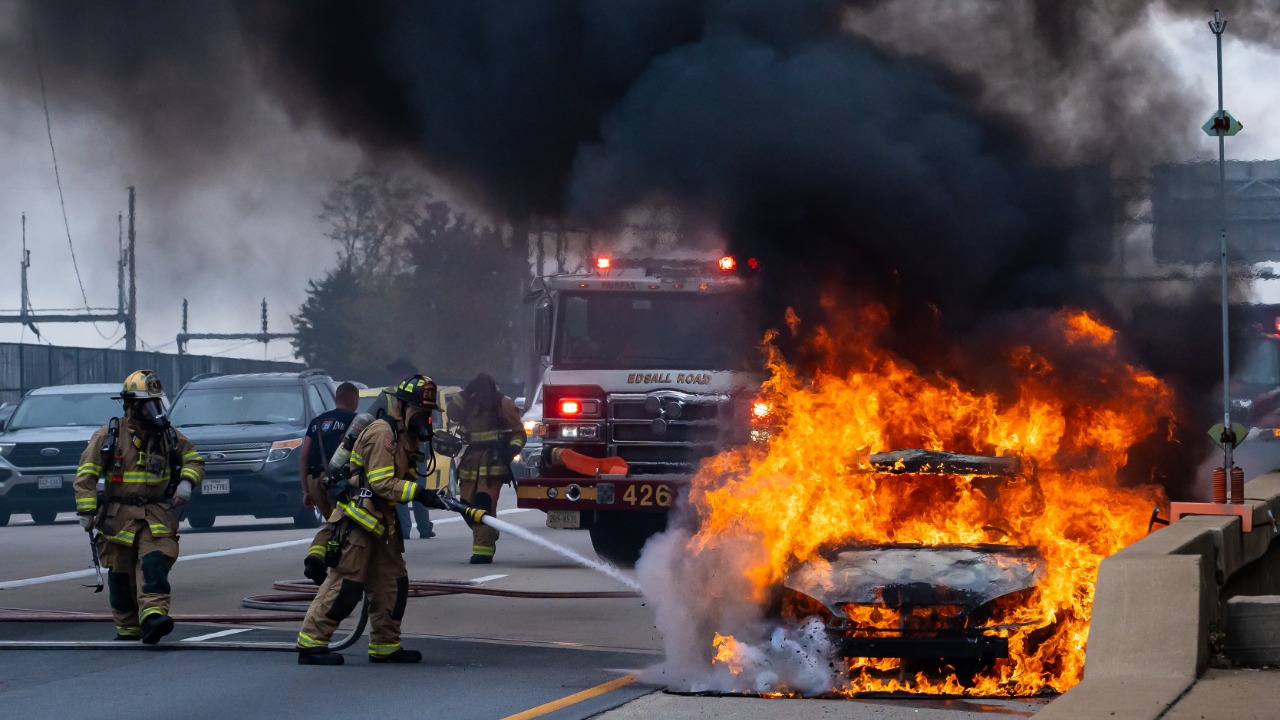

More than 3.2 million vehicles on US roads currently have an unresolved recall serious enough that owners have been instructed to park outside and away from buildings or other vehicles.
The national total increased by nearly 50 percent in June 2026 after Stellantis recalled more than one million Jeep Wrangler SUVs and Gladiator pickup trucks over an electrical defect that can cause a fire even when the ignition is switched off.
The 3.2 million figure comes from CARFAX vehicle-history data and refers specifically to open “Park Outside” recalls. It does not represent every vehicle with any type of fire-related recall, so the total number of cars carrying unresolved fire hazards could be higher.
A park-outside warning is more urgent than a routine recall notice. It means regulators or manufacturers believe a defect can potentially ignite while the vehicle is unattended, creating a risk not only to occupants but also to homes, garages and nearby cars.
One Jeep Recall Added More Than a Million Vehicles
The largest recent increase came from a recall affecting 1,076,999 model-year 2021 through 2025 Jeep Wrangler and Jeep Gladiator vehicles in the United States.
The affected Jeeps may have an electrical connection problem in the wiring associated with the electric hydraulic power-steering pump. A loose or high-resistance connection can generate excessive heat and potentially ignite surrounding combustible material.
The defect can cause a fire while the vehicle is being driven or while it is parked with the ignition turned off. Owners have therefore been advised to park outside, away from buildings and other vehicles, until the recall repair has been completed.
Stellantis reported at least 72 potential fire incidents and one injury during its investigation. Of those incidents, 35 had been confirmed as related to the suspected defect when the recall was announced.
The global campaign covered more than 1.3 million vehicles, including approximately 106,000 in Canada, 23,000 in Mexico and another 125,000 in other markets.
What a Park-Outside Recall Means
A park-outside instruction is normally issued when a defect can cause a fire without warning and without the vehicle being actively operated.
Owners may be told to avoid garages, carports and parking spaces close to other vehicles. The precaution reduces the chance that a vehicle fire will spread to a home or neighboring property.
The instruction does not mean every recalled vehicle will catch fire. In many recalls, only a small percentage of the affected population is expected to contain the actual defect.
However, manufacturers often cannot identify the dangerous vehicles without an inspection, software test or replacement part. Until that work is completed, every vehicle included by VIN must be treated as potentially affected.
Parking outside is only a temporary risk-reduction measure. It does not repair the defect or make continued driving automatically safe.
More Than 3.2 Million Vehicles Remain Unrepaired
CARFAX reported on June 18, 2026, that the number of US vehicles with an open park-outside recall had climbed to more than 3.2 million.
The total had increased by almost half in roughly one week, largely because of the new Jeep campaign.
An “open” recall means the manufacturer’s records do not show that the required remedy has been completed for that specific vehicle.
Some owners may not know they are affected. Recall notices can be mailed to an old address after a car changes hands, while used-car buyers may assume the previous owner already completed every repair.
Other motorists may receive the notice but delay the work because the vehicle appears to operate normally. Fire-risk defects often produce no dashboard warning, unusual sound or change in performance before an incident.
The 3.2 Million Total Includes Multiple Recalls
The Jeep Wrangler and Gladiator campaign is a major part of the total, but it is not the only active park-outside recall.
Certain Jeep Wrangler 4xe and Grand Cherokee 4xe plug-in hybrids have also been recalled because damaged battery cells can produce a thermal event and vehicle fire. That campaign covers 320,065 vehicles from model years 2020 through 2026.
Owners of those plug-in hybrids were instructed to park outside and avoid charging the battery until the remedy was completed. Chrysler had received 19 incident reports and identified one injury potentially associated with the defect when the recall was announced.
Kia recently recalled nearly 463,000 Telluride SUVs from model years 2020 through 2024 because a front power-seat motor may overheat and start a fire. Owners were instructed to park outside until a new repair is installed.
BMW has also recalled 29,119 plug-in hybrid vehicles because water entering an engine starter relay can cause corrosion, a short circuit and overheating even when the vehicle is parked and turned off. BMW advised affected owners to park outside until the starter is replaced.
These campaigns involve different parts and technical causes. The common feature is that each defect may produce a fire while the vehicle is unattended.
Some Vehicles Should Not Be Charged
Owners of recalled electric and plug-in hybrid vehicles may receive an additional instruction not to charge the high-voltage battery.
A damaged battery cell can enter thermal runaway, a self-heating process in which rising temperature triggers chemical reactions that release even more heat.
Charging adds energy to the battery and may increase the consequences of an internal failure. Manufacturers may therefore tell owners to avoid Level 1, Level 2 and DC fast charging until a software update, battery inspection or module replacement is completed.
This instruction must be followed separately from the park-outside warning. Parking an affected EV outdoors does not make it safe to charge.
Owners should read the exact notice attached to their VIN because the required precautions vary between recalls.
A Car Can Ignite After It Has Been Switched Off
Modern vehicles contain many systems that may remain electrically active after the ignition is turned off.
Battery-management equipment, security systems, communications modules and other electronic components can continue receiving power. A short circuit or high-resistance connection may therefore generate heat even while the vehicle appears inactive.
Mechanical systems can also remain hot after driving. Fuel, oil or electrical defects may ignite minutes or hours after the vehicle has been parked.
This is why owners should not assume a car is safe simply because it has been sitting quietly in a garage.
A burning smell, melting plastic, smoke, warning messages or unexpected electrical problems may indicate a developing issue, but a fire can also occur with little advance warning.
How to Check a Vehicle for an Open Recall
The most reliable way to determine whether a specific vehicle is affected is to search its 17-character vehicle identification number.
The VIN is normally visible through the lower driver’s side of the windshield. It can also be found on the driver’s-door label, registration certificate, title and insurance documents.
Owners can enter it into the official NHTSA recall search. NHTSA explains that recalls are issued when a vehicle or component creates an unreasonable safety risk or fails to meet federal safety requirements.
CARFAX also offers a recall lookup using a VIN or license plate. Its data indicated that approximately 57.7 million vehicles had at least one open safety recall in 2024, although most did not carry park-outside warnings.
Owners should check both current household vehicles and older cars that are driven infrequently. A rarely used truck stored in an attached garage can still present a fire hazard.
Model Lists Are Not Enough
Two vehicles with the same model and model year may have different recall statuses.
Manufacturers define affected populations by production date, factory, component batch and other technical records. One 2023 Jeep Wrangler may be included while another apparently identical Wrangler may not be.
The reverse can also happen when a manufacturer expands a recall after finding that more production periods contain the defect.
Owners should therefore avoid relying only on a news headline, social-media post or general model list. The VIN result is what determines whether the individual vehicle has an open recall.
A vehicle repaired under an earlier campaign may also need another remedy if the first repair later proves incomplete or ineffective. The new Kia Telluride campaign, for example, replaced a previous recall after additional overheating and fire incidents were reported in vehicles that had already received the earlier fix.
What Owners Should Do When a Recall Appears
An owner who finds an open park-outside recall should contact an authorized dealership for the vehicle’s manufacturer.
The dealer should confirm the recall, explain the current precautions and schedule the free repair. Federal safety recall remedies are provided without charge to the vehicle owner.
When parts are not yet available, the owner should continue following the manufacturer’s interim instructions. Those may include parking outside, avoiding charging, limiting use or arranging transportation through the manufacturer.
A person should not drive a recalled vehicle to a dealership when the notice contains a “Do Not Drive” instruction. The manufacturer or dealer should instead be asked about towing, mobile service or a loaner vehicle.
Park-outside and do-not-drive warnings are related but not identical. A vehicle may be permitted to operate while still being unsafe to park near a structure, depending on the defect.
Do Not Attempt a Home Repair
Owners should not disconnect batteries, remove fuses, alter wiring or attempt to repair a high-voltage system themselves.
Modern automotive electrical equipment can remain energized even after the ordinary 12-volt battery has been disconnected. Electric and plug-in hybrid vehicles contain high-voltage components capable of causing severe injury or death.
An improvised repair may also disable safety equipment without removing the underlying fire risk.
The approved recall remedy may require diagnostic software, specialized insulation testing or replacement components that are not available to an ordinary repair shop.
Only an authorized technician should perform the recall work.
Used-Car Buyers Face an Additional Risk
A used vehicle may change ownership without its recall history following it clearly.
The manufacturer’s letter may continue going to the previous owner, while the buyer assumes the dealership would not sell a vehicle with a serious unresolved defect.
Federal law generally prohibits a dealer from selling a new vehicle with an open safety recall, but it does not impose the same broad prohibition on every used-vehicle sale.
Anyone buying a used car should run the VIN through NHTSA before paying a deposit or completing the transaction.
A vehicle carrying a park-outside warning should not be stored in a garage or driven home until the seller arranges the required repair or the buyer fully understands the official safety instructions.
Written documentation showing that the recall was completed is more reliable than a seller’s verbal assurance.
Why Millions of Recalls Remain Open
NHTSA recorded 997 vehicle-safety recalls affecting more than 29 million vehicles during 2025 alone. The agency acknowledges that millions of recalls remain unrepaired or unaddressed each year.
The repair rate is often lowest among older vehicles. Owners may believe the car is not valuable enough to justify visiting a dealership, even though the repair is free.
Vehicles also pass through auctions, used-car lots and private sales. Contact information becomes outdated, and some owners never receive the original notice.
Parts shortages can delay repairs, especially when a campaign suddenly covers hundreds of thousands or millions of vehicles.
Some drivers may also misunderstand the word “recall” and assume the entire car must be returned or purchased back. In most cases, a recall means a dealership replaces or modifies a specific component while the owner keeps the vehicle.
A Small Failure Rate Can Still Produce Many Fires
Manufacturers sometimes estimate that only one percent or less of a recalled population contains the actual defect.
That percentage can sound insignificant, but one percent of one million vehicles equals 10,000 potentially defective cars.
A fire event can also have consequences far beyond the vehicle itself. A single car burning inside an attached garage may spread flames and toxic smoke through an occupied home.
This is why recalls can cover an entire component population even when only a limited number of fires have been confirmed.
The purpose is to repair vehicles before investigators know which individual unit will fail next.
What to Do When a Parked Vehicle Begins Smoking
Anyone who sees smoke, flames, sparking or signs of extreme heat should move away from the vehicle and call emergency services.
People should not open the hood or approach an EV battery to investigate. Opening a compartment may introduce oxygen and expose the person to flames or toxic gases.
A vehicle should not be moved once an active fire has begun unless emergency responders direct otherwise. Attempting to drive it away from a structure can expose the driver and other road users to additional danger.
Lithium-ion battery fires can reignite after appearing to be extinguished, so the vehicle may need continued monitoring and special handling by firefighters.
Owners should report the incident to the manufacturer and NHTSA after the immediate emergency has ended.
The Main Safety Message
More than 3.2 million US vehicles currently carry an open park-outside recall, according to CARFAX’s June 2026 analysis. The total jumped nearly 50 percent following a major recall of more than one million Jeep Wrangler and Gladiator vehicles.
The affected vehicles are not all from one manufacturer, and they do not share one common defect. Some contain overheating wiring, some have faulty seat motors, some have defective starter equipment and others carry batteries capable of thermal runaway.
What they share is the possibility of catching fire while parked, sometimes with the ignition turned off.
Owners should check their VIN, follow every interim warning and arrange the free repair. A vehicle that appears to operate normally may still be unsafe to leave inside a garage.