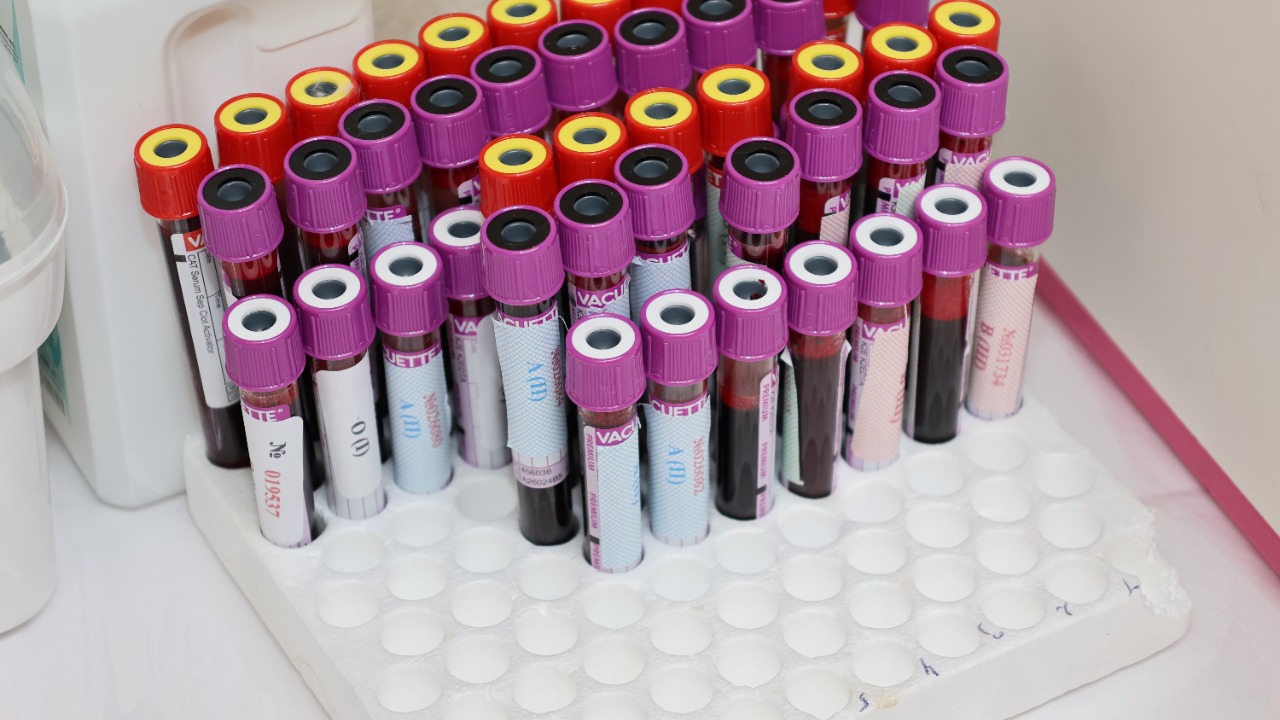

A new experimental blood test detected colon cancer with 81% accuracy among people who had the disease, raising hope that a simple blood draw could help more adults complete colorectal cancer screening before symptoms appear. The test also ruled out colon cancer with 90% accuracy among people who did not have the disease, according to research presented at the 2025 American Society of Clinical Oncology Gastrointestinal Cancers Symposium and summarized by Medical Xpress.
The study involved more than 40,000 adults ages 45 to 85 at about 200 sites across the United States. Participants had blood drawn and then underwent colonoscopy, allowing researchers to compare the blood test with the current gold-standard screening method.
That scale makes the result important. Many cancer blood-test headlines come from very small pilot studies. This one involved a large screening population and tested the blood sample against colonoscopy findings, which gives the result more practical relevance.
Why the 81% Number Matters
An 81% detection rate means the blood test correctly identified many people who already had colon cancer. For a disease that is often preventable or highly treatable when found early, a convenient blood test could help people who avoid colonoscopy or stool-based tests.
Colorectal cancer is dangerous partly because it can grow quietly. People may feel healthy while polyps or early cancers develop. By the time symptoms such as bleeding, anemia, abdominal pain, weight loss, or bowel changes appear, disease may be more advanced.
The American Cancer Society says survival is much better when colorectal cancer is found before it spreads. That is why screening matters so much. The earlier the cancer is found, the more treatment options patients usually have.
Why “Before Any Scan” Needs Careful Reading
The strongest way to describe this research is that the blood test may help detect colon cancer through a blood sample before a person develops symptoms and before cancer is discovered through a follow-up diagnostic procedure. But it does not mean the blood test fully replaces scans, colonoscopy, biopsy, or medical evaluation.
In colorectal cancer screening, the main comparison is not usually a CT scan. It is colonoscopy, stool testing, sigmoidoscopy, and other approved screening methods. If a blood test comes back positive, a colonoscopy is still needed to find the tumor, remove polyps if possible, and confirm diagnosis with tissue.
That distinction matters. A blood test can raise a warning flag. A colonoscopy can directly see the inside of the colon and remove precancerous growths before they turn into cancer. Those are different jobs.
Why Colonoscopy Remains the Gold Standard
Colonoscopy is considered the gold standard because it can both detect and prevent colorectal cancer. During the procedure, doctors can find and remove polyps, which are abnormal growths that may become cancer over time.
A blood test cannot remove polyps. It also may miss many precancerous lesions. That means a blood test may be useful for increasing screening participation, but it does not offer the same preventive power as colonoscopy.
The CDC’s colorectal cancer screening guidance explains that screening can find precancerous polyps so they can be removed before becoming cancer. That prevention benefit is the reason colonoscopy remains so valuable.
Why People Avoid Current Screening
Many adults delay or avoid colorectal cancer screening. Some dislike the bowel preparation required before colonoscopy. Some fear anesthesia, cost, discomfort, time off work, or the procedure itself. Others find stool tests unpleasant or forget to complete them every year.
Researchers noted that about 22% of people eligible for colon cancer screening have never received it, and in some states that number is even higher. A blood test could remove some of those barriers because many people are already comfortable with routine blood draws during checkups.
This is where the new test could make the biggest difference. It may not be the strongest screening method, but it may be the method some people are actually willing to take.
Why Screening Participation Can Save Lives
The best screening test is often the one a person completes. A perfect test does not help if people avoid it. A less invasive blood test could bring unscreened adults into the screening system, leading to more early diagnoses and more follow-up colonoscopies when needed.
Colorectal cancer screening is generally recommended starting at age 45 for average-risk adults in the United States. People with family history, inflammatory bowel disease, certain genetic syndromes, or previous polyps may need earlier or more frequent screening.
The National Cancer Institute explains that several screening options exist, including colonoscopy, stool tests, and other methods. A blood-based option could become another tool, especially for people who are not getting screened at all.
What the Test Might Be Looking For
Cancer blood tests often look for tiny biological signals shed by tumors into the bloodstream. These may include fragments of tumor DNA, methylation patterns, proteins, or other molecular markers. Different companies and research groups use different technologies.
In colorectal cancer, tumors can release DNA into the blood, but early cancers and precancerous polyps may release very small amounts. That makes early detection technically difficult. The test has to find a weak signal without creating too many false alarms.
This is one reason blood-based screening is challenging. The earlier the cancer, the less biological material may be available in the bloodstream. A test that works well for advanced cancer may not perform as well for stage-one cancer or precancerous polyps.
Why False Positives Matter
The study reported that the blood test was 90% accurate in ruling out colon cancer among healthy people. That is promising, but it also means some people without cancer could receive a positive result and need follow-up testing.
False positives can cause anxiety, extra procedures, medical costs, and unnecessary stress. In cancer screening, the goal is not only to find disease. It is to find disease while keeping false alarms low enough that the screening program helps more than it harms.
A positive blood test would not mean someone definitely has cancer. It would mean they need colonoscopy or further evaluation. That follow-up step is essential.
Why False Negatives Matter Even More
A false negative is when the test says no cancer is detected even though cancer is present. This is especially important for blood-based screening because a negative result could give people false reassurance.
If a blood test misses about one out of five cancers, patients and doctors must understand that the result is not perfect. People with symptoms should not ignore them just because a blood test is negative. Rectal bleeding, unexplained iron-deficiency anemia, persistent bowel changes, unexplained weight loss, or ongoing abdominal pain still need medical evaluation.
This is why blood tests should be used within screening guidelines, not as a reason to dismiss warning signs.
Why Stage-One Detection Is the Big Goal
Stage-one colorectal cancer is still localized and has not spread to distant organs. Finding cancer at that stage can dramatically improve treatment options and survival chances. Many early-stage cases can be treated surgically, sometimes with less intensive therapy than advanced disease requires.
The challenge is that early-stage cancers may shed fewer detectable signals into the blood. That makes stage-one detection the true test of whether blood-based cancer screening can change outcomes.
A headline saying a blood test caught stage-one cancer sounds powerful, but the real medical question is broader: How many early cancers did it detect, how many did it miss, how often did it falsely alarm healthy people, and did it lead to better outcomes over time?
The FDA-Approved Blood Test Context
The United States already has an FDA-approved blood-based colorectal cancer screening test called Shield, made by Guardant Health. The FDA approved Shield in 2024 for colorectal cancer screening in adults 45 and older at average risk.
Shield marked a major milestone because it became the first blood test approved by the FDA as a primary screening option for colorectal cancer. However, experts have cautioned that blood tests generally do not detect advanced precancerous polyps as well as colonoscopy or some stool-based methods.
That means the new wave of blood tests may improve access and convenience, but they are not a simple upgrade over every existing option.
Why Doctors Are Carefully Optimistic
Doctors are optimistic because blood testing could reach people who are currently not screened. At the same time, they are cautious because colorectal cancer prevention depends heavily on finding and removing polyps.
A blood test that detects cancer but misses many precancerous lesions may help with early diagnosis but not prevention in the same way colonoscopy does. That does not make it useless. It means doctors must match the test to the patient and explain its limits clearly.
For someone refusing colonoscopy and not completing stool tests, a blood test may be far better than no screening. For someone willing and able to undergo colonoscopy, colonoscopy may still offer stronger protection.
Why This Could Help Underserved Communities
Screening gaps are often worse in communities with limited access to specialists, transportation problems, lack of paid time off, lower insurance coverage, language barriers, and medical mistrust. Colonoscopy requires scheduling, bowel preparation, transportation, recovery time, and sometimes out-of-pocket costs.
A blood test could be offered during a routine primary-care visit, community clinic appointment, or annual physical. That convenience could help reach people who have never been screened.
But access will depend on cost, insurance coverage, follow-up systems, and whether positive results lead to timely colonoscopy. A screening test only helps if the healthcare system can complete the next step.
Why Follow-Up Colonoscopy Is Still Essential
If a blood test is positive, patients must not stop there. A positive result is not a final diagnosis. A colonoscopy is needed to locate the source, remove polyps if possible, biopsy suspicious tissue, and stage confirmed cancer.
This follow-up requirement is one of the biggest challenges for any noninvasive screening test. If people get a positive result but cannot access colonoscopy, the screening program fails.
Healthcare systems using blood-based tests must ensure that positive patients are tracked, contacted, scheduled, and supported through diagnostic completion.
Why This Test Could Change Primary Care
Primary-care doctors are often the front line of cancer screening. They remind patients about colonoscopy, order stool tests, track overdue screenings, and discuss family history. A blood test could give them a new option during routine lab work.
Imagine a patient who comes in for cholesterol, blood sugar, kidney function, and liver tests. Adding a colorectal cancer screening blood test could feel much easier than arranging a separate stool kit or colonoscopy referral.
That simplicity could improve screening rates. But doctors would still need to explain that the test has limits and that colonoscopy may still be recommended depending on risk, symptoms, and test results.
Why Patients Should Not Wait for a “Perfect” Test
Some people hear about new blood tests and decide to delay current screening until the technology improves. That is risky. Colorectal cancer can develop silently over years, and approved screening options are already available.
People who are due for screening should talk with their healthcare provider now. Waiting for the newest test could allow a preventable cancer to grow.
The American Cancer Society recommends that average-risk adults begin colorectal cancer screening at age 45. The right test depends on medical history, risk level, availability, and patient preference.
Why Blood Tests Are Part of a Bigger Cancer Trend
Colorectal cancer is only one area where blood-based screening is advancing. Researchers are also studying liquid biopsies for lung, pancreatic, ovarian, liver, stomach, breast, and multi-cancer detection. Some tests look for circulating tumor DNA. Others use methylation patterns, proteins, immune signals, or machine learning.
The long-term dream is a simple blood draw that can detect cancer earlier, identify where it started, and guide follow-up. But cancer biology is complicated. Some tumors shed strong signals into blood. Others do not. Some positive signals may be hard to trace to a tumor location.
That is why many multi-cancer tests remain under study and are not yet standard screening tools for the general population.
Why Accuracy Numbers Can Be Misleading
Headlines often use one number, such as 81% accuracy, but screening performance has several parts. Sensitivity measures how well a test finds disease. Specificity measures how well it rules out disease in people without it. Positive predictive value depends on how common the disease is in the tested population. Negative predictive value shows how reassuring a negative result is.
A test can sound impressive in one statistic but still have limitations. For colorectal cancer screening, doctors also care about detection of advanced adenomas, because removing those lesions can prevent cancer.
Patients should ask not only “How accurate is it?” but also “What does it detect, what does it miss, and what happens after a positive result?”
Final Takeaway
A new experimental blood test detected colon cancer with 81% accuracy among people who had the disease and ruled it out with 90% accuracy among people without cancer. The study involved more than 40,000 adults ages 45 to 85 and compared blood-test results with colonoscopy, making it an important step in the future of easier colorectal cancer screening.
The promise is clear. A blood test could help reach millions of adults who avoid colonoscopy or stool-based screening, leading to earlier diagnosis and better outcomes. But the test is not a replacement for colonoscopy, especially because colonoscopy can find and remove precancerous polyps.
For now, the safest message is practical: do not skip colorectal cancer screening. A blood test may become another useful tool, especially for people who would otherwise go unscreened, but positive results still require colonoscopy, and symptoms should always be checked by a doctor.