
Passengers on a recent United Airlines flight from Newark to Los Angeles watched a routine trip turn into a security scare when a man allegedly tried to open an exit door at cruising altitude and assaulted another traveler. The crew diverted to Chicago for an emergency landing, where law enforcement removed the passenger and the remaining travelers continued on a different aircraft. The episode has renewed attention on unruly behavior in the air and what it means for safety, accountability, and the flying experience.
Aviation experts stress that an airliner’s doors cannot be opened at high altitude because of cabin pressure and aircraft design, but the attempt itself created fear in the cabin and forced pilots and crew into crisis mode. The case now sits at the intersection of criminal law, airline policy, and a broader pattern of disruptive conduct that has reshaped how carriers prepare for worst case scenarios in flight.
How the midair door scare unfolded and what investigators know
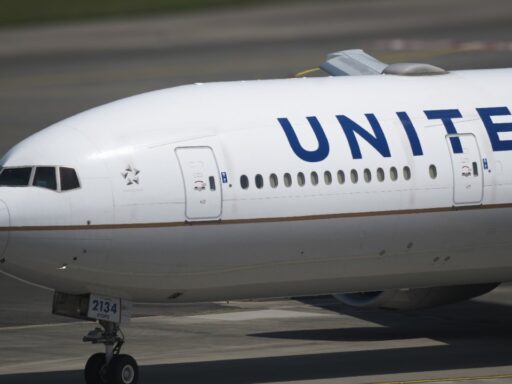
United Airlines Flight 1551 was traveling from Newark Liberty International Airport to Los Angeles when a male passenger allegedly left his seat, moved toward an exit and tried to pull the handle while the plane was still at cruising height. According to law enforcement accounts, other travelers reported that he also struck a nearby passenger during the struggle, which added to the chaos in the cabin. The crew decided to divert and the aircraft landed in Chicago, where officers met the plane at the gate and removed the suspect from the flight, as later described in reports on the emergency landing.
Witnesses described a tense few minutes as flight attendants shouted for help and several passengers stepped in to restrain the man until the aircraft was safely on the ground. The airline arranged for the rest of the travelers to continue their journey on another plane, while the original jet remained on the ground for checks and to support the investigation. Federal authorities are reviewing whether the man will face charges for interfering with a flight crew and for the alleged assault, which can bring serious penalties when they occur on a commercial airliner.
This United incident did not occur in isolation. Earlier this year, a SkyWest flight operating for a major carrier diverted to a different airport after a passenger reportedly tried to open a cabin door and had to be restrained by others on board. That case, which led to an emergency landing and law enforcement response, drew attention to how quickly a single disruptive individual can alter a flight’s course, as described in coverage of the SkyWest emergency.
Similar scenes have played out on low cost carriers as well. A Frontier Airlines flight that departed from a Caribbean destination and was headed to the United States diverted to Miami after an unruly passenger allegedly tried to open a door and became physically aggressive with crew members. The pilots declared an emergency and landed so that police could meet the aircraft, according to accounts of the Frontier diversion. In each case, the pattern is similar: an attempt to manipulate a door, a rapid response by crew and passengers, and a diversion that disrupts hundreds of people.
Why midair door attempts and emergency diversions are drawing fresh scrutiny
From a technical standpoint, aviation specialists repeatedly explain that a standard airliner door cannot be opened at 36,000 feet because the cabin is pressurized and the door plugs into the fuselage. The force holding it in place is far beyond what a person can overcome. That reality did not stop the United passenger from allegedly tugging at the handle at about that altitude, a detail that featured prominently in reports on the door incident. The real danger in these episodes comes less from the mechanical possibility of opening the door and more from the chaos and potential violence that follow.
Cabin crews have to make fast decisions when a person behaves unpredictably near an exit or cockpit. That often means diverting to the nearest suitable airport, which can burn extra fuel, upend schedules and strand passengers far from their destinations. Airlines then face the cost of rebooking, crew time limits and the public relations fallout of video clips that circulate widely. On the United flight, as in other recent cases, fellow travelers helped restrain the suspect, which raises separate questions about the risks that passengers take when they intervene physically to protect the cabin.
The surge in disruptive behavior has also become a labor issue. Flight attendants report higher rates of verbal abuse and occasional physical confrontations, especially when passengers are intoxicated or in conflict over seating and personal space. A recent case on a regional flight to Indianapolis, where a disruptive traveler had to be removed after causing a disturbance that led to law enforcement involvement, highlighted how often crews now rely on police support at the gate, as seen in accounts of the Indianapolis incident. Union leaders argue that crews need clearer backing from airlines and regulators when they decide to divert or to deny boarding to someone who appears unstable.
Public perception adds another layer. Even if the door itself is not going to open at altitude, the sight of someone yanking at an exit handle is terrifying for many travelers. Parents traveling with children, elderly passengers and anyone with a fear of flying can experience lasting anxiety after such an event. Each headline about a midair disturbance reinforces that concern, which may shape how people feel about crowded cabins, alcohol service and security screening long after the specific case fades from the news cycle.
How airlines, regulators and passengers are likely to respond next
The pattern of door related incidents and emergency landings is pushing airlines and regulators toward a mix of policy changes, technology tweaks and cultural shifts in the cabin. Carriers have already tightened internal rules around alcohol service, with some limiting in flight sales or training crews to cut off service earlier when a customer appears impaired. After the Frontier case in which a man allegedly tried to open a door and had to be restrained until the jet landed in Miami, industry observers pointed to stricter gate screening for intoxication as one likely response, building on lessons from that diverted flight.
Regulators are also signaling a tougher stance. Federal authorities have pursued higher civil penalties against passengers who interfere with crews or threaten safety, and prosecutors have not hesitated to bring criminal charges when a case involves an alleged assault or an attempt to breach an exit. The United passenger who was removed in Chicago could face that kind of dual response, with both fines and potential jail time if investigators conclude that he knowingly endangered others on board.
On the operational side, airlines are reviewing how they brief passengers and how they position crew members near exits. Some are considering more visible pre flight reminders that tampering with doors or safety equipment is a serious offense, not a prank. Others are experimenting with cabin layouts and staffing patterns that keep trained personnel closer to high risk areas during critical phases of flight. The SkyWest diversion, which unfolded on a relatively small regional jet, showed that even aircraft with fewer seats can benefit from clear protocols for restraining a passenger and coordinating with the cockpit, as highlighted in accounts of that regional jet incident.
Passengers themselves are being drawn into the conversation. Videos from the Newark to Los Angeles flight and from other disruptions show groups of travelers tackling or holding down an unruly person until the plane lands. While many viewers praise that instinct, safety experts warn that ad hoc interventions can escalate a situation or lead to injuries. Airlines are therefore refining their announcements and safety cards to clarify when crew might ask for help and how bystanders can support without making matters worse, for example by quickly notifying attendants, moving children away from the scene and avoiding crowding the aisle.