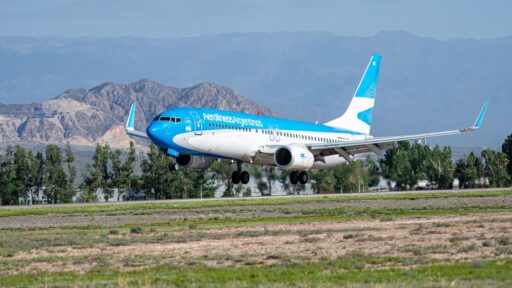
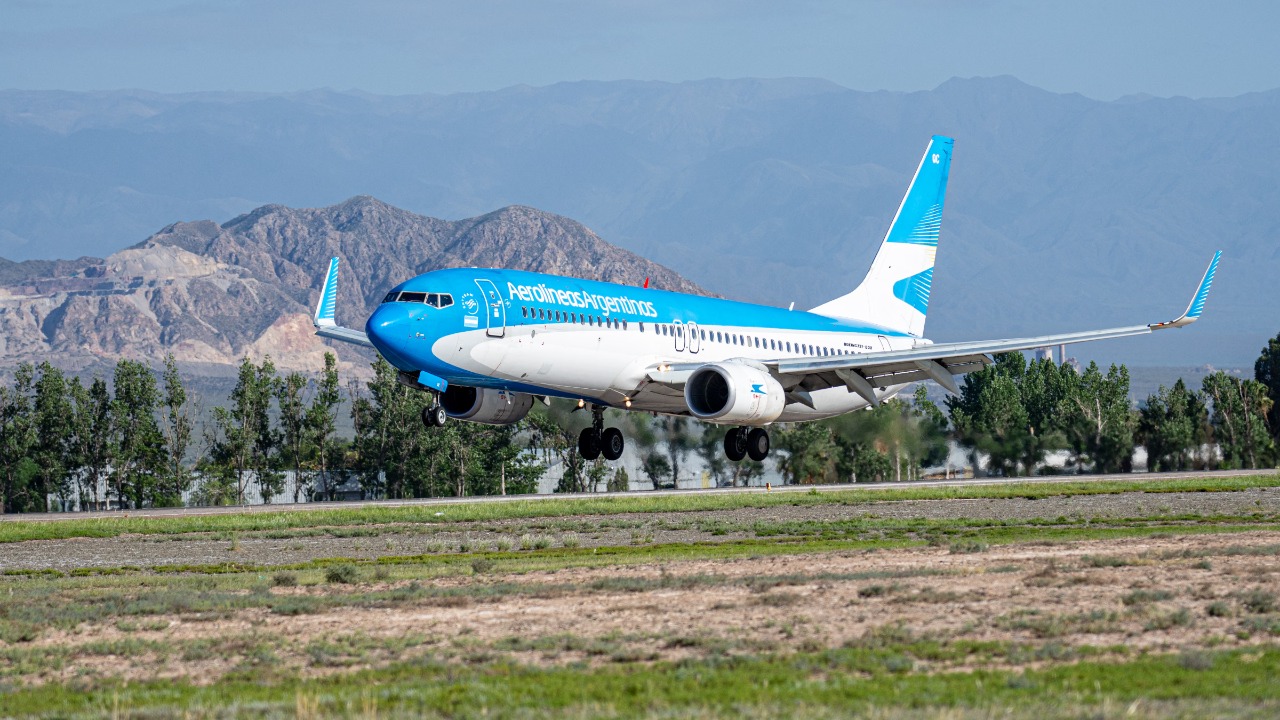

As a United Airlines Boeing 737 descended toward Newark Liberty International Airport with 106 people on board, its pilots suddenly spotted a drone in their flight path. The aircraft passed within what the crew described as a dangerously close distance, a near miss that instantly turned a routine arrival into a serious safety scare. No one was injured, but the incident has sharpened questions about how a small unmanned aircraft could end up so close to a packed commercial jet on final approach.
The episode has prompted a federal investigation, renewed concern among pilots, and fresh scrutiny of drone rules near major airports. It also shows how quickly a single rogue device can threaten a plane full of passengers, even in one of the most tightly controlled pieces of airspace in the United States.
Reconstructing what happened on the Newark approach
The flight involved a United Airlines Boeing 737 carrying 100 passengers and 6 crew members on approach to Newark Liberty International Airport. According to reports based on air traffic control recordings, the crew reported seeing a drone at about 3,000 feet while aligned with the runway, with the object close enough that the captain later described it as a near collision. One account notes that the pilots said the drone passed off the wing of the aircraft as they continued the approach, a detail that underscores how little margin separated a scare from a catastrophe.
Audio from the cockpit and tower communications, cited in multiple reports, captures the crew alerting controllers to the drone and describing its proximity. A detailed account of the event on Newark approach notes that the pilots immediately notified air traffic control, which then warned other aircraft inbound to the airport. That sequence reflects how quickly controllers must react when an unexpected object appears in the arrival corridor.
Several outlets describe the drone as flying directly in the path of the 737, with one report stating that the aircraft came within an estimated few hundred feet of the device. A summary of the incident on the United jet notes that the crew did not have time to take evasive action beyond monitoring the object and continuing a stabilized approach. That detail suggests the drone appeared suddenly and at a point in the descent where abrupt maneuvering could itself endanger passengers.
Investigative coverage has also emphasized the number of people on board. A report describing the near miss as involving 106 people, including all passengers and crew, highlights how many lives were at stake in a single incident. One account on near drone miss notes that passengers were not immediately told about the close call, which is typical when crews focus on safely completing the landing before sharing details.
How this near miss changes the conversation on drones and airliners
Drone sightings around airports are not new, but this case stands out for how close a large commercial jet reportedly came to a small unmanned aircraft while on final approach. Coverage of the incident on United Airlines flight stresses that the aircraft was in a critical phase of flight, with gear down and flaps extended, when the drone appeared. At that point, pilots have limited options to maneuver aggressively without risking a hard landing or destabilized approach.
The Federal Aviation Administration prohibits drones from operating in controlled airspace around major airports without explicit authorization, and standard rules require recreational operators to keep devices below 400 feet and well clear of aircraft. Despite those restrictions, reports of drones near airliners have persisted. A summary of the Newark case on the near collision notes that the FAA has opened an investigation into who operated the drone and how it entered the arrival corridor.
What changed with this incident is not that a drone was spotted near an airport, but that the crew of a fully loaded Boeing 737 described a near hit in one of the busiest pieces of airspace in the country. The scenario highlights several specific risks:
- A drone striking a jet engine could cause ingestion and potential damage similar to a bird strike, with the added hazard of hard components and batteries.
- An impact with the cockpit windshield could injure pilots or damage critical instruments at a moment when they must focus on landing.
- A collision with the wing or tail could affect control surfaces, especially at low altitude where there is little time to recover.
Experts have long warned that even relatively small consumer drones can cause serious damage if they hit a fast-moving airliner. The Newark near miss provides a concrete example that moves those warnings from hypothetical risk to a narrowly avoided event. For airlines already facing scrutiny on safety issues, a drone encounter that comes within what pilots consider a near collision raises pressure to show that current protections are adequate.
The incident also exposes gaps in enforcement. Consumer drones are widely available and can be flown with minimal training, yet tracking individual devices in real time remains difficult. While some newer drones include geofencing that restricts flight near airports, not all devices have those safeguards, and some operators can disable them. The Newark case suggests that a determined or careless user can still put a drone into restricted airspace despite existing rules.
Why the Newark scare resonates with passengers and regulators now
For passengers, the idea that a small drone could jeopardize a routine landing at a major hub cuts directly into expectations of safety. Many travelers assume that airspace around large airports is tightly controlled, with no room for unauthorized devices. When a packed Boeing 737 comes close to a drone in that environment, it challenges that assumption and raises new questions about what else might be slipping through the system.
Timing also matters. The popularity of drones for photography, recreation, and commercial work has expanded rapidly, and many devices can now climb to several thousand feet and travel long distances. That growth has outpaced public understanding of aviation rules. Reports on the Newark incident, including coverage that describes the flight as having nearly struck a drone while lined up with the runway, underline how the technology has outstripped the average operator’s sense of risk.
Regulators face a delicate balance. The FAA and other authorities have encouraged innovation in unmanned aircraft, including projects for package delivery and infrastructure inspection. At the same time, they must protect the safety of commercial air travel. When a near miss like the Newark event occurs, it strengthens arguments for tighter controls, more aggressive enforcement, and wider use of technologies that can detect or disable rogue drones near critical infrastructure.
Pilot groups have already been vocal about the threat. Organizations representing cockpit crews have repeatedly warned that a collision between a drone and a transport-category aircraft could have severe consequences, especially at low altitude and low speed. The Newark approach, with a fully loaded 737 and 106 people on board, fits exactly the scenario those groups have described in safety briefings.
Public perception also shifts when incidents are tied to specific airlines and airports. A report that frames the event as a United Airlines jet nearly hitting a drone as it prepared to land at Newark connects the risk to a well-known carrier and a major East Coast hub. That framing makes the issue feel less abstract and more like a direct concern for anyone who flies through similar airports.
Next steps for investigators, regulators, and the drone industry
The immediate next step is the FAA investigation. Officials will attempt to identify the drone operator, determine whether the device was flown intentionally into the flight path, and assess what, if any, enforcement action is appropriate. Investigators typically review radar data, pilot reports, and any available video or witness accounts. In some cases, they can trace a drone through serial numbers or manufacturer records, especially if it is recovered on the ground.