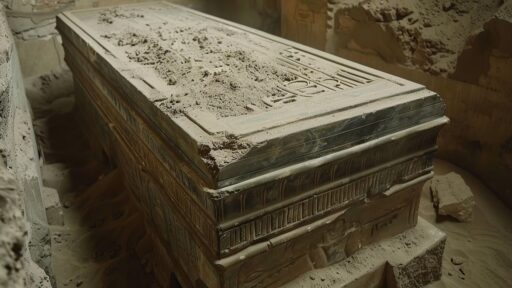
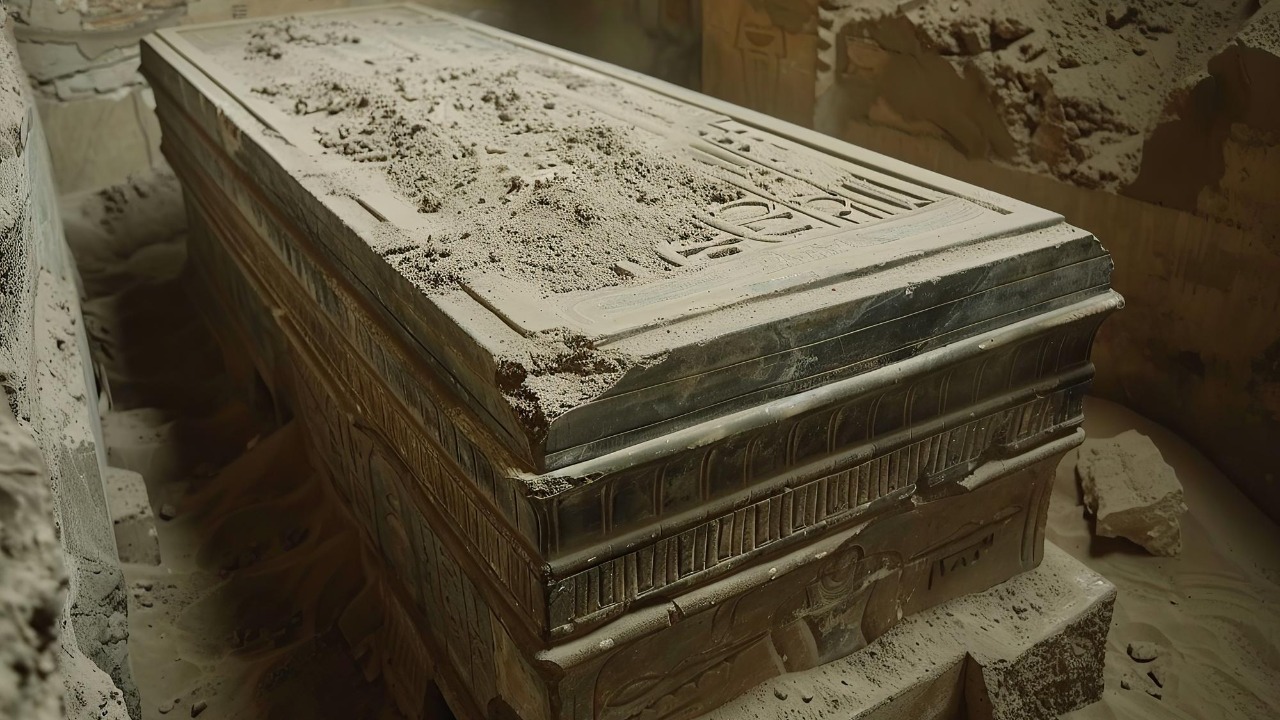

Archaeologists in Croatia have opened a late Roman sarcophagus that remained sealed for roughly 1,500 years, revealing an undisturbed burial from the twilight of imperial rule along the Adriatic coast. The stone coffin, discovered within a larger tomb complex, offers a rare snapshot of late antique life, death, and belief preserved in situ rather than filtered through centuries of disturbance or reuse. For specialists in Roman history, it is the kind of find that can recalibrate assumptions built on fragmentary evidence.
The sarcophagus lay hidden beneath later structures in what was once a prosperous Roman settlement, protected by layers of debris and subsequent construction. Its intact state, along with the grave goods and human remains inside, now gives researchers a controlled context to study how local elites navigated shifting religious, economic, and political currents as the Western Empire unraveled.
What the Croatian sarcophagus reveals about late Roman life and death
Archaeologists identified the stone coffin as part of a late Roman necropolis associated with a coastal settlement that thrived on trade across the Adriatic. According to reports on the sealed Croatian find, the sarcophagus was uncovered during rescue excavations triggered by modern construction, a reminder of how much of the Roman world still lies beneath contemporary cities. Set within a masonry tomb, the coffin was carefully oriented and sealed with stone slabs and mortar, which prevented looting and weathering for a millennium and a half.
Inside, archaeologists found the skeletal remains of an adult, likely a member of the local elite based on the quality of the stonework and the associated goods. Grave items included personal ornaments and everyday objects that would have carried both symbolic and practical meaning. Their presence suggests that the community still invested significant resources in funerary display, even as imperial structures weakened elsewhere in Europe. Bioarchaeologists can now examine the bones for signs of diet, disease, and physical stress, building a profile of how this individual lived and died within a coastal Roman milieu.
The sarcophagus itself is a key artifact. Its dimensions, stone type, and carving style can be compared with other late Roman burials along the Dalmatian coast and further inland. Decorative motifs, if present, may hint at religious affiliation, with Christian symbols, traditional pagan imagery, or a blend of both. In late antiquity, burial art often reveals how communities negotiated competing identities, and this coffin offers a secure context to test broader patterns identified in more disturbed sites.
The wider tomb complex around the sarcophagus also matters. Archaeologists have documented multiple burials in the same area, indicating a family or community plot rather than an isolated grave. The layout of the necropolis, the clustering of tombs, and any evidence of reuse or reorganization over time will help chart how local burial customs changed as Christianity spread and as Roman civic institutions fragmented. Because the sealed coffin sits within this matrix, it can be dated and interpreted relative to neighboring graves, not in isolation.
How an untouched Roman coffin reshapes current debates in archaeology
An undisturbed burial from late antiquity is a rare asset for researchers, especially in a region where centuries of building and looting have churned the archaeological record. The Croatian sarcophagus joins a short list of sealed Roman coffins, such as a similar sarcophagus discovery reported in another urban context, that allow scientists to test long-standing assumptions about burial practice against a clean, stratified context. When grave goods and human remains have not been rearranged or removed, patterns of placement, orientation, and association carry far more interpretive weight.
For historians of late Roman religion, the find arrives at a moment of active debate over how quickly and thoroughly Christianity replaced earlier cults in provincial cities. Funerary archaeology often provides the best evidence for this transition, since tomb art, inscriptions, and grave goods can signal belief systems more clearly than fragmentary texts. If the Croatian sarcophagus bears Christian symbols, such as a chi-rho or cross, alongside traditional motifs, it would support arguments for gradual, overlapping change rather than a sharp break. If it is entirely non-Christian, that would highlight the persistence of older traditions in a region that later became a stronghold of Christian culture.
The sealed context also has implications for economic history. Items such as glass vessels, imported ceramics, or specific metalwork styles can be traced to production centers across the Mediterranean. Their presence in a late Roman grave on the Croatian coast would confirm that trade networks remained active longer than some narratives of decline suggest. Conversely, a predominance of locally made goods might indicate a more insular economy by the time the individual was buried. Either way, the sarcophagus functions as a time capsule for the material flows that sustained life on the Adriatic frontier of the empire.
Modern analytical techniques heighten the value of such a discovery. Stable isotope analysis of the bones can reveal whether the deceased grew up locally or migrated from elsewhere in the empire, while DNA testing may clarify ancestry and familial ties to other burials in the necropolis. Residue analysis on ceramics or textiles could identify the contents of vessels or the composition of clothing and shrouds. Because the coffin remained sealed, organic materials have a better chance of survival, making it possible to reconstruct details of diet, health, and ritual that would be invisible in a disturbed grave.
The find also speaks to contemporary debates about heritage management in rapidly developing regions. Rescue excavations like the one that revealed the sarcophagus show how infrastructure projects can either destroy or illuminate the past. In Croatia, where tourism heavily depends on Roman and medieval heritage, decisions about how to balance construction with archaeology carry direct economic and cultural consequences. Each intact burial that survives development pressures strengthens arguments for systematic survey and excavation before new building begins.
Future research and public access for the Croatian sarcophagus
Now that the sarcophagus has been opened and documented in situ, the next phase involves detailed laboratory study. Conservators will stabilize the coffin and its contents, cleaning and consolidating fragile materials before they are exposed to air and light for extended periods. Human remains will be transferred to specialized facilities where osteologists can record age, sex, stature, pathologies, and any trauma, building a life history for the person who once occupied this high-status grave.
Archaeologists will also integrate data from the sarcophagus into a broader reconstruction of the late Roman settlement, correlating burial information with evidence from nearby domestic structures, workshops, and public buildings. If inscriptions emerge from the tomb complex, they may identify family names or local officials, linking the deceased to known historical figures or to patterns of municipal governance along the Adriatic. Combined with environmental data, such as pollen and animal bones from surrounding layers, researchers can sketch how climate, agriculture, and trade shaped daily life at the time of burial.
Public presentation is another likely step. Croatian museums have a strong track record of showcasing Roman artifacts from sites like Pula and Split, and the sealed sarcophagus offers a compelling narrative for exhibitions focused on the end of empire. Curators may choose to display the coffin itself, accompanied by reconstructions of the original burial and interactive media that explain the scientific techniques used in its study. For visitors, seeing an untouched late antique grave can make the abstract story of Rome’s decline tangible and immediate.
Digital documentation will extend the reach of the discovery beyond physical galleries. High resolution 3D scans of the sarcophagus and its contents can be shared with researchers worldwide, enabling comparative studies with other late Roman burials without moving fragile objects across borders. Virtual reconstructions of the necropolis and the surrounding town can be integrated into educational platforms, giving students and the public a chance to explore the site as it may have looked when the coffin was first sealed.